“Reported to lie 3 miles north east” says the chart. Which means they aren’t really sure where it is. Zooming in, there’s just a jaggedy mass of green reef symbol which screams “don’t hit me”. So it was with caution that I placed the approach waypoints into the chart plotter, knowing that our arrival was likely to be in the early hours of the morning, before good light. But the wind was light and seas gentle, the moon almost full – perfect conditions for approaching a mid-ocean reef, where there are no landmarks above water; nothing but crashing waves. Beveridge reef is a sunken atoll somewhere between Palmerston and Niue; its remoteness and inaccessibility making it an irresistible stop. But could we find it?
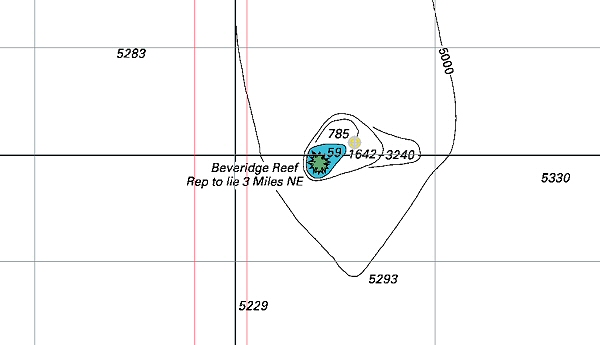
Wind light, again, so we arrived in the area later than expected. An hour or so after dawn I could just about make out breakers on the horizon through the binoculars. A few minutes later, the larger ones were visible with the naked eye. None of my official charts – paper or electronic – had any more detail than the green jaggedy reef symbol … but I’ve seen pictures of boats inside the reef, and have a sketch map from another sailor with GPS positions, so was confident we could find our way in. According to the sketch, the reef has a pass on the western side. Much closer to the reef, I saw the unmistakeable wavelets of a rip current, a tidal race – water pouring out through the pass as the moon pulls the tide off towards New Zealand. It’s always hard to judge the size of these tidal race waves; especially with nothing to provide a sense of scale. It’s easy to see which way the tide is flowing though, and with the water pouring OUT of the reef, we could approach closely and just get swept safely out to sea again if we happened to bump the bottom, or there was any other problem. Driving Rafiki along the foam line that marked the middle of the race (and the deepest water), I soon had us through into the lagoon where the current relaxed and the water got deeper. We saw minimum 6m depth through the pass (plenty), which in the ultra clear water, looked a lot less!
We anchored on the far side of the lagoon, on a band of sand that runs all the way around the reef. These lagoons all seem to have the same shallow sandy shelf, extending inwards from the fringing reef, sometimes only a few metres and sometimes for hundreds of metres. Pure turquoise water only a few feet deep, suddenly dropping off into deeper water in the middle of the lagoon, the ramp so consistent and perfect that it looks man made. You can see the change of colour in the water. I can now judge the depth just by the shade of blue. Almost nothing lives on the sand shelf; just a few isolated coral heads trying to make a stand. There’s nothing hard to bump into, and hardly any tide, so I’m happy taking the boat onto these sandy shelves to anchor with only inches below our keel.
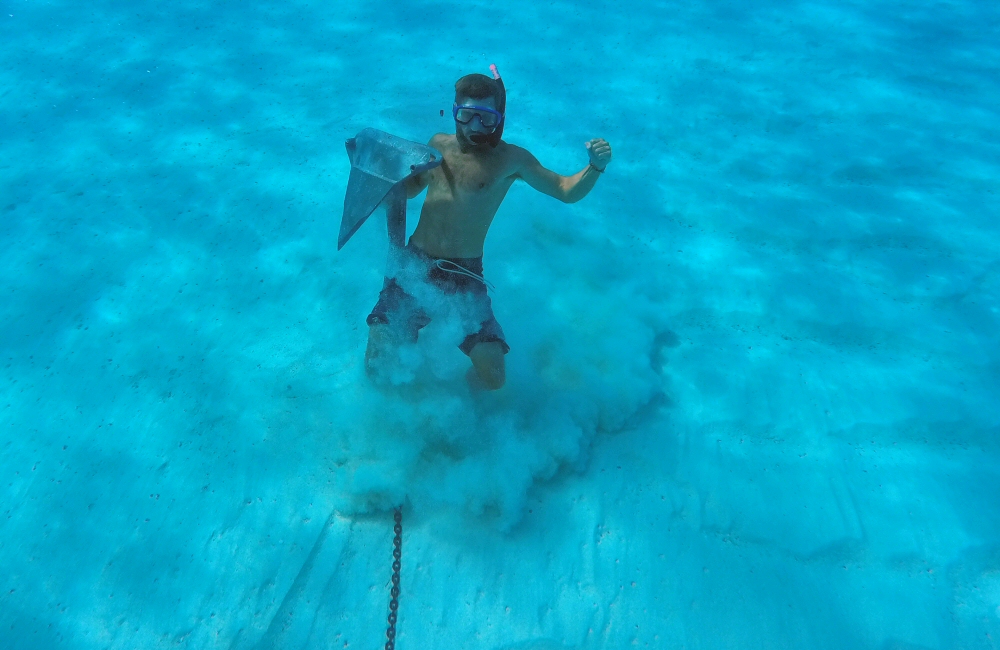
The water is SO clear – I’m assuming because there’s no land and no vegetation. We took the dinghy out to the edge of the reef and snorkeled by the wreck of a small fishing boat. How unlucky – to hit the only reef around for hundreds of miles! Not much to see in the way of fish, but lots of live coral and a shark dressed up in an all-over dark grey suit – one that I’d not seen before. Was he harmless like the black-tips, coming in close just out of curiosity, or was he circling us getting ready for the kill? We all survived, anyway.
Nobody else here. I’d hoped we might meet another boat in this isolated corner of the Pacific, so we could swap stories and have a bit of new conversation, but we had the place to ourselves. Which wasn’t so bad really – the solitude reinforcing the fact that this is completely and totally the middle of nowhere. The only sound; a rumble of surf in the background. The only life; fish, sharks, rays, spiky urchins, squishy black sea cucumbers and a few sea birds perched on the wreck. Colours so vibrant and pure; above and below the surface; not a speck or waft of pollution (other than the rusting hulk of the boat of course).
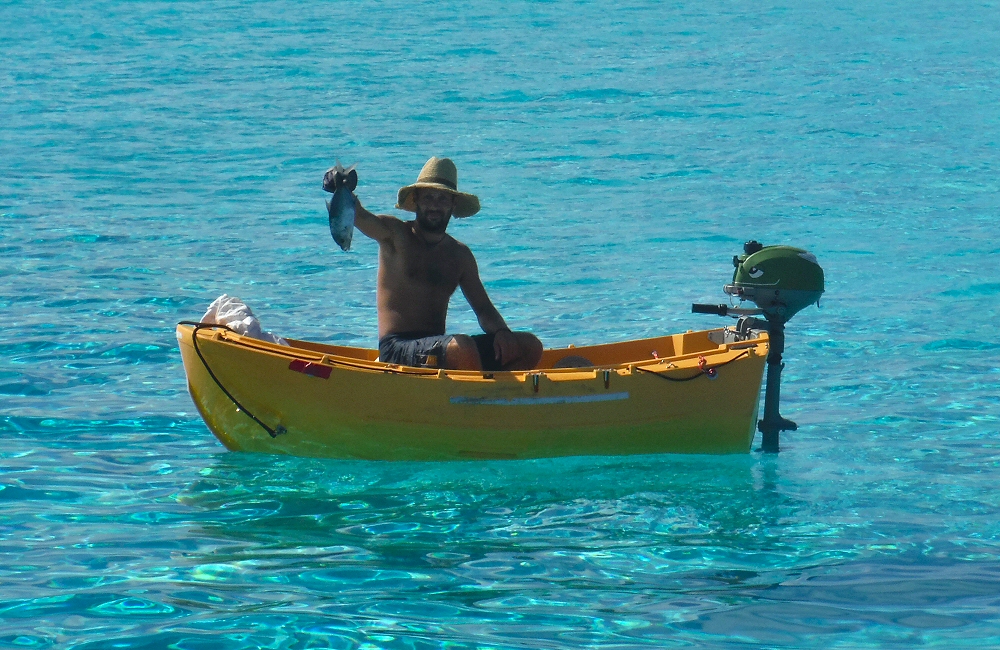
I spent the afternoon fishing from the dinghy, losing lures, running aground, dropping a rod over the side while I tried to tie us to a rock… generally being Mr Incompetent. I did catch a decent sized spotted grouper, but I put it back as I’d heard they were ciguatoxic. Also caught a little spotted yellow thing which wasn’t big enough to eat. Giving up, I headed back to the boat with a line trailing astern, and hooked a Jack! A “carangue bleu” in French – the same as the one we’d been given for supper in Fakarava. So I figured we should be fine, no ciguatera. Fresh poisson for supper on the grill! But after reading more about the toxin – how one species can be fine in one place but toxic in another, and the severity of acute symptoms, I reluctantly decided it wasn’t worth the risk. Canned fish again, then. Which feels so wrong in a place like this.
I had a full night of calm, deep sleep under the full moon in a gentle breeze. Woke just before dawn to watch an incredible sunrise, tucked up in my sleeping bag on the cockpit seat. Temperatures at night are dropping; and we’re getting dew on deck too. We just nudged over 20 degrees south … only a couple of degrees until we’re out of the tropics!

 Road and Ocean
The photos show magical places and moods – and lovely to see you’d coped with the kite surfing, – in a totally different, challenging place … ! What glorious water; We are keeping close on the winds behind you and feel the motion of Rafiki…….. waiting to hear when you are in ‘tomorrow’ time band! Am very happy that you are immersed in this huge experience , learning all the way along .!!
LikeLike