SYDNEEEEEE

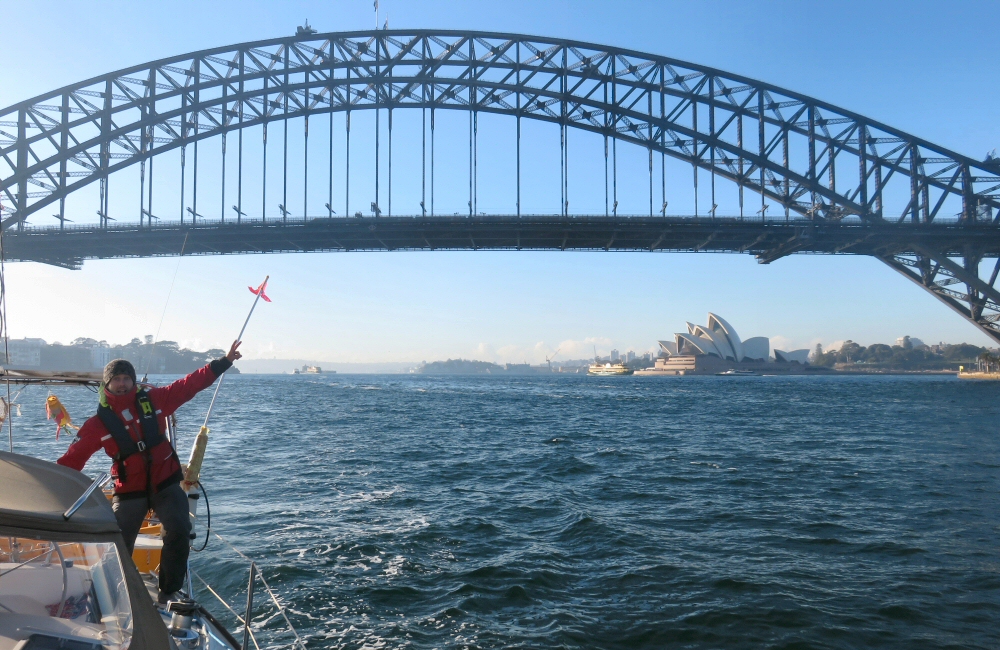
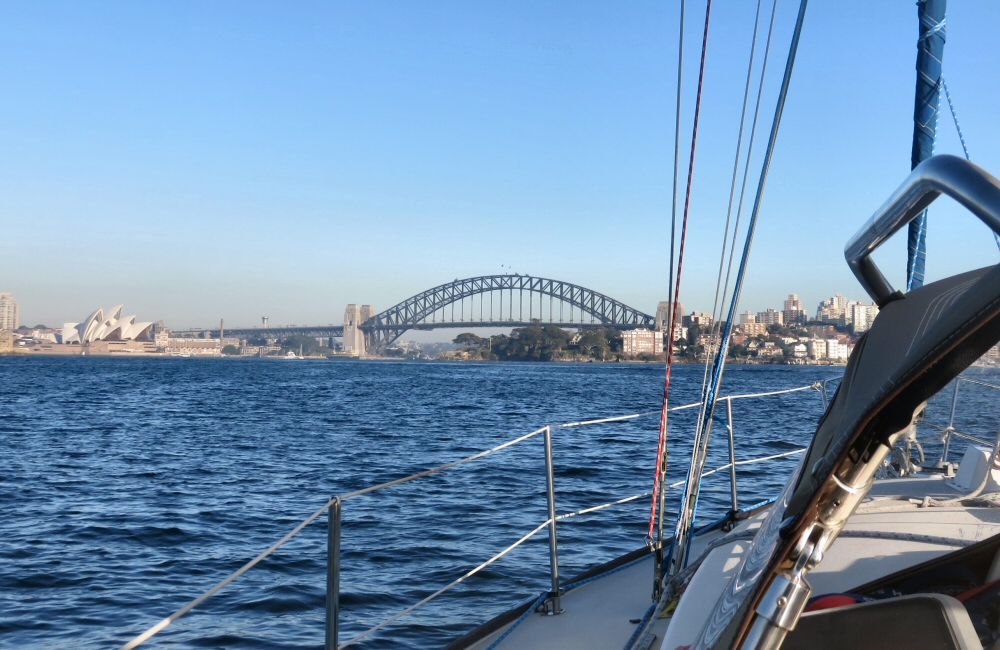
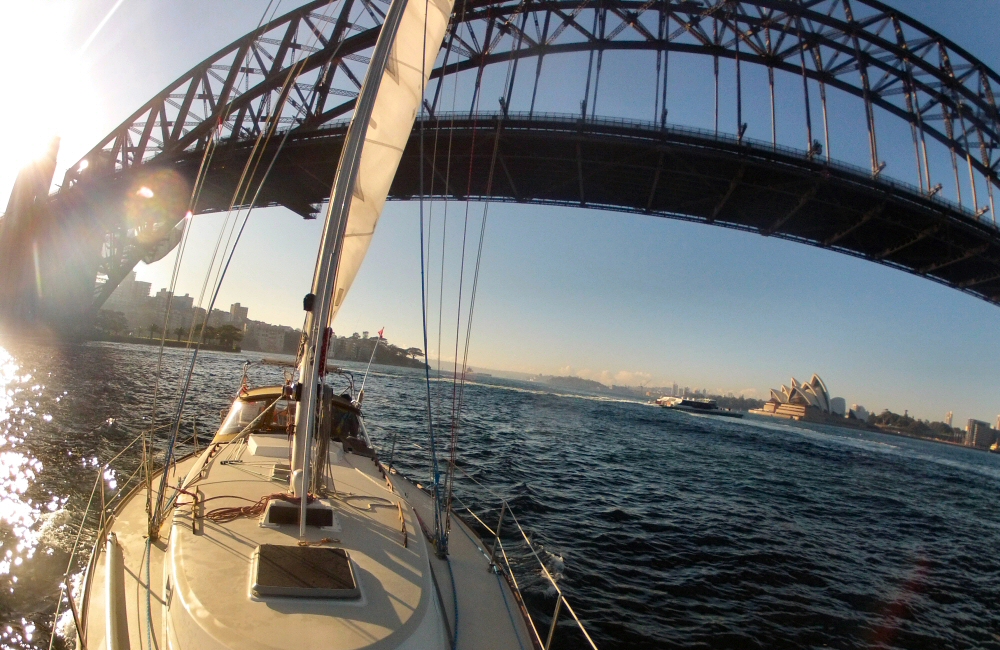
An amazing dawn exploded in the sky behind us as we sailed through the heads into Sydney harbour yesterday morning. Blue skies, light wind, and sun to warm me up after my final morning watch. The “real” coffee I’d been saving was just as tasty as I was expecting. Conditions were perfect for our last day on the Pacific, as my boat and mind turned towards land. We furled the genoa for the last time, cranked the engine on and motored into the city. Turning a bend in the harbour, the iconic Sydney Opera House appeared on the left. I still couldn’t quite believe that we’ve got to The Other Side! Only now that we’ve reached our final destination does it feel like the trip is over, book-ended by the Golden Gate Bridge in California last October, and the Opera House in Sydney – 10,200 sea miles later.

Sydney Opera House!
Sydney Opera House!
An epic finish to an epic trip

We picked up a mooring ball at the marina by the brokers, and started cleaning and packing. Dave and I took a taxi into town – the plan was that I would hire a “ute” (pickup) to take the dinghy up to Newcastle … but my driving licence card had expired and I only had a printed copy of my paper licence. If they wouldn’t let me take one, then plan B would be for Dave to drive. All worked out OK, phew. We rocked up back at the waterside with the truck, loaded on the dinghy and all my stuff. I said goodbye to Dave and Eva, and they headed off with huge rucksacks on their backs and heads full of memories.

I spent an hour or so with the broker, showing him around my ship, which looks and feels so different now that she’s completely empty. In great shape though – I hope the next owner treats her well and has as much fun as we’ve had. As the sun set over the Sydney hills, I said goodbye to Rafiki and headed ashore for the last time.

It’s been an amazing journey. Thank you, weather gods, for giving us safe passage, and (amazingly) letting us stay on schedule for over 8,000 miles of passage-making. Thank you Rafiki for keeping us safe and being an amazing home on the ocean. Adios, nana, au revoir…

Yard work

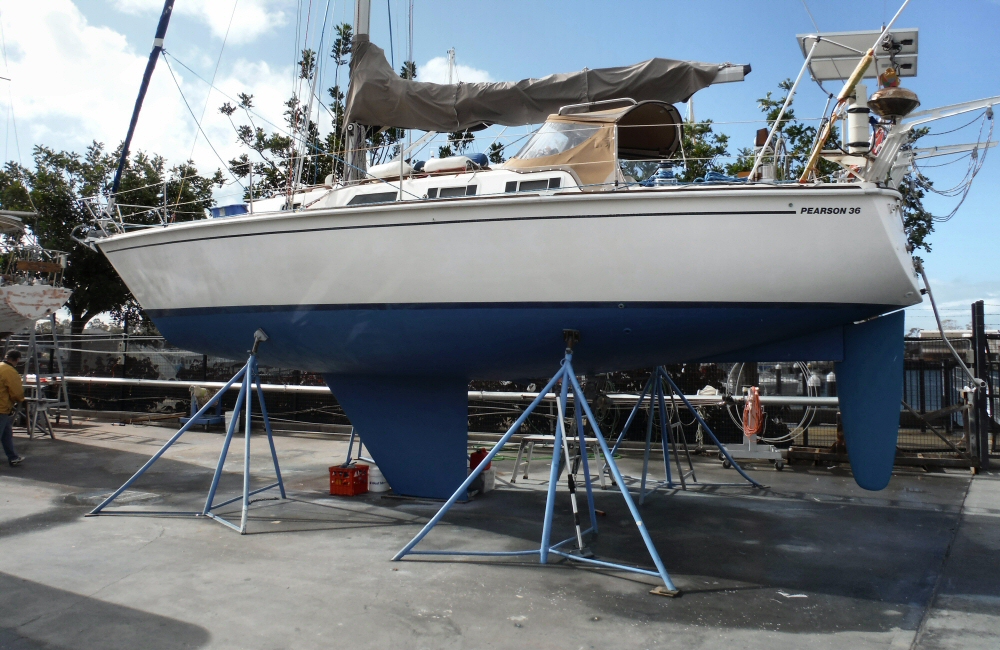
This weekend we have Rafiki out on the hard in Newcastle, doing some tidy-up work before she sells. Yesterday Dave and Eva sanded and painted the bottom while I removed the water maker and took down paintings, pictures and packed boxes with all our stuff. Today I took off the extra diesel tanks, and finished emptying lockers and cupboards. So many memories of amazing times are buzzing around my head. I’m very sad to see this phase of life move into the past, but have exciting things to look forward to – a real mix of feelings. Right now it’s a weird transition phase that I want to get through as quickly as possible. The voyage is as good as over, now it’s a case of complex logistics – importing the boat, moving things around Australia and back to the UK, getting rid of everything else … and only then when all that is done can I book a flight back home. Soon soon!

2015 07 17 1500 Yard work 2
All clean with new bottom paint

Pounding through the Pacific

Wind is whining in the rigging. Our small boat is thumping and splashing through the dark sea under a dark, moonless and starless sky. Flashes of white phosphorescence light up the night each time the bow dives into a wave, leaving a trail of sparkles in our wake. Sometimes there’s a larger patch of glowing sea which lasts longer – maybe some creature of the deep disturbed by our passing? It’s 0700, the end of my night watch, but it’s not yet day time. There’s a knife slit in the cloud cover just above the eastern horizon, dead astern. The first glimmer of morning is lighting up the sky behind it, an orange gash in the darkness as the sun tries to slash its way through. The wind is gusty. Mainly blowing near gale force, hauling the boat along as though we were harnessed to a full herd of wild white horses. But sometimes, every few hours for perhaps half an hour, it dies to just the regular trade wind – about 15 knots – leaving us rolling around in the leftover waves. Without the wind to keep them under control, the waves bounce and jump all over the place for a short while, restlessly spending all their stored up energy. It doesn’t take long for the sea to mellow though. Yesterday the wind stayed strong for most of the day and the seas built up impressively. Rolling mountains of dark blue ocean stretching from horizon to horizon, the tops whipped into white foam by the wind. A huge open space filled with an enormous amount of raw natural energy. The kind of sight you only get way offshore, and being right in the middle on a small boat, charging along under sail, makes it pretty special.

It’s been like this for a few days, and I’ve figured out a perfect combination of sails to deal with the changing conditions. We still have the 3rd reef in the main, which we don’t need to touch at all. The storm jib is hoisted and sheeted in tight. When the wind’s up in the thirties, Rafiki will power along at four or five knots, with the centre of effort low and centred in the boat so she doesn’t pitch and dive into the random waves that sometimes rise cheekily in front. The gusts of 40 knots or so push our speed up to six or seven; still not overpowered, but a bit creaky and noisy down below. The storm jib is working out way better than a partially rolled genoa, which, having the power coming from way up high and forward, makes for a slamming, uncomfortable ride. When the wind drops off and the waves mellow out, we unleash as much extra power as we need just by unfurling the genoa outside the storm jib.

Only minutes later, the orange gash in the sky has lost its colour, while the monochromatic seascape is starting to show hints of gunmetal blue. Maybe. I’m not sure. It might still just be grey. The yellow cans of diesel strapped to the rails on each side of the boat are catching the sun and shining happily. All still full – there’s been plenty of wind so far! There’s a thin line of sunlight shining through the hatch and dancing around on the forward bulkhead where Rose’s dad’s screen print is hanging. Like a barcode scanner trying to find a message in the regular patterns of the print.

Dawn always seems to be so much faster than dusk. The colour show only lasts a few minutes at most. I’ve not managed to figure out why – surely the physics of sun rising and setting are the same, whichever horizon it’s on? Especially at sea where there’s no land to make things complicated. Another one for the list of things to look up when I get back to civilisation.

We’re coming up to 5 days at sea now. The half way mark between Tonga and New Caledonia. The first part of this passage has been a mixed bag of wind, waves and navigating around dangers. The track on the chart wiggles all over the place for the first couple of days, and then turns into a nice straight line when the wind swung to the south. We sailed over 180 degrees west the other day! A full hemisphere away from home, and now the longitude digits on the GPS are counting down while the latitude counts up. We actually crossed the date line somewhere between Niue and Tonga, but we were having a bit of a pickle with weather and instrument failure so we didn’t really celebrate it. Also we didn’t really know where it was – none of my charts have time zones marked, and it wiggles around various countries depending on which day they choose to be in.

We’re settling into life at sea again. Keeping the boat’s speed up without pushing her too hard. Reading. Snoozing. Watching the waves. Getting a bit bored of crackers for lunch every day though. But now, time for breakfast – scrambled eggs and spinach, mmm.

Final preparations

After waiting in line in the Puerto Vallarta baggage hall for maybe an hour and a half, I finally got to customs. There’s a button to press – if you get a green light, you’re clear to go through, but if you get a red light then the questions and searching begins. The lady before me got a red button, so probability was on my side. While her bag was searched, the customs man was looking my big, suspicious bag up and down, no doubt running questions through in his head. My turn came, I pressed the button, and got a green light. Whoopee! Through the airport, picked up a taxi and back to the boat. Rafiki was all well, but a little grubby from two months sat in a marina. Even though I was starving hungry, I found I had to at least give the cockpit a scrub down before unpacking bags and filling my belly.

It’s been a busy week, getting every thing ready. David and Eva, my Swiss crew, arrived on Monday with home-made biscuits in hand. We spent the day getting to know each other, and settling in. The rest of the week has been spent on a bunch of jobs, me working on the boat, David and Eva ticking things off their todo list and hunting down a place to make copies of the charts I brought out from the UK. We borrowed a huge stack of charts from a local boating group, but it turns out that the ones I’d picked up from the Admiralty were the best for having as emergency backup. We’ve made copies of a few old, interesting looking charts though – to put up on the wall later! David + Eva have packed a sextant and large stack of astro navigation books, so we hope to be proficient old-time navigators by the time we get to Australia 🙂

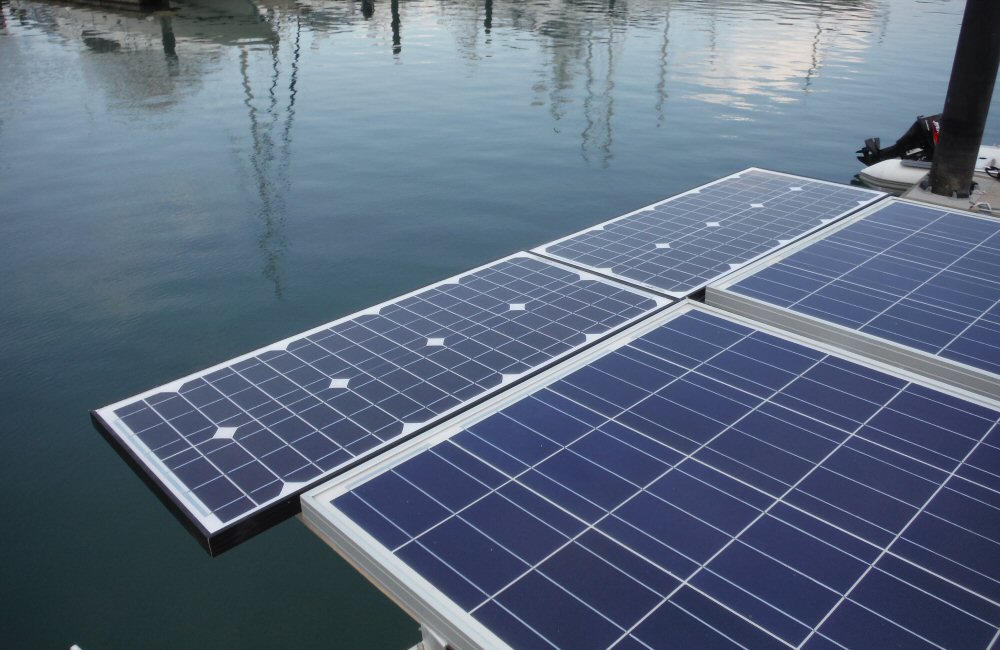
The boat was pretty much ready for an ocean crossing back in October last year, since the sail down the outside of the Baja peninsula is remote and long. Still, 2,800 miles of open ocean, and then a further 5,000+ miles of sailing to get to the other side of the biggest ocean on the planet requires a certain amount of preparation. In fact it’s a logistical behemoth. This will I’ve ticked off a few final jobs; adding a third battery, two more solar panels, inner forestay for the storm jib, and running backstays to support it, and then a load of little things around the place.

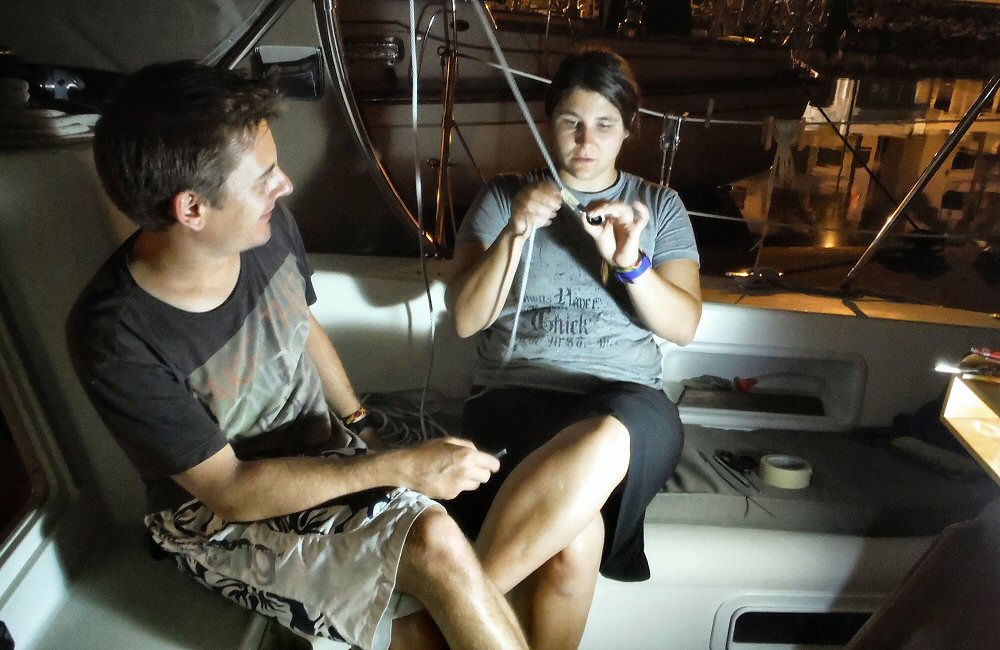
2015 03 05 1900 splicing into the night
David and Eva splicing backstays, late into the night
Extra solar panels
Extra solar panels, smuggled through customs
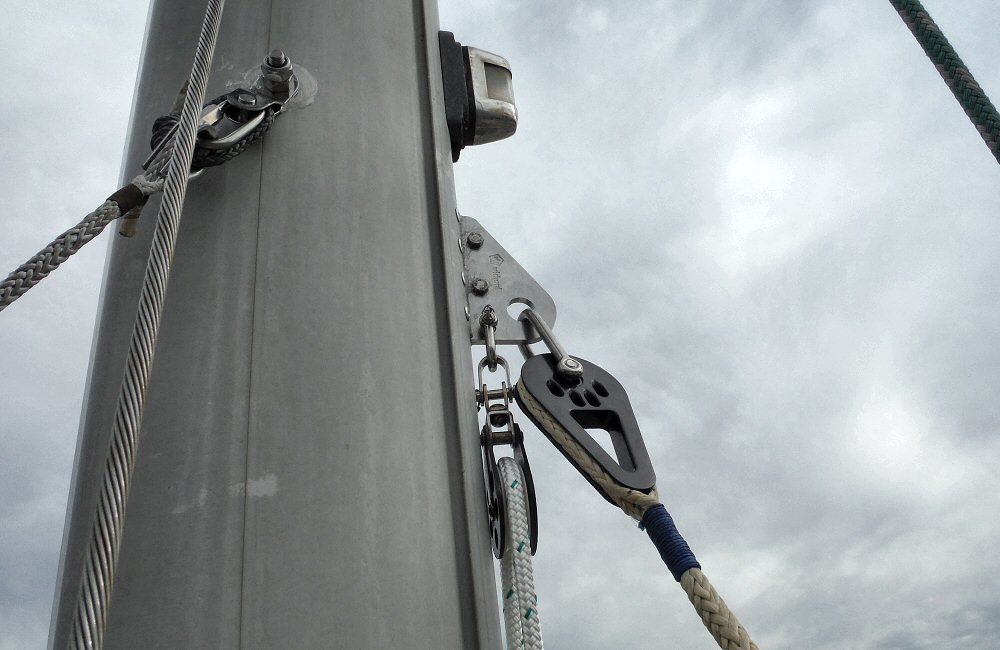
Forestay attachment on the mast
Forestay attachment and running backstays … had to cut a huge slot in the front of the mast … eek!
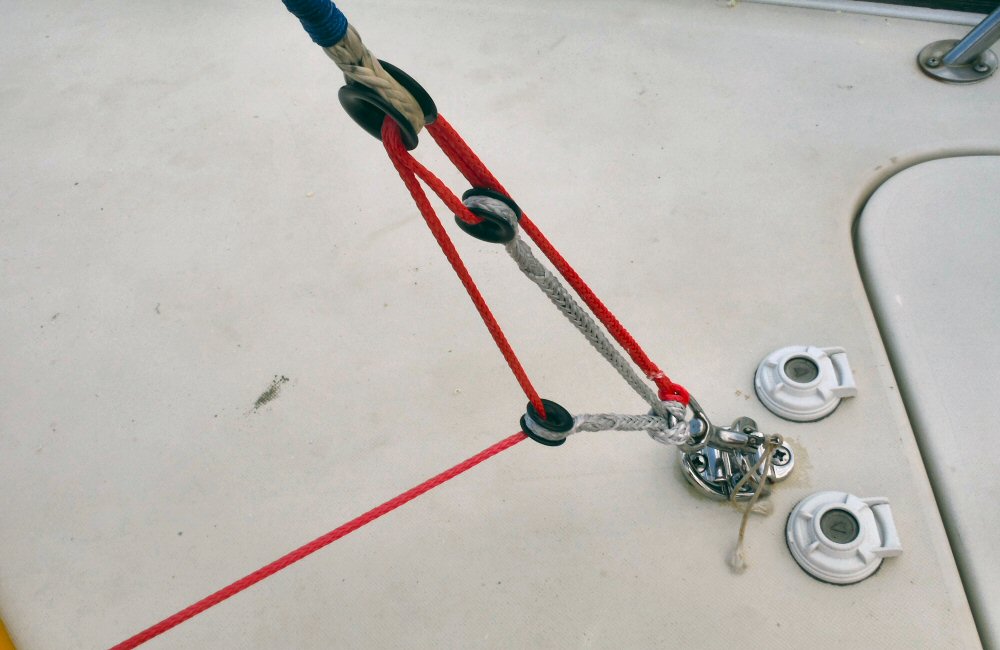
Forestay - lower attachment on the deck
Forestay – lower attachment on the deck

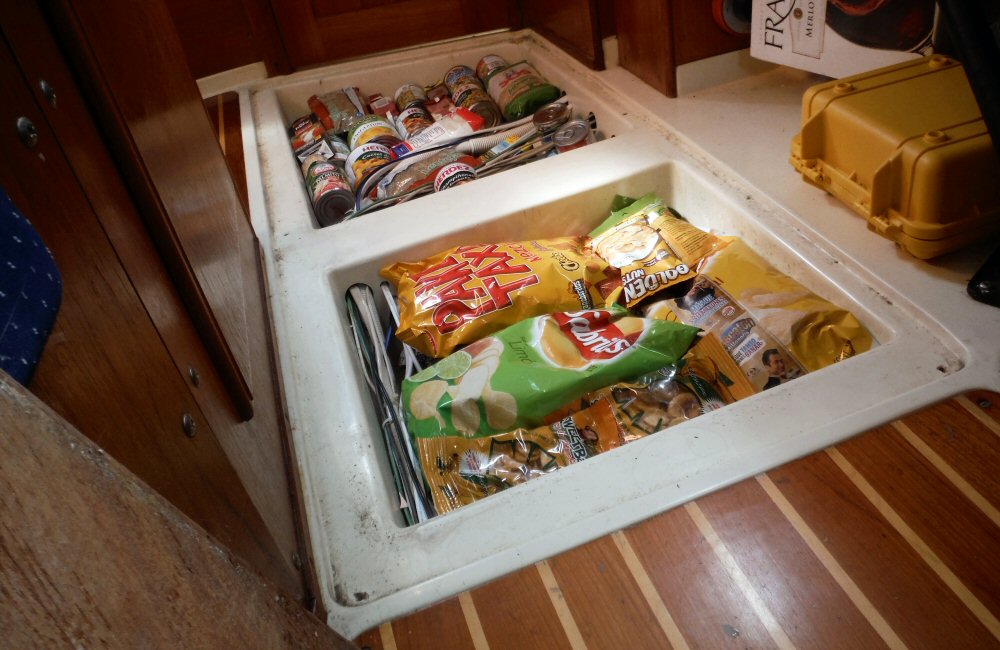
On Friday we did our first major food shop, spending over three hours and thousands of Pesos in the local supermarket … and having to take TWO taxis back to the boat with all the food. With a bit of extra shelving squeezed in here and there, and by squirreling things away under the floors, Rafiki soaked it all up easily. Shopping for many months at a time is an interesting challenge. The first time we’re going to be able to get decent supplies once we leave Mexico is 8 weeks later in Tahiti … where it’s expensive. So we’re packing in as much as we can carry.

Food everywhere!
Food everywhere! Here screwed under the floorboards

Last night we spent at anchor outside La Cruz, 10 miles north of here nestled in the corner of Banderas Bay. We got a good shakedown sail, making sure everything was functioning as it’s supposed to. I tightened the rigging, got the water maker back in action, and we threw the boat around a bit. All systems checked out A-OK. We’d made extra copies of the charts for some other sailors here in the bay, and delivered them up to La Cruz too.

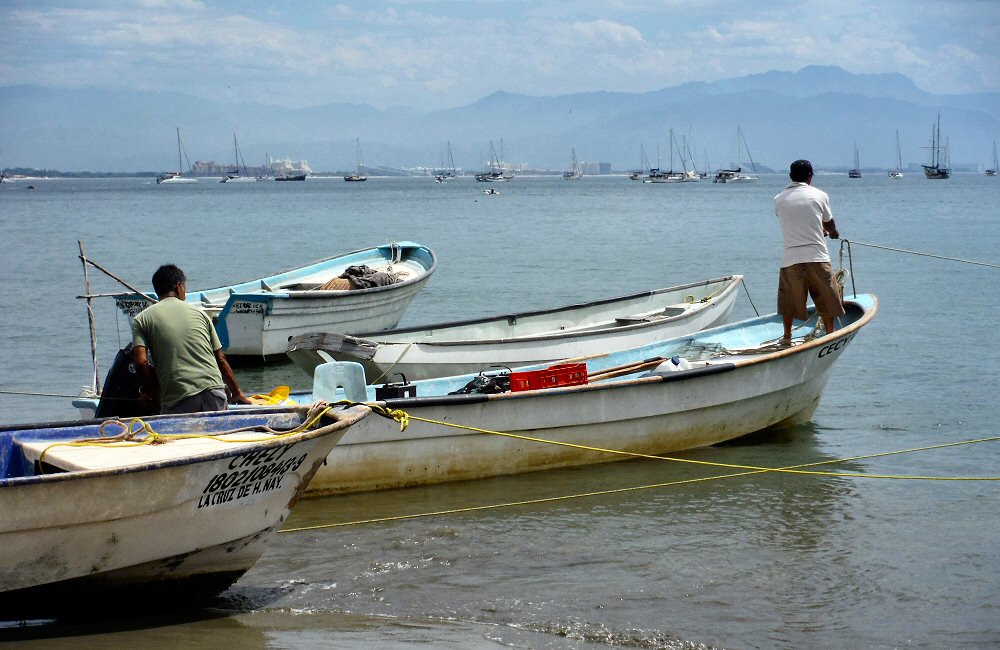
Typical Mexican fishing scene
Topping up on a couple of kilos of dried fruit
Grabbing a couple of kilos of dried fruit

The group of boats making the voyage from the Americas across to Australia or New Zealand are called “Puddle Jumpers”, and they have their own radio net each evening to give position reports to each other, and catch up with any other news. It’s on a shortwave radio system (SSB) that I can only receive, since I don’t have a transmitter. It’s the first time I’ve sat down and listened in … the first step towards being out there ourselves. Boats were checking in from as far as Panama and the Galapagos. There’s a “net controller” that will follow us all the way to the Marquesas – these radios transmit a long way. I’ll be sending position reports in by email, and another boat will be reporting us on the net. There’s a list of other boats jumpin’ the puddle here.

The same position (and weather) reports will be displayed on the Rafiki tracker, which I’ve put up on the blog. I hope to get a report sent every few days.

Tomorrow we do our final food shop for fresh food, fill up with water and propane, and get our Mexico clearance papers. Then we’re ready to leave! I’ll post again before we set sail…


Windlass installation

Over the last few months I’ve found loads of information from various forums and blog posts online … apart from windlass installations on the Pearson 36-2, so here’s some information on how I did it, in the hope that someone else out there will find it useful.

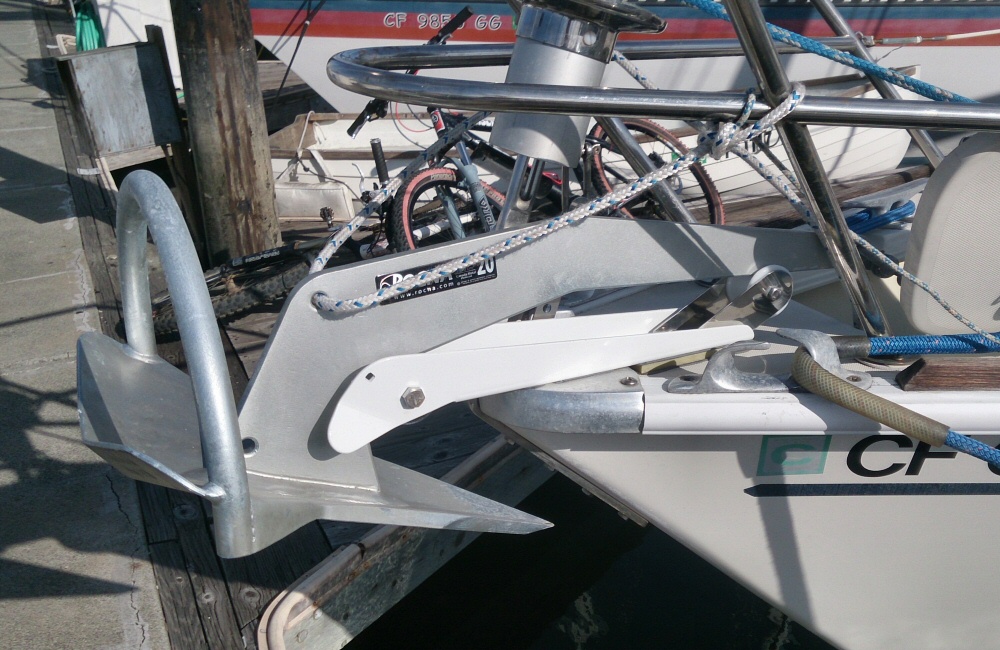
Seeing as we’re going to be headed much further afield soon, and anchoring out a lot, a windlass was on the “need” list. I also wanted a spare bower (main) anchor, so decided to get a new 20kg Rocna and keep the old 35 lb CQR as the spare. I decided to err on the side of caution and buy 5/6″ chain; 150 foot of it. To haul all this lot up, I chose a Maxwell RC8 windlass; because it had the ability to take a winch handle in emergencies as standard, whereas others needed an expensive add-on. The windlass only comes with a toggle switch and I wanted something to use up at the bow, so bought a couple of Maxwell foot switches.

I already added a dedicated engine battery under the aft cabin bunk, and as the windlass is always going to be running when the engine is on, I decided to take power directly from that.

There were a couple of options for mounting the windlass;

1) behind the anchor locker, with the gypsy poking out on deck
2) in the anchor locker itself, angled back for the right chain pull

Unfortunately there’s not enough space to mount this windlass through the deck behind the anchor locker opening; the front of the windlass would extend a couple of inches forward of the rear edge of the hole. I could have modified the locker lid and build a frame / bracket for the front end of the windlass, but thought that was a bit “hacky” and would have looked a real mess. Ended up with the second choice, which also keeps the windlass nicely out of the weather.

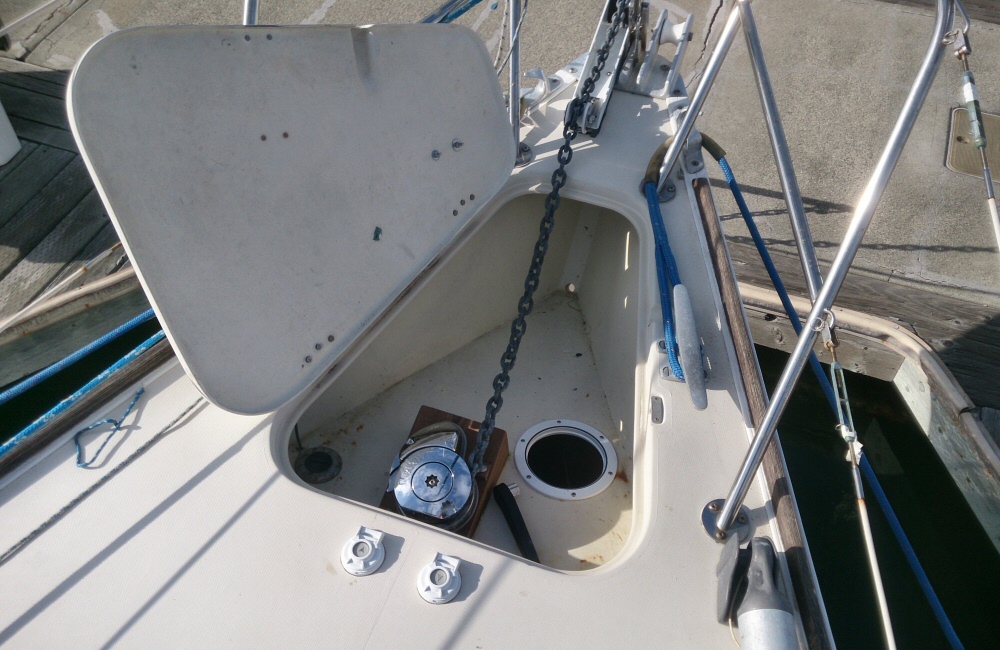
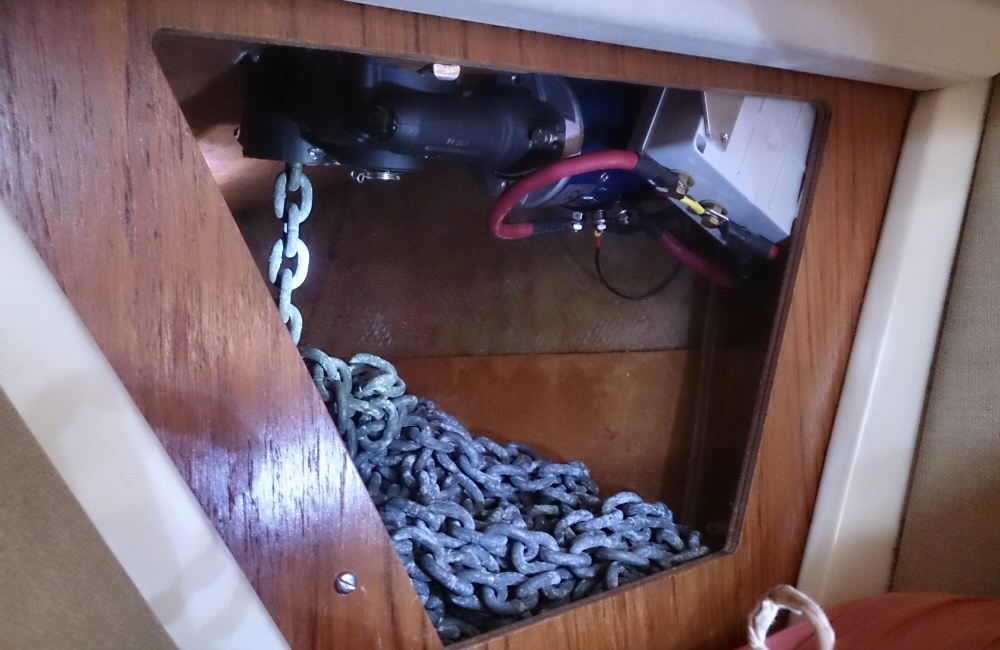
Chain locker

I turned the space in the bow, under the anchor locker, into a chain locker. Having the windlass drive and wet chain in the same airspace isn’t ideal, but needs must… Ideally there would have been a way to lead chain aft so it’s not all in the bow, but the water tank under the v-berth prevents that. The combined weight of anchor, windlass and chain puts the boat bow-down a good 3 inches or so (!) which is far from ideal – but we’re still a long way off our cruising weight so as long as I load as much as possible towards the stern we should be level again; outboard, life raft, 20 gallons of diesel … not ideal to have weight in the ends but again, not many other options.

I reinforced the sides of the locker with 3mm ply glued to the inside of the hull, and gave it a good coat of epoxy. The water-fill pipe also comes through this space, and since I didn’t want chain sliding around to chafe through the pipe I wrapped another layer of fatter pipe around it. This new chain locker should drain into the bilge; it’s now all sealed around the edges apart from a hole at the lower forward end. Any green water over the bow will go into the deck locker and then overboard through the bow drain; I’m hoping that very little should get below.

Mounting the windlass

Having the windlass mounted in the locker, which is quite a bit lower than the deck, meant I needed a mount that knocked the angle back a good 20 degrees or so to make sure that the chain ran on and off the gypsy at the right angle. The floor of the locker itself ramps downwards towards the bow too. I got a local carpenter buddy to make this up for me from laminated teak for a hundred or so bucks (teak is expensive!). The teak is bolted to the bottom of the anchor locker with 4 large coach bolts, and plenty of epoxy. Sticking this down was pretty committing! There were loads of interesting angles to calculate here; coach bolts, windlass mount bolts, a hole for the windlass drive, and a hole for the chain.

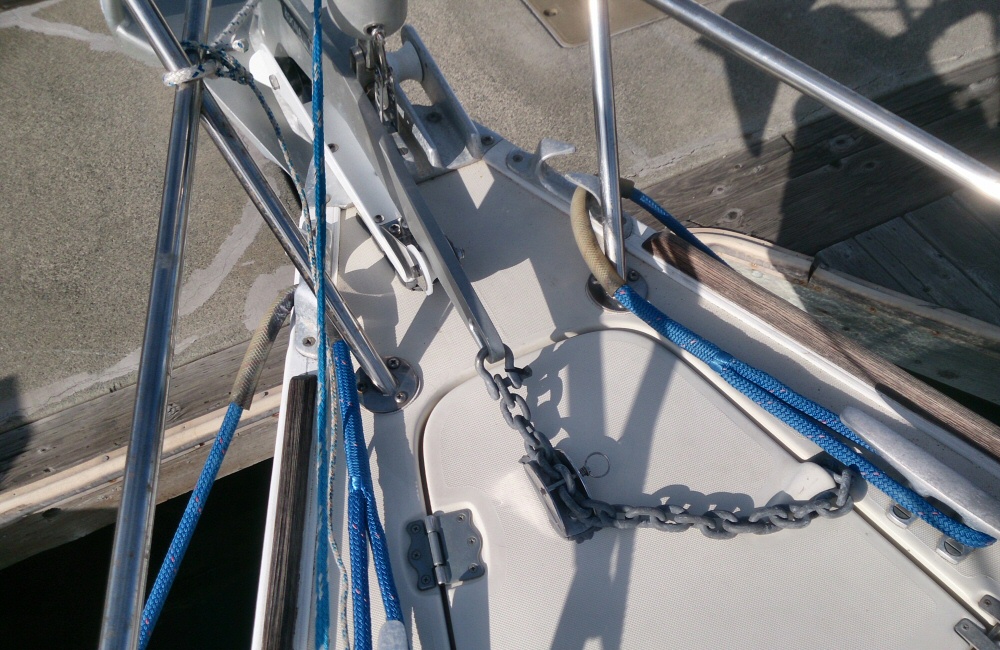
Because the whole assembly is tilted back a fair amount, part of the chain hole (hawse pipe) sits above the back of the drive motor below, so I extended the hawse pipe section with some PVC pipe, the bottom of which you can just see in the photo of the chain locker. So far I’ve not had any trouble with this feeding in or out. However with 150 feet of chain we do get pile-ups every 50 feet or so. Having someone down below to knock the chain pile aside was not an option so I cut an access hatch in the bottom of the anchor locker, just to the right of the teak windlass mount, which makes it easy to deal with chain pile-ups from on deck.

Anchor and roller

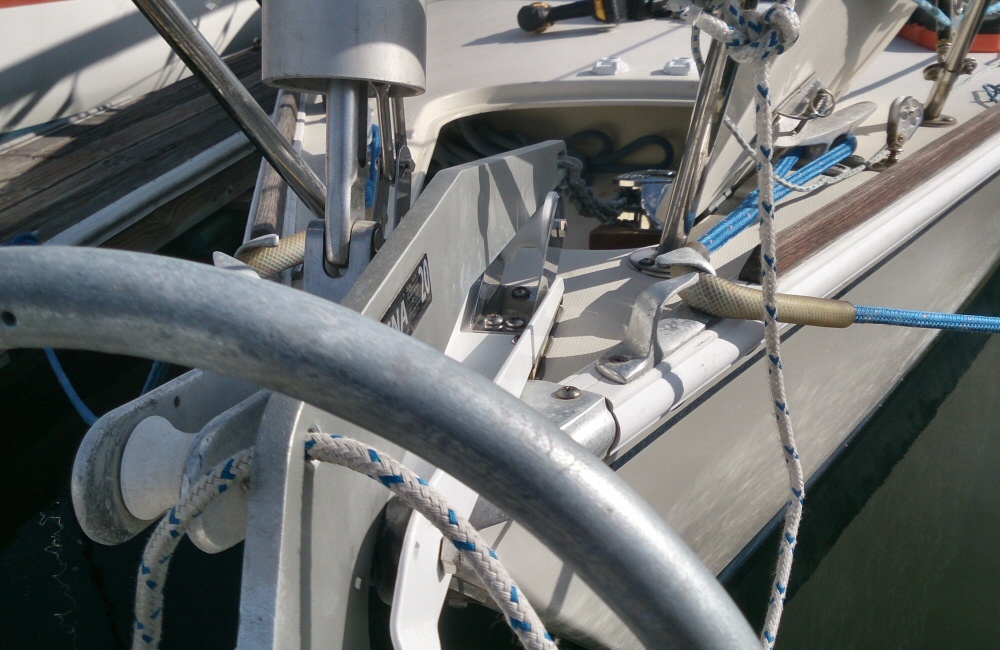
From the photos you’ll also see that I’ve mounted the anchor on the port side of the bow. This is because I wanted an anchor roller designed for a Rocna rather than use the under-engineered alloy roller that comes standard on the Pearson 36-2. I bought a Windline (URM-2?) off eBay, and added a Lewmar roller on the aft end to carry the chain clear of the forward end of the locker. The windlass is fairly deep in the locker, so the chain would have taken a nice chunk out of the deck, as well as rubbing directly on the back end of the main anchor roller. Not good.

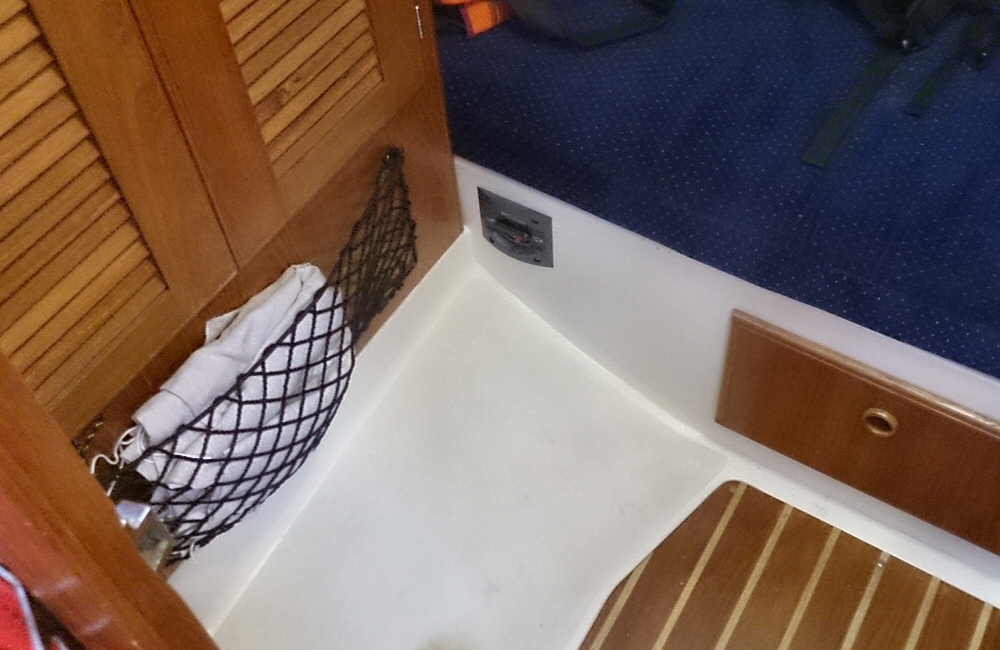
Controls

I added the foot switches on deck, which is just where I’ve always seen them when I’ve been anchoring on other boats, but in hindsight I should have put them in the locker itself, seeing as you have to have the lid open to operate the windlass anyway – it would have kept them out of the weather and out of the way. Some folk would have a control on a cable instead. I might fit one as well; as backup in case the switches fail. Maybe. I haven’t yet mounted the toggle up/down switch that came with the windlass; if this goes in the cockpit somewhere then that will be the backup option. The windlass has a clutch so you don’t need power to drop the hook, but there’s the possibility that we need to get the anchor up in a hurry to leave a lee-shore anchorage, and I don’t want to be messing with wires; I like to have backups for safety-critical kit.

Which brings me onto the manual lift option on the windlass itself. The centre winch handle hole is for the clutch, and the one on the outside of the gypsy is to haul the chain in manually. As I write this and look at the pictures in detail, I see that the handle isn’t going to go all the way round in the space- doh! At least it can come up bit by bit.

Power

Power to the windlass is via 1 AWG welding cable running directly from the engine battery under the aft cabin bunk, via the circuit breaker, through lockers and cavities along the starboard side of the boat at eye level, to the bow. The cable run was pretty straightforward; accessing each bulkhead with a 25mm hole saw was simpler than I thought it was going to be.

Does it work?

For passage making, the anchor is stored on the roller and lashed with line. There’s also a chain lock bolted to the top of the locker lid. When we get to an anchorage, we undo the chain lock, loosen the line, slide the anchor forwards a few inches and re-lash it. This gives enough room to open the locker lid. Dropping the anchor then means undoing the line and slipping the clutch on the windlass.

So far so good. We’ve not had lots of use out of it but everything works exactly as expected. When we’re just using 50 feet of chain, there’s no need to knock over the pile in the locker as it comes in.

I’ll post another report once we’re 50 anchorages into our trip 🙂

Anchor 01 Anchor 02 Windlass Windlass switch Chain locker Anchor 04 Anchor 03 Anchor locker