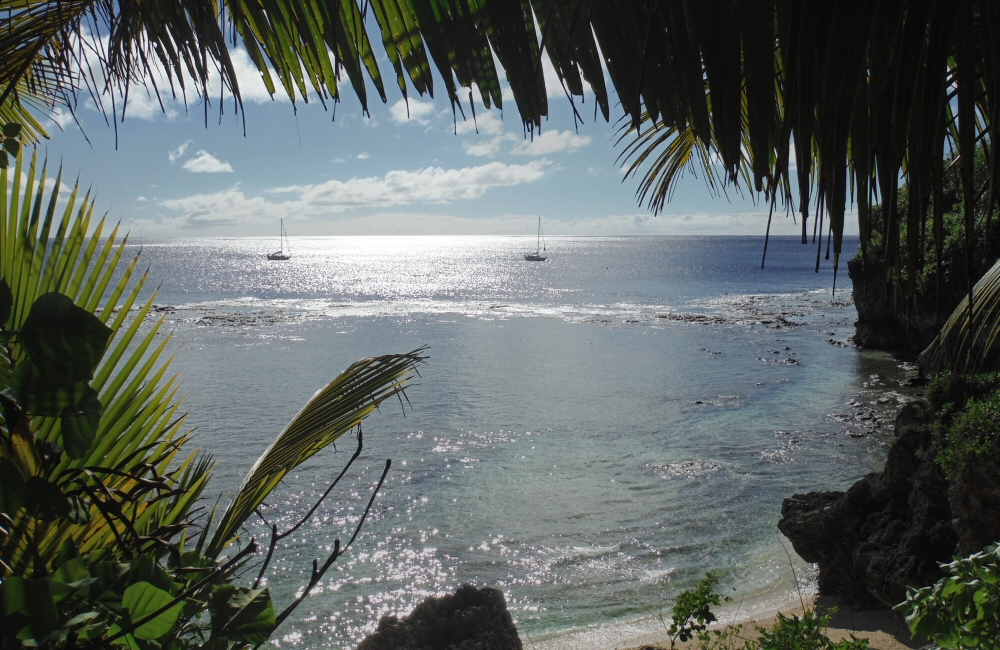
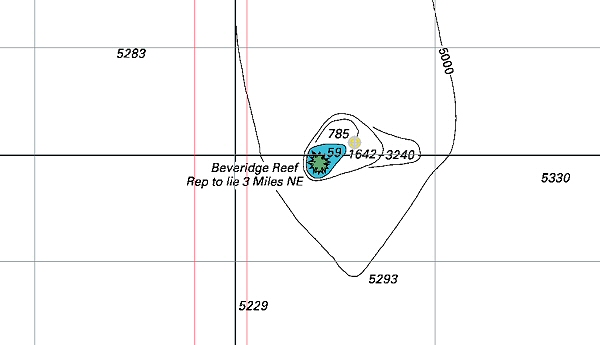
After Beveridge reef we had a couple of days passage to the island of Niue. “The Rock” they call it – a lump of coral only a few miles across, raised up from the ocean gazillions of years ago. The country just consists of the one island, with only 1500-odd inhabitants. There’s nowhere (safe) to anchor around the island as the water gets really deep really quickly, so there are a number of moorings available by the island’s wharf. No fringing reef, and no shallows nearby, meant we could come in at night without too much stress. As usual, we had light winds – but this time just enough to keep us moving along gently without too much slamming of the sails. We arrived in the early hours of the morning, no moon, really dark. A few minutes of searching with a torch and we picked up a mooring ball. One other boat there, sitting in the black darkness like a ghost ship – no lights on at all.
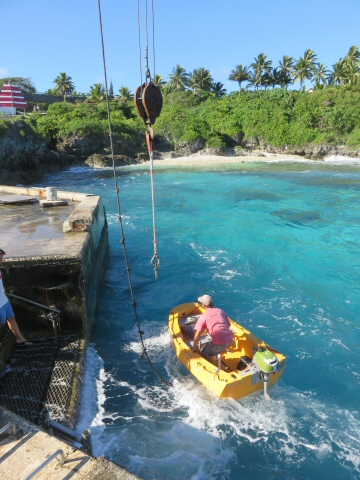
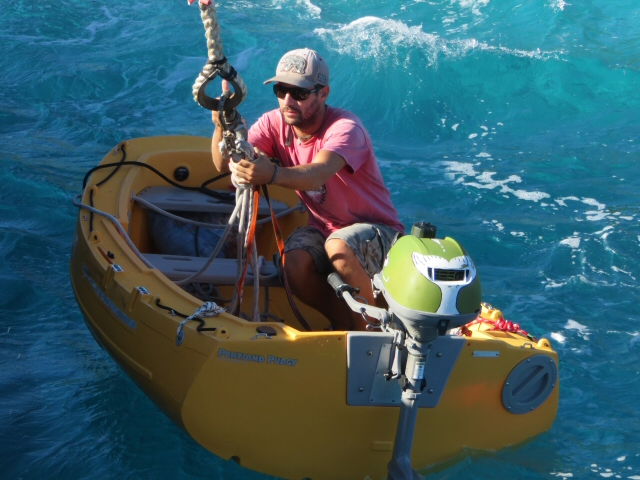
In the morning we called up the island HQ on the radio and arranged for customs to come down to the wharf to check us in. The island just has one landing point – the wharf, with a crane to lift boats out of the water. So I rigged up a bridle on our dinghy and we motored ashore. Timing our actions between the big sets of waves, Dave and Eva hopped out and scrambled up the ladder, and I hooked onto the crane and was hoisted quickly out of the water, still sat in the dinghy. A new way to enter a new country!
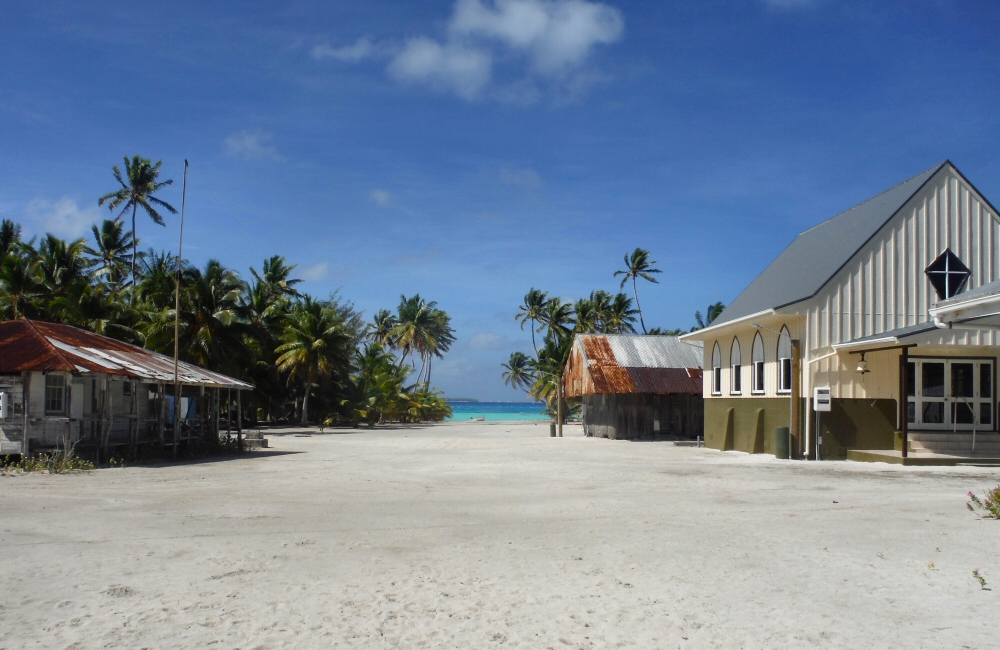
As soon as I stepped ashore I had a feeling that it would be a welcoming place. The yacht club commodore came down to meet us, and I chatted with a few older fisherman sat in their car, in broken English. Customs and immigration was a simple enough process, and then we explored the small town of Alofi for the rest of the day. Only a few buildings spread out along the main road, everything very neat and tidy – apart from the abandoned properties destroyed in the last cyclone. Later in the day I overheard a French singlehander struggling to communicate with the radio HQ, offered to translate, and ended up going out to bring him ashore as he didn’t have a dinghy ready, and then going with him to customs to translate there too. We spent the evening aboard his boat – Ivitu – eating fresh Tuna and Wahoo that he’d caught on his way into Niue, drinking rum and wine, having a good chat.
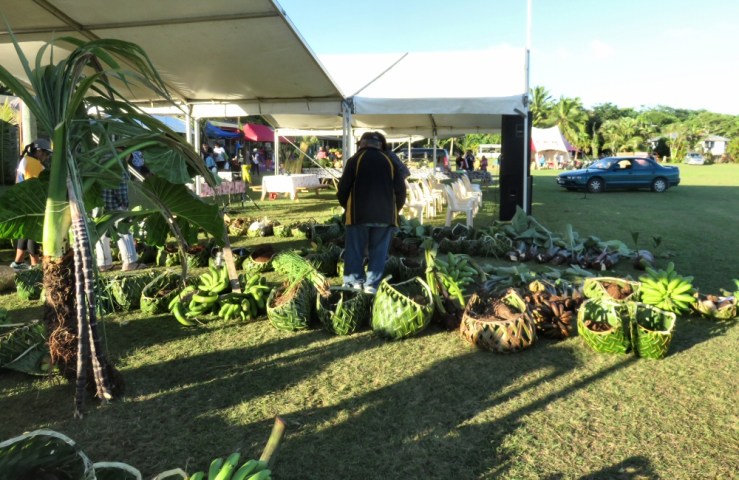
Next day the French fella, Lionel, joined us for a ride in our rental car across the island to “show day” in one of the villages. Started early with lots of food for sale – a mix of local stuff and things flown in from New Zealand on the twice-weekly flight. Taro root, BBQ chicken, sausages, crab sticks. I stashed a plate away in the car to tuck into later for lunch. In one corner a spread of large vegetables and fruit was laid out on the grass; a competition. Huge bananas, taro, coconuts, and some root vegetable I couldn’t identify. Wandering among the veggies on lengths of string were some monster blue coconut crabs, being shooed away by the judges. Then speeches and dances from troupes of school kids.
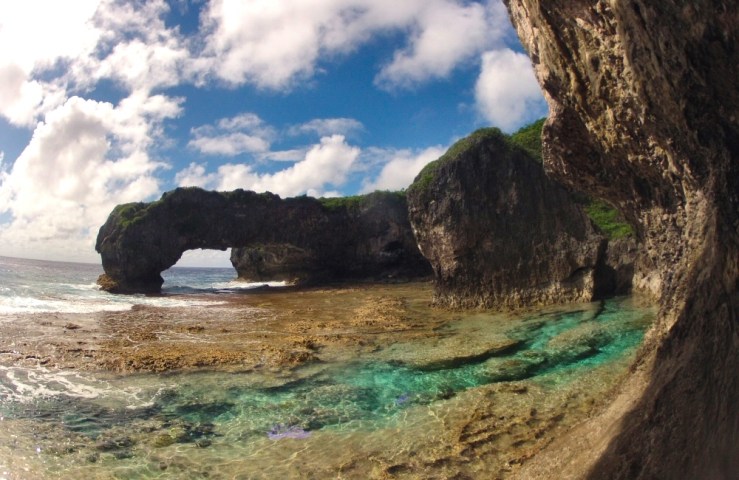
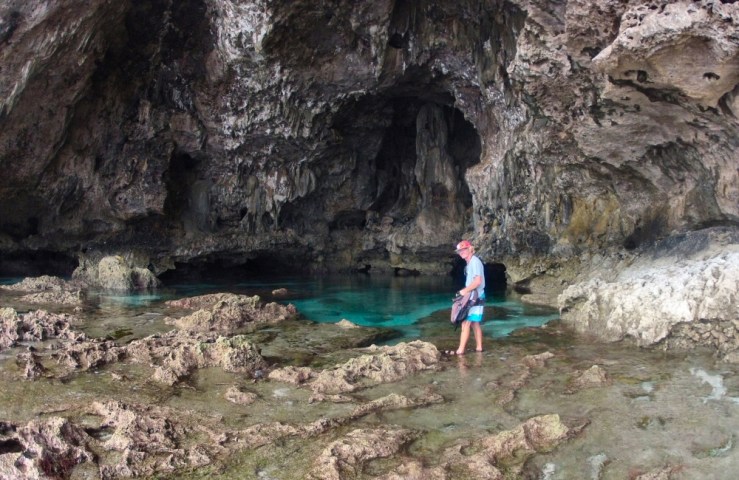
Just before it finished at noon we busted out and explored the “sea tracks” around the north coast of the island – being a coral lump there are loads of caves, grottos, nooks and crannies. No bats though, which I found strange. Learnt what I believe to be the French word for bats – “chauve souris” – shaved mice … is that for real? Thinking about it now maybe it should be “cave mice” – but the word for cave is different … hmm I’m going to have to look this up later. The island didn’t appear to have much in the way of animal or bird life – likewise not many insects. Hundreds of miles out in the middle of nowhere and not very fertile; not so surprising I guess.
Evening was spent on “Max” – a French couple’s 54-foot Amele, eating more of the fish, drinking wine, and trying to keep up with the fast French conversation. They’d arrived in the afternoon while we were ashore. A big boat – plenty of freezers on board – which meant a wonderful freshly baked tarte-au-poivres for dessert! Hervé and Caroline are from Brittany, with a great sense of humour, I tried to give as good as I got as a Brit on the receiving end of the jokes. Lionel is a lean, blonde, curly haired sea vagabond, seeming much younger than his 53 years with a hip-hop baseball cap, board shorts and tired tee shirt. Very animated, enthusiastic and much as I imagine his precursors Bernard Moitessier and Jean Gau to have been like back in the sixties. Hervé – a robust, ruddy, short haired Bréton with an infectious “joie de vivre” and a mischievous look in his eye. His wife Caroline – smiling and open, and of course impeccably presented and stylishly dressed in the way of French women the world over. The two of them were clearly very comfortable on board together, seeming much more of an even team of two than many other couples I’ve met at sea. I like the French. They make me chuckle – almost every Frenchman fits the stereotype in some way.
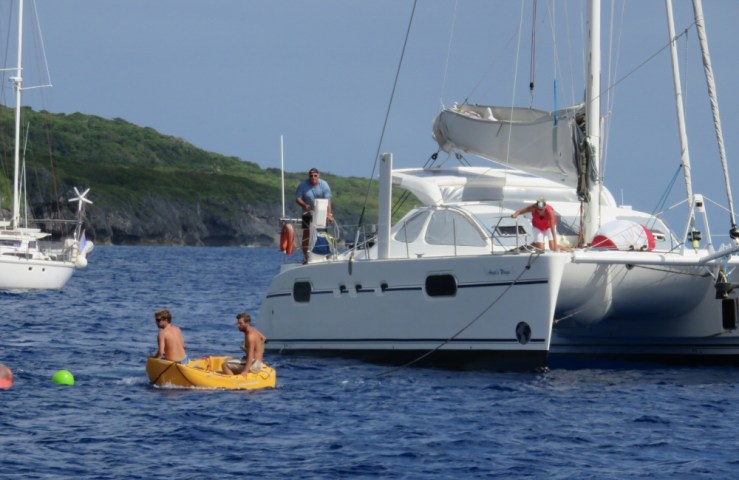
Sunday – a day of rest in the very Christian community – nothing happening ashore, we stayed aboard Rafiki. Helped a large Aussie catamaran pick up a mooring in the afternoon – “Angels Wings”. Rob and Jo – who I later discovered we’d met very briefly on Bora Bora. Being light and nimble, I was winched up his mast to fix a strop to the head of his genoa to factor for a new, shorter furler that he’d had fitted a week earlier. While the weather was reasonable and the boat was flat, I went up Rafiki’s mast too, to check all was OK, a job I do every month or so. All good. Evening aboard Angels Wings chatting and eating.
During the night the wind swung around to the north and swell wrapped around the island to make a bumpy, uncomfortable time on the moorings. Checked out with customs and immigration first thing in the morning, and then set sail for Tonga about mid day.
I enjoyed our stop on Niue – small and friendly. There’s a noticeable difference from French Polynesia in that we are now reaching the other side of the Pacific – closer to NZ and Australia – where boats are coming in from the west. The islanders speak English, which feels strange as we’re so far from home in every way imaginable. Looking at the globe, we’re pretty much on the opposite side now!








 Road and Ocean