
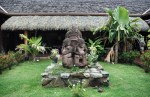
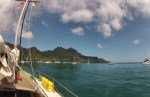
In the morning, the sun shows a dramatic view. Taiohae bay is surrounded by high mountains, all rich with green vegetation apart from where black volcanic features show through; rocks, caves, cliffs. It’s hot and humid already. There was rain in the night, which has washed the salt of the passage off the decks. We drop the dinghy in the water and motor ashore. There’s a concrete wharf and a few buildings, large wooden tables on the dock where the local fishermen butcher their catch. Cars, people, so much to look at! It instantly feels like Polynesia; palm trees, black sand beach, stone carvings and big men with tattooed faces. All the women wear a flower behind their right ear; usually a white frangipani but sometimes a red hibiscus. The land smells damp and earthy. Behind the dock there are a few buildings- a snack shop/restaurant under a marquee because their store front is being renovated, a small clothing shop, and a door to a place called Yacht Services. There are a few fresh veg stands under a roof nearby – we’ll come back later for that.
We have a wander around town – it’s not large, I think there are about one to two thousand people here; but it’s still the largest town in the Marquesas Islands. There’s a tarmac road along the waterfront, and a few other roads running up into the hills behind. The buildings are all in good shape and it all looks smart. First stop; Gendarmerie, to clear in to French Polynesia. As we’re EU citizens, it’s a quick and painless process; just a few forms to fill, and then post one off from La Poste opposite, where we also find a cash machine to get some money out. We pick up a baguette sandwich from a man that is trying his best to be a woman, find out where we can get the propane tank refilled, and catch up with folk back home briefly on the internet.
Coming ashore again later in the morning, the rusty ladder I’m climbing up breaks and lacerates my foot deeply. Blood everywhere – pumping out of the wound with each heartbeat – so I lie down and stick my foot up in the air to slow the bleeding. Another sailor comes by with some iodine and a bandage, we wash the cut, I slap the dressing on, and decide to hobble up the road to the local clinic. We have all the medical stuff we need on board; cleaners, creams, stitches, antibiotics – but as we’re near professional help I may as well make the most of it.
After a couple of hours in the clinic, chatting in French to the jovial nurses Roland and Jean, waiting for the doctor to come back from lunch break, and getting the job done, I’m ready to hobble back to the dock. Annoying, since I need to keep it out of the water until it’s fully healed to prevent coral infection … fortunately the Marquesas aren’t a beach or snorkelling spot, and hopefully by the time we get to the Tuamotus in a week or so it will be all better. Just a good reminder of how careful we need to be. Eva and David start up in song … “Captain hinkbein [and the rest in German]…” – something about a peg-leg captain hobbling along. Ha ha.
Next day when the local supply ship has moved off the dock, we fill all our bright yellow jerry cans with diesel, pick up the gas tank and by mid afternoon, set sail for the next bay 5 miles along the coast. The sun sets just as we’re getting in, but there’s enough light to show an incredible backdrop of huge black fluted cliffs, rising straight up to 1000+ metres.
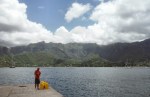
In the morning the dramatic anchorage really impresses. The cliffs are viciously jagged, climbing into the clouds so steeply that it’s mostly bare rock, green bushes clinging on here are there, with a light dusting of yellow blossom. On the other side of the bay, the hills are lower and rolling. There’s only one house, in a clearing cut from the trees. Smoke rising from a fire, cockerel squawking, washing hanging on a line, a couple of small motorboats anchored just offshore. The bay is in two sections; like rabbit ears, the east lobe where we’re anchored, and the west lobe where there’s a black sand beach, and a row of palm trees under the cliffs. We get the kayaks off the deck, put the dinghy in the water and all paddle round to the beach.
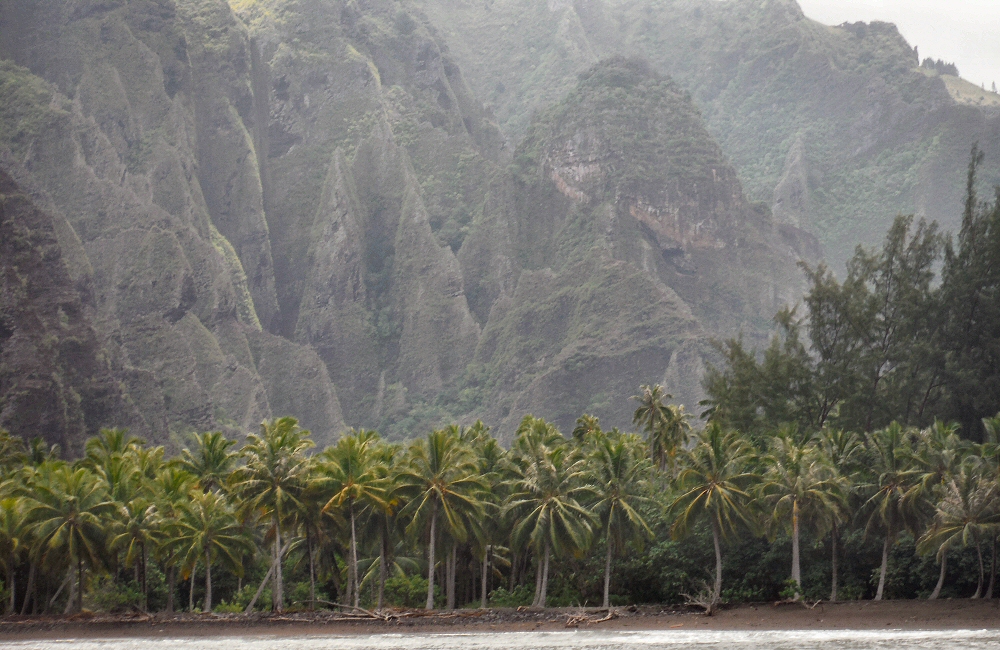
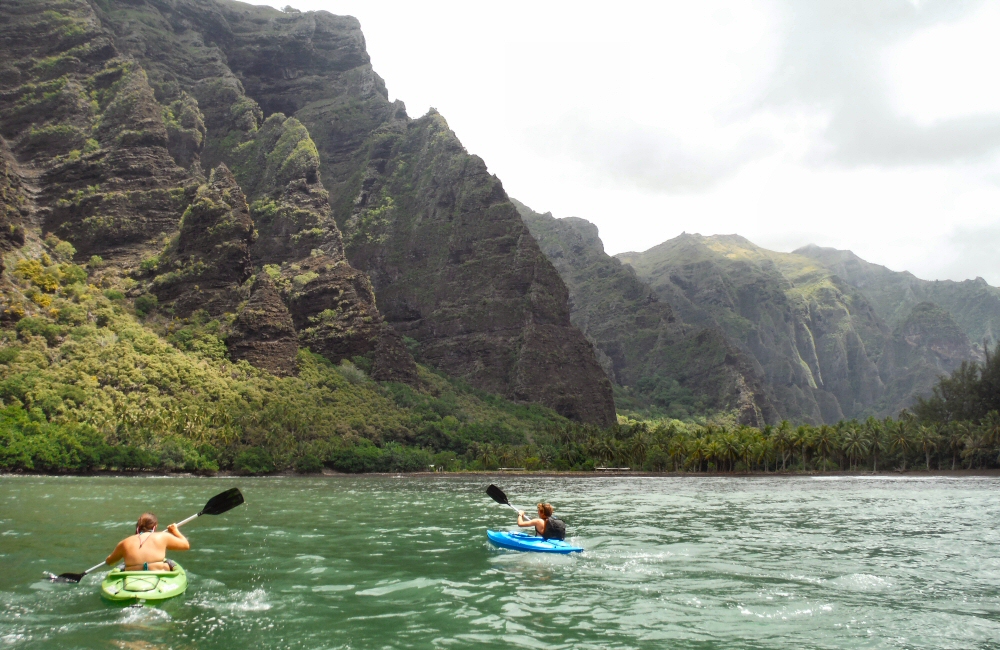
Dave and Eva wander up the valley to the “3rd highest waterfall in the world” – a 5 hour round trip hike – and I sit on the beach for a while. With just one operating foot, getting ashore through the surf, and then dragging the dinghy up the beach was interesting. Thinking maybe it’s not so wise to be hanging around under the coconut trees, I move down onto the sand and just sit there, soaking it all in. Soon the biting bugs arrive, so I head back to Rafiki to relax for the day.
6 hours later I get a call on the radio – “We need a pickup!” – Dave and Eva have found a young polynesian couple and bought more fruit than they can carry in the kayaks, so need me to row round in the dinghy. They carry the fruit out to me as I wait in the small surf; papaya, pamplemousse, star fruit, guava, lemons, oranges, and half a tree of green bananas. We’re going to have to work hard to get through all this before it goes off! It’s dark by the time we get back to the boat; we have dinner and then, as usual, I fall asleep in the cockpit soon afterwards.

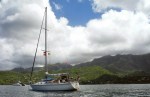
It’s a calm, quiet anchorage, with two other boats here, one of whom we made the crossing from Mexico with, and the other a Canadian boat who is on a similar schedule to us, so we might see them again further down the line. Tomorrow, we’ll set sail south for Ua Pou, the next island.





 Road and Ocean