Its mad to think we left the UK nearly two months ago and I haven’t managed a single update here on the blog. To be truthful, the pace has been relentless. It’s only now, that we have finally arrived in the islands [Nouméa, July 22], that time and headspace is opening up enough to get some words jotted down.
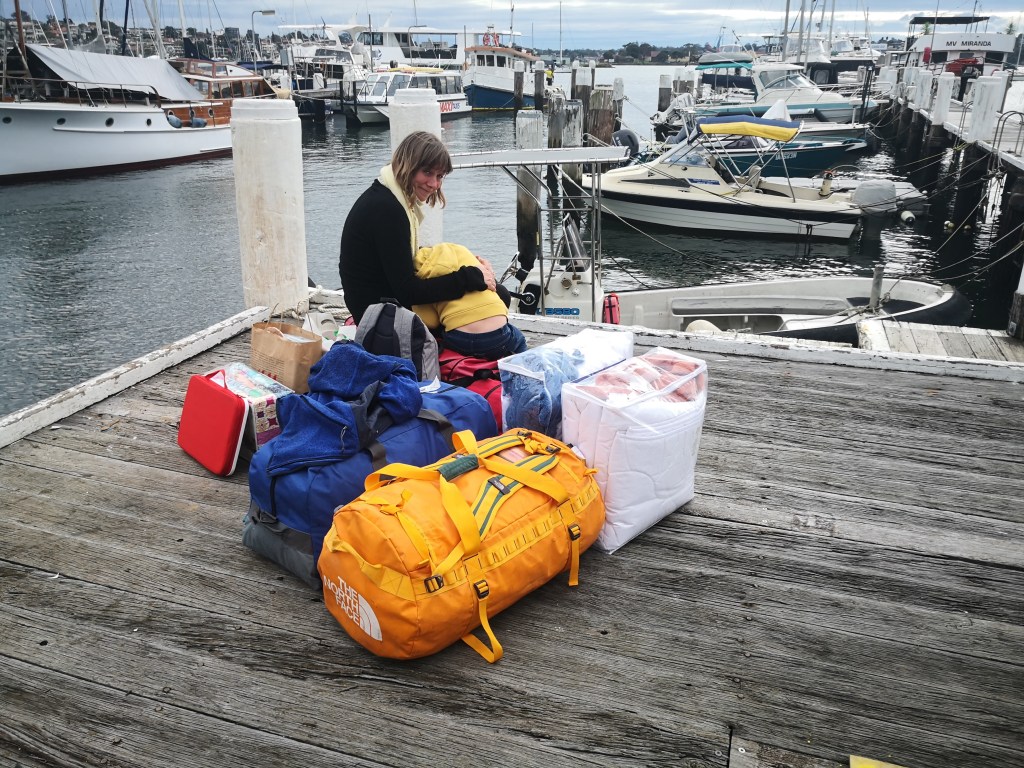
We arrived in Sydney on June 1st and moved straight aboard Songline at Balmain marina. She’s a great boat, built for exactly the kind of work we want her for, but she was empty. No inventory, not even knives and forks … which meant that all we had was what we’d packed in our three bags from the UK, plus a few tools and spares I had bought when out in Australia the last time.
An offshore, off-grid trip needs a considerable amount of preparation and equipment, which meant full-throttle organisation was needed for us to get everything ready within a few weeks and then find time to sail north to meet our friends in Coffs Harbour at the start of July for the first leg over to Noumea (New Caledonia).
Our time in Sydney was spent with many, many soul destroying trips to retail outlets to buy everything from the missing kitchen equipment to paper and activity materials to keep Tilly busy for months. To marine stores for shackles, ropes, boat parts. Fishing shops for lures and line. Late night sorties to random suburbs to pick up surfboards and kayak. Supermarkets for multi-trolley trips to load what feels like hundreds of cans of food (though as we sit here in Noumea it feels like we still might be under provisioned).
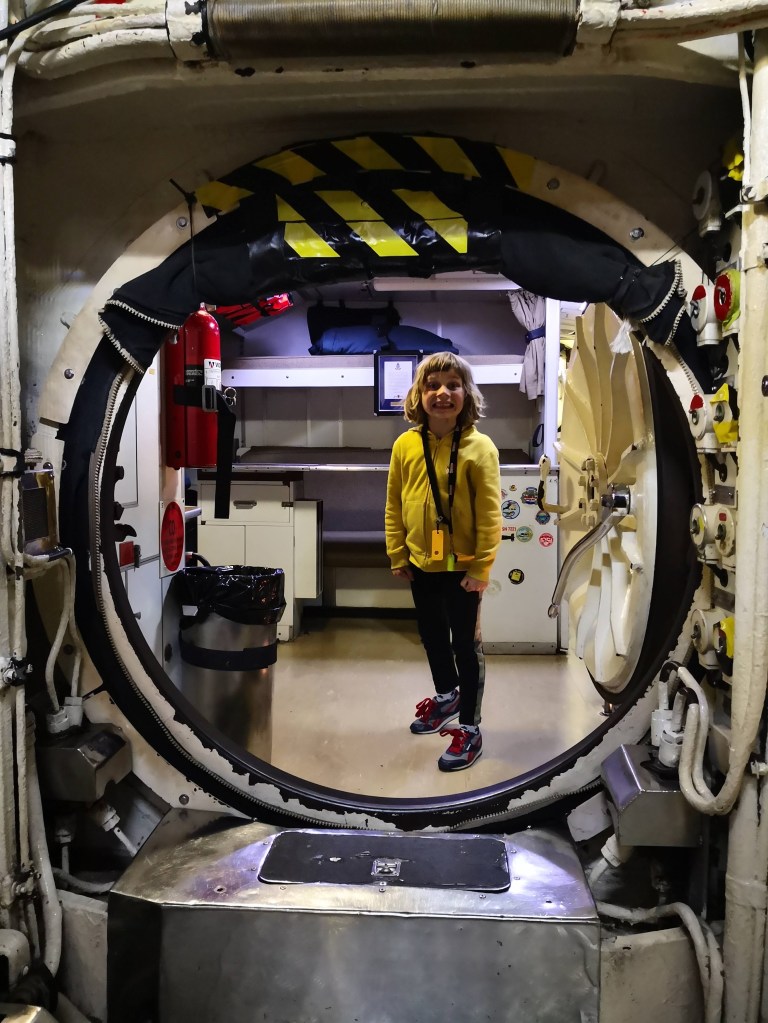
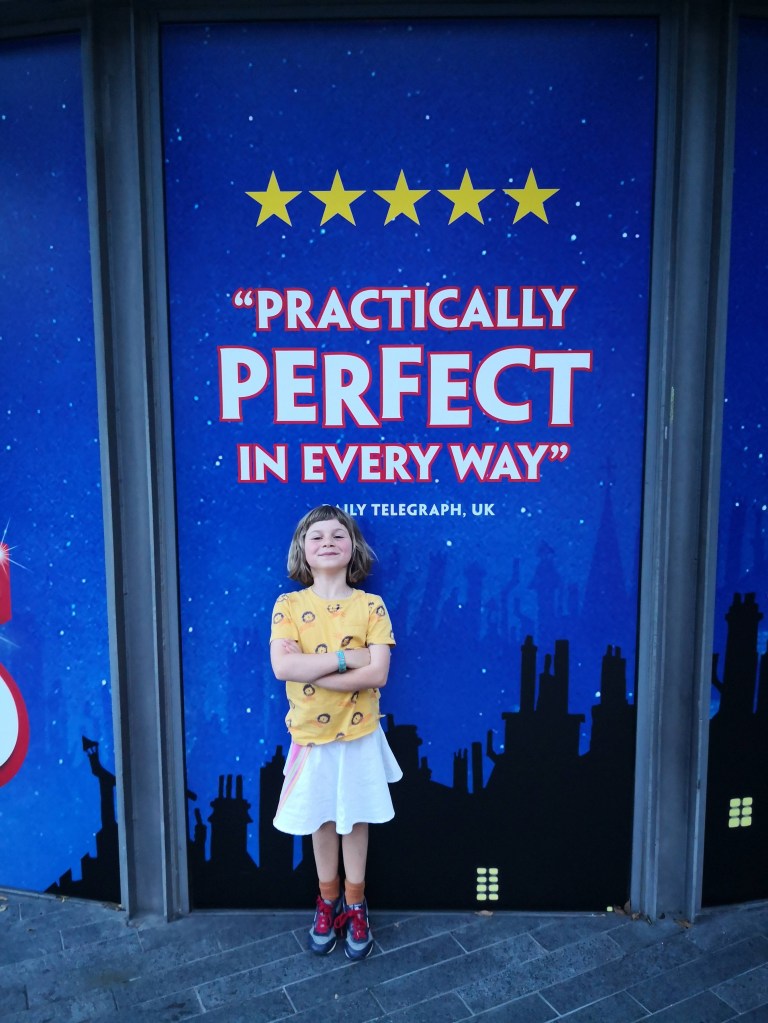
We did manage a few down-days, going to the aquarium, the maritime museum, art galleries an a fantastic live show of Mary Poppins which was mind-blowing. Being able to use our friends’ car for a week was a godsend – thanks Andy and Jess!
We had a weekend in Melbourne to see old Bristol friends. Cold, refreshing, and nice to be away from preparation for a couple of days.
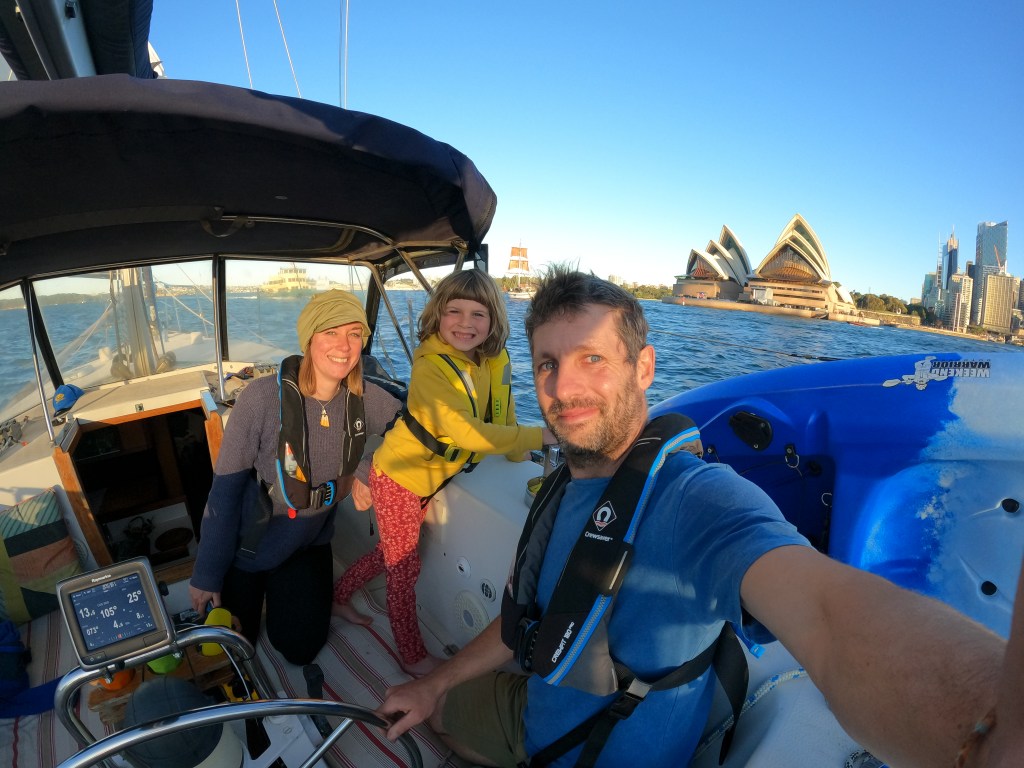
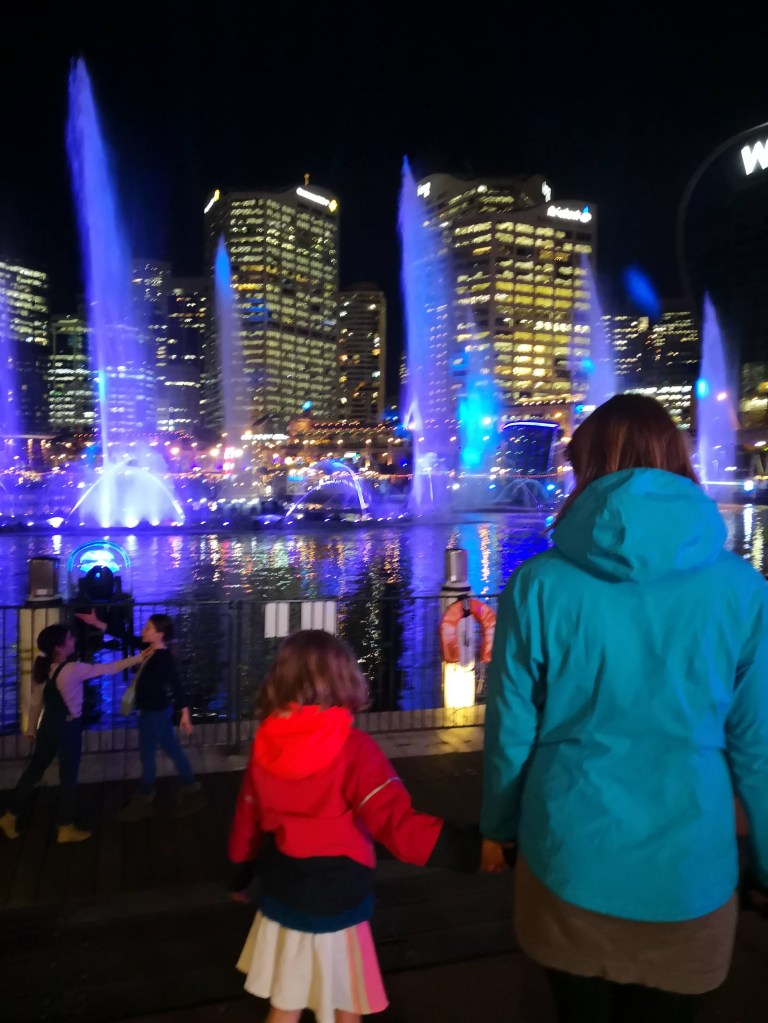
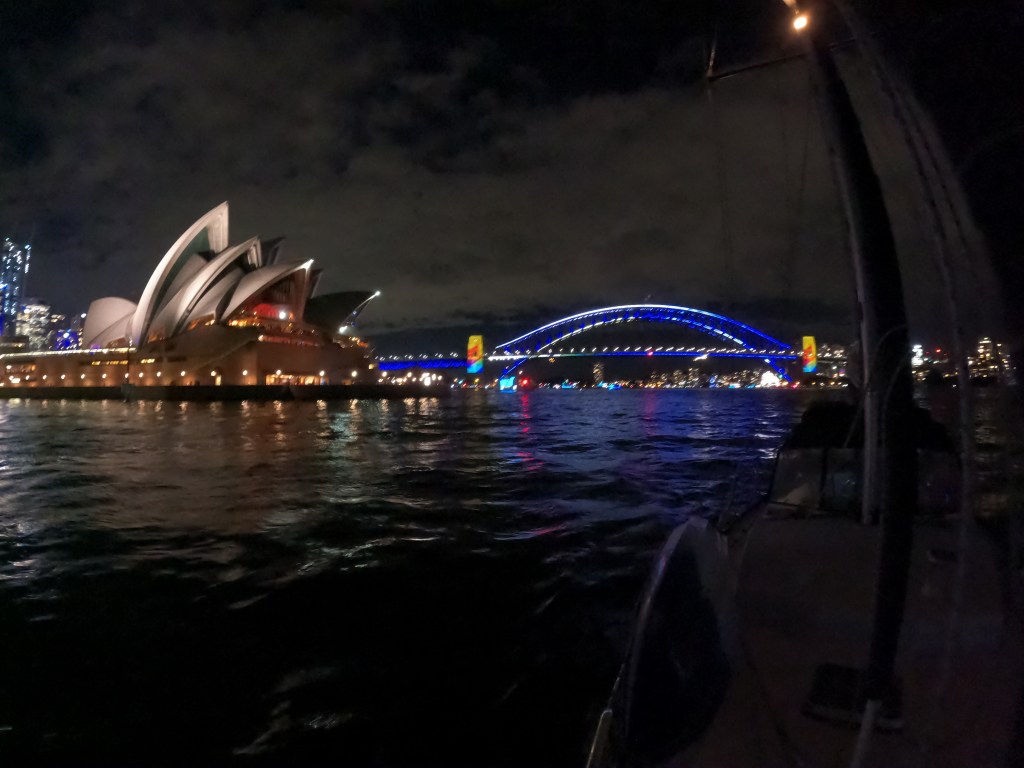
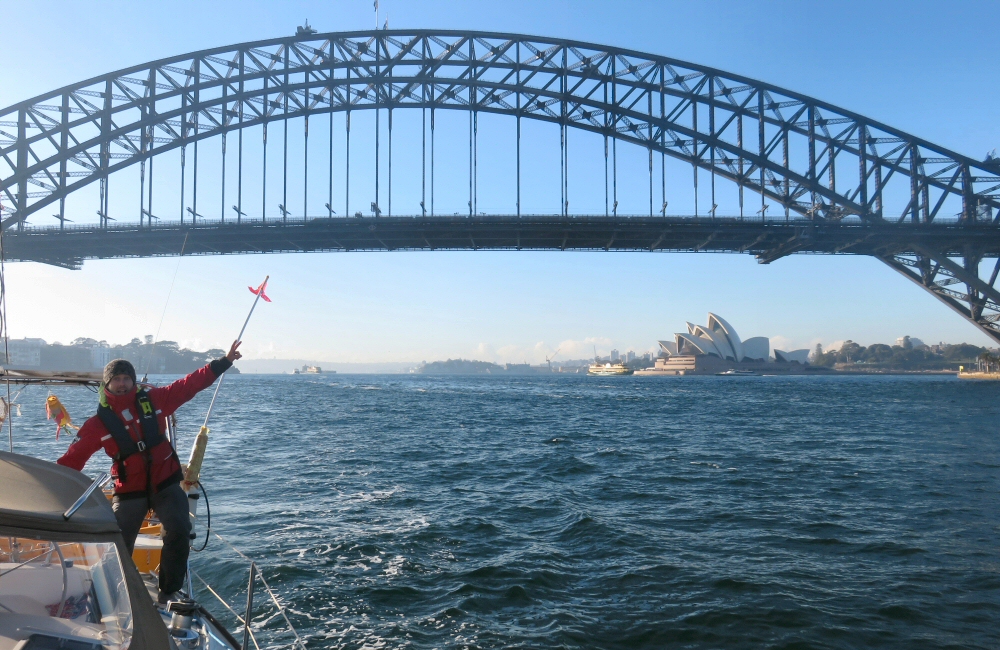
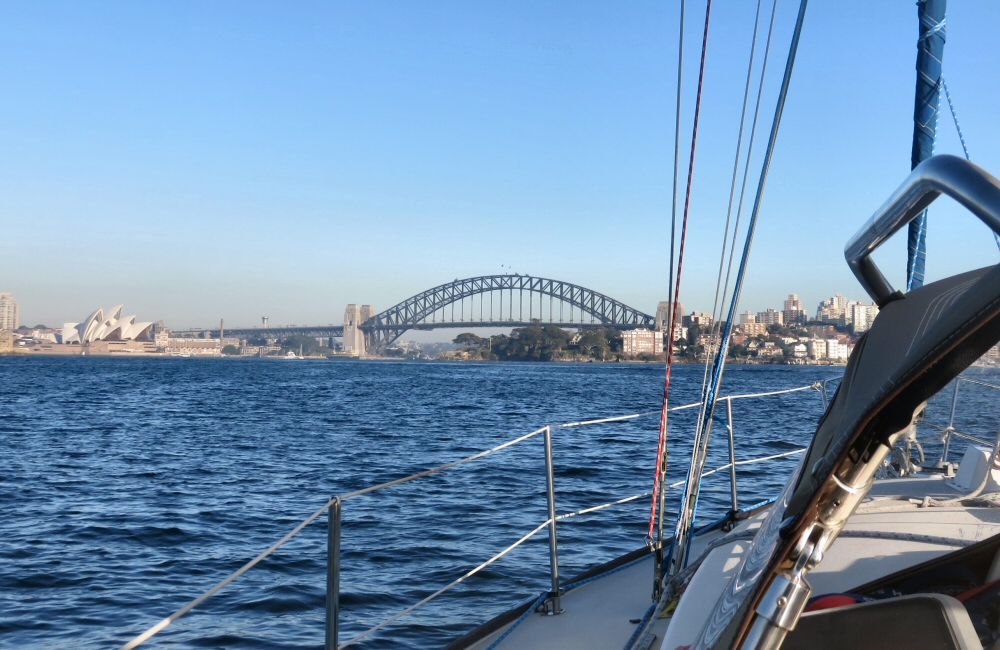
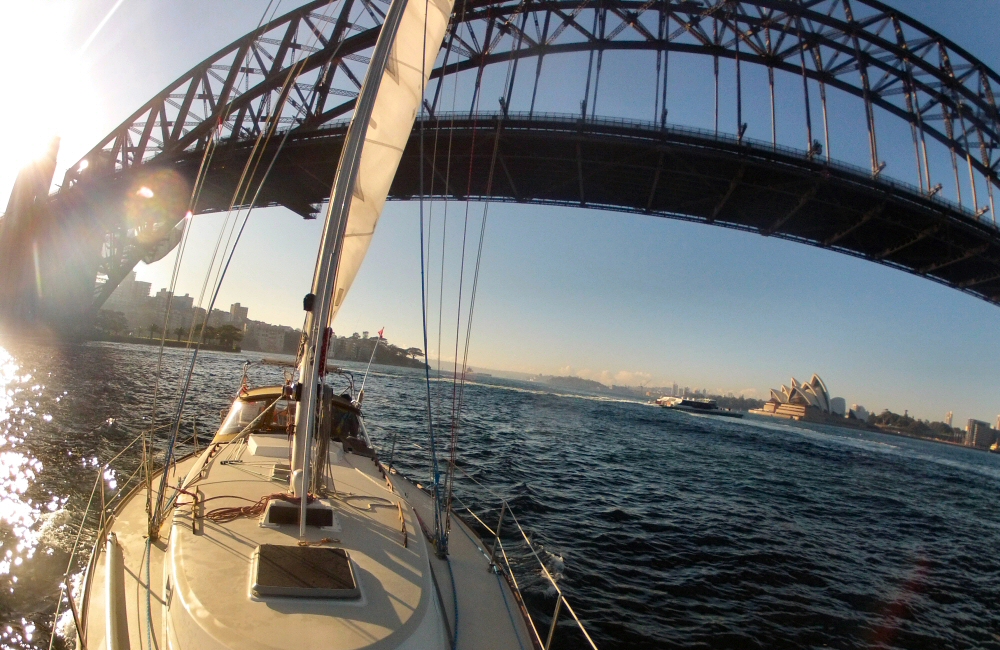
Our last night in Sydney was spent at anchor by the opera house after a tour of the “Vivid Sydney” lights in the dark.
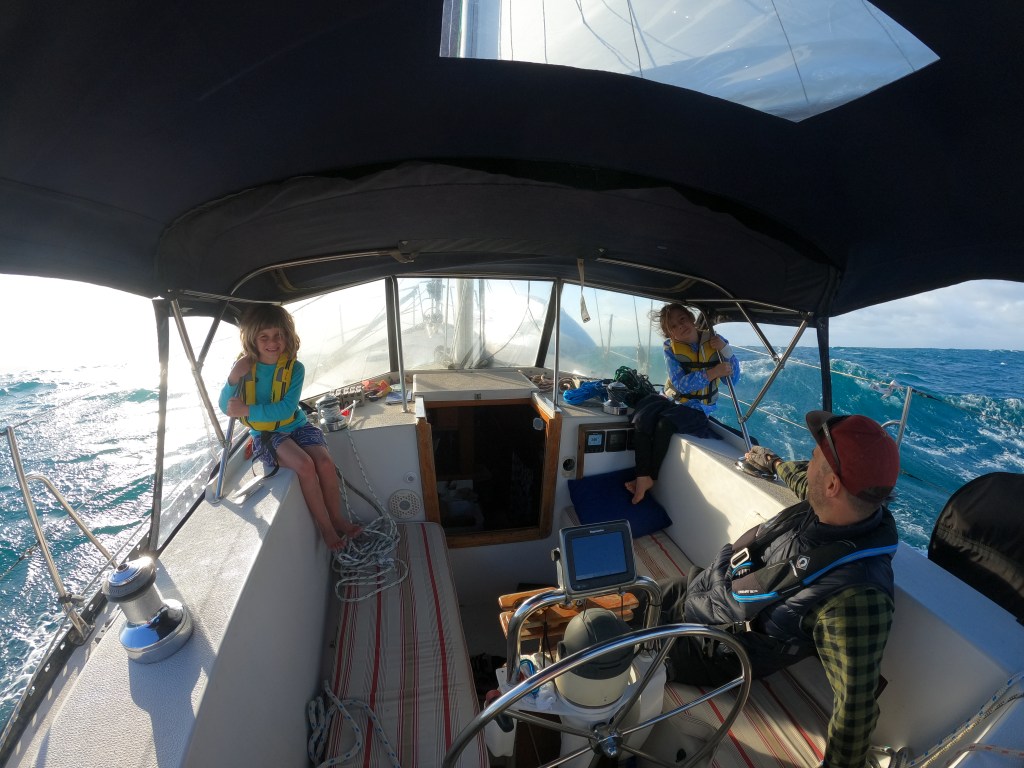
Then in the morning, over to Manly to pick up Andy and Luelle for a 30-odd mile sail up to the Hawkesbury river. 6 or so hours later we tuck into Refuge Bay just before dusk. A frisky sail, with lumpy waves and a fair bit of wind… a good test for Songline and crew. The kids loved it!
We spent a couple of awesome weeks on the road; Sheffield, Dumfries & Galloway, Scotland, Northumberland and one last night in the Yorkshire Dales. Had two nights with Rich and Sam near Sheffield, the first parked up by Redmires reservoirs (memories from Sheffield Uni days!) and the second in a slippery campsite near Bakewell. Caught up with Si and Sue Berry, Kate and Paul Testa and their families.
Drove up to meet John and Helen (and Billy-bob and Rio) in Dalbeattie. Then over to Kirroughtree, and up to Loch Lomond and across to Aberfeldy. Back down via Northumberland, a night in a campsite … then through the Yorkshire Dales … a night way out on the top of the moors where our gas finally ran out; not even enough for a cup of tea 😦
An amazing dawn exploded in the sky behind us as we sailed through the heads into Sydney harbour yesterday morning. Blue skies, light wind, and sun to warm me up after my final morning watch. The “real” coffee I’d been saving was just as tasty as I was expecting. Conditions were perfect for our last day on the Pacific, as my boat and mind turned towards land. We furled the genoa for the last time, cranked the engine on and motored into the city. Turning a bend in the harbour, the iconic Sydney Opera House appeared on the left. I still couldn’t quite believe that we’ve got to The Other Side! Only now that we’ve reached our final destination does it feel like the trip is over, book-ended by the Golden Gate Bridge in California last October, and the Opera House in Sydney – 10,200 sea miles later.
Sydney Opera House!
An epic finish to an epic trip
We picked up a mooring ball at the marina by the brokers, and started cleaning and packing. Dave and I took a taxi into town – the plan was that I would hire a “ute” (pickup) to take the dinghy up to Newcastle … but my driving licence card had expired and I only had a printed copy of my paper licence. If they wouldn’t let me take one, then plan B would be for Dave to drive. All worked out OK, phew. We rocked up back at the waterside with the truck, loaded on the dinghy and all my stuff. I said goodbye to Dave and Eva, and they headed off with huge rucksacks on their backs and heads full of memories.
I spent an hour or so with the broker, showing him around my ship, which looks and feels so different now that she’s completely empty. In great shape though – I hope the next owner treats her well and has as much fun as we’ve had. As the sun set over the Sydney hills, I said goodbye to Rafiki and headed ashore for the last time.
It’s been an amazing journey. Thank you, weather gods, for giving us safe passage, and (amazingly) letting us stay on schedule for over 8,000 miles of passage-making. Thank you Rafiki for keeping us safe and being an amazing home on the ocean. Adios, nana, au revoir…
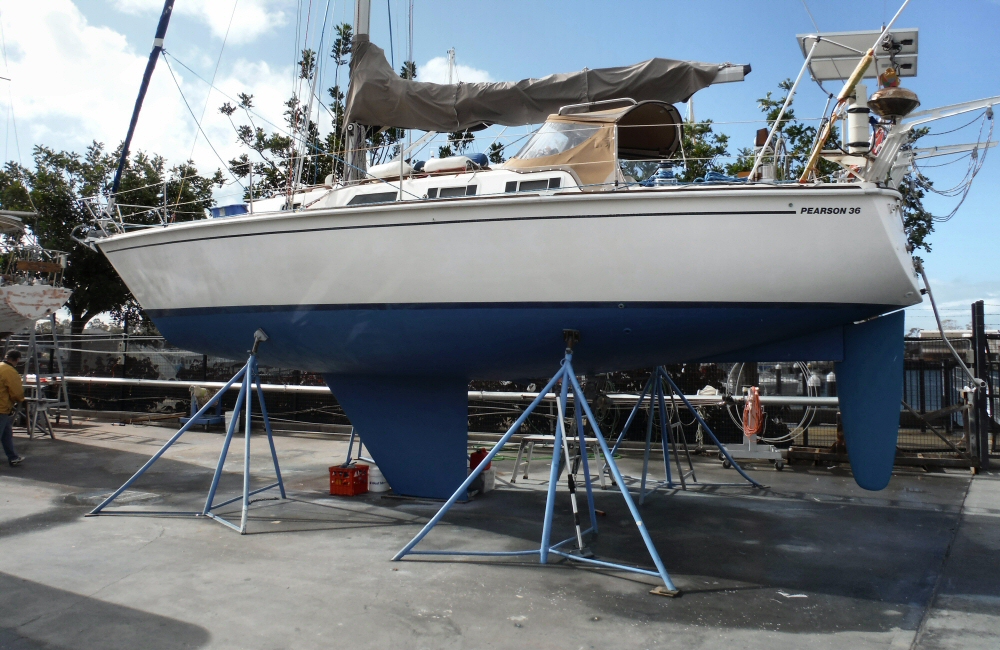
This weekend we have Rafiki out on the hard in Newcastle, doing some tidy-up work before she sells. Yesterday Dave and Eva sanded and painted the bottom while I removed the water maker and took down paintings, pictures and packed boxes with all our stuff. Today I took off the extra diesel tanks, and finished emptying lockers and cupboards. So many memories of amazing times are buzzing around my head. I’m very sad to see this phase of life move into the past, but have exciting things to look forward to – a real mix of feelings. Right now it’s a weird transition phase that I want to get through as quickly as possible. The voyage is as good as over, now it’s a case of complex logistics – importing the boat, moving things around Australia and back to the UK, getting rid of everything else … and only then when all that is done can I book a flight back home. Soon soon!
“Hibari, Hibari, Hibari, this is sailing vessel Rafiki, Rafiki.”
…
“Station calling Hibari, go ahead.”
“Hibari this is sailing vessel Rafiki. We are approaching you from the north, distance approximately 5 miles. We will pass close astern of you. Over.”
“Rafiki, Hibari. I understand you. Please stay clear and give us 1 mile distance. Over.”
“Roger. We will pass one mile astern of you. Rafiki standing by, channel one six.”
Ships passing in the night. We’re about ten miles of the Australian coast, heading south. Departed Coff’s Harbour yesterday afternoon. It’s busy tonight, at least compared to the open ocean. Out there in the middle of nowhere we didn’t see anyone for days at a time. Here, big cargo ships charge past every hour, their lights first appearing as specks on the horizon, blinking on and off as they appear and disappear behind waves. After a few minutes the lights are solid, on full time, as the ship rises above the horizon maybe 5 or 6 miles away. Within 20 minutes, they are right up next to us. Before the lights appear, a little mark pops up on my chartplotter; their AIS signal coming in over the radio. I can see their name, speed, direction, destination, size, rate of turn, how close they are going to pass us, and the time to closest distance. Usually we have an alarm set so that whenever a ship is due to come within 2 miles in the next 25 minutes, the plotter beeps – but when it’s busy like tonight, I’ve got it turned off. We also transmit an AIS signal, so that other ships can see where we are and where we’re going. These days all commercial vessels need to have AIS, which makes night sailing on busy coasts much easier!
A spectacular dawn is breaking, sharp clouds etched in black against a vivid palette of soft watercolour peach, orange and red. Soon the bottom of the clouds will turn red, and then the sun will be up. It’s cold out here tonight, can’t be much above ten degrees. Back in Coff’s Harbour, we endured the “coldest spell in fifteen years” as a “polar vortex” (gotta love the media names for extreme weather) came through, driven by the low pressure that we’d sailed hard to avoid being at sea for. Clear skies, windy, and bitterly cold for a couple of days. They even had snow on the hills not far away! I regretted sending all my warm clothes back to England…
Clearing into Australia was straightforward; we pulled into the marina and two burly chaps came aboard in smart blue uniforms and big clumpy boots. Between them they handled customs, immigration and quarantine. Friendly and efficient, by ten we were all done. So we’re officially in!
With the Aussie flag now flying from our starboard spreader, we’re bashing south into choppy seas and a chilly, gusty headwind. Next stop Newcastle, about 140 miles away.
Rafiki and crew are at anchor, safe and sound in Coffs Harbour, AUSTRALIA! We got in yesterday afternoon (Saturday) after a few days’ hard sailing, trying to get to shore before the arrival of some forecast nasty weather – a deep low pressure system coming across the Tasman sea. We didn’t want to find out what conditions would be like offshore when that came through. Even so, as a final leaving present, the Pacific gave us another tough night on Friday. Another bloody gale, this time with torrential rain. We had 40 knots of wind in complete and total darkness for much of the first half of the night, apart from flashes of lightning north and south.
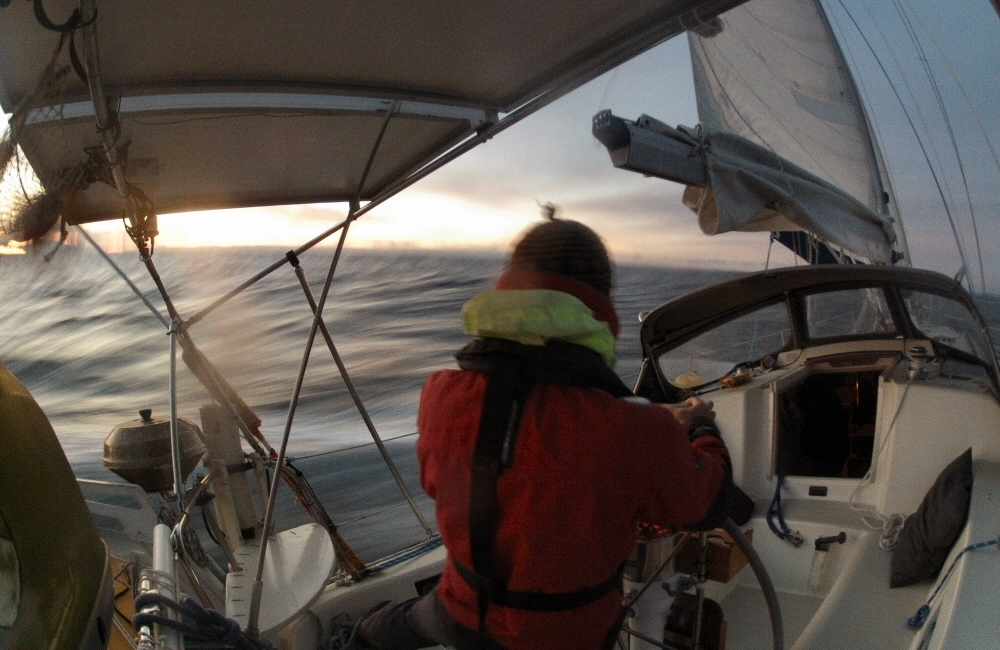
When conditions are rough, we usually just set the main sail with 3rd reef and fore-reach slowly up and over the waves, at about 50 degrees to the wind. I can generally get some sleep while the others are on watch, as there are few decisions to make; we’ll leave the boat set up like this even if it gets windier. Every now and then there’s a huge THUMP on the side of the hull by my head as a wave hits us from a random angle, but there’s nothing we can do about those. But this time, slowing down would mean putting ourselves in potentially rougher weather in a few days, so I gave instructions to “keep at least 5 knots boat speed, but don’t break anything!”. With a scrap of genoa out (too windy for the storm jib) we charged through the night with the wind on the beam. Lots of wind usually means big waves, and big waves from the side are not good – there’s a risk that a large one could roll the boat. As the wind hadn’t been blowing for long, the seas had yet to grow large or steep. We managed to make good speed while I kept a close eye on how the waves were building. No way I could sleep in conditions like this. For a couple of hours when it was windiest, we did roll in the genoa, slow down and head towards the waves – but otherwise Rafiki pushed on, dealing with conditions brilliantly.
Last dawn at sea
The wind and waves eased gradually through until dawn, and by the time the sun came up the sky was almost clear. We had a beautiful last day’s run into Coffs Harbour. Sun shining (but brr, chilly), flat water, 20 knots of breeze and a load of current helping us along. The sea was alive with dolphin, whale, fish skittering over the surface, and loads of birds. I kept looking at the land on the horizon, not quite able to believe that this is the other side of the Pacific. A new continent, not just another island. Over 8,000 miles from Mexico, a third of the way around the planet! As we sailed over the top of New Zealand on our way from Tonga – traversing the whole country’s longitude without stopping – it reminded me of the distance we’ve covered. Chipping away bit by bit, just a hundred miles a day, it’s hard to retain a sense of scale – every mile of ocean looks the same. The cold down here is a sharp reminder that we’re now over 30 degrees south!
That’s Oz, that is. See any ‘roos?
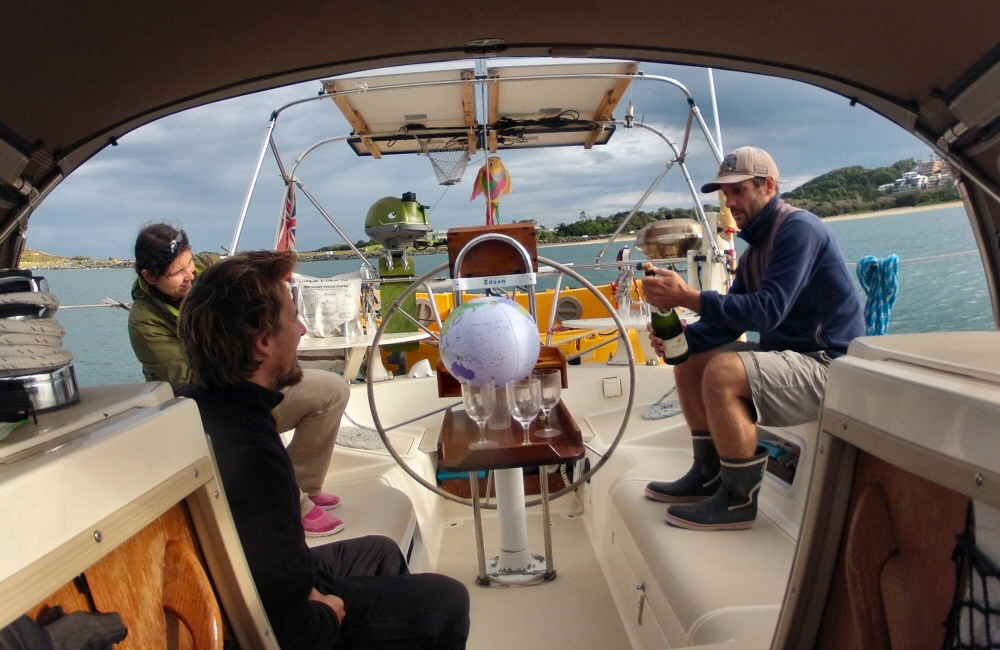
As soon as the anchor was down, out came the champagne! While the trip isn’t yet over, this definitely qualifies as the other side of the ocean. We made toasts to thank Neptune and Rafiki for safe passage, and soaked up the feeling of not going anywhere. My responsibilities as always-on offshore skipper were washed away with a nice cuppa, allowing three weeks of sleep deprivation to catch up with me. Tired, relieved, and happy not to have to face another bout of weather at sea, I slept a deep, blissful 15 hours through till this morning.
Champagne time
We can’t go ashore until Monday without paying quarantine overtime fees, so we’re anchored in the bay, sorting things out on the boat. Cleaning, tidying, oiling teak, baking bread, and trying our best to eat all the remaining forbidden foods that the ultra-strict quarantine are due to confiscate tomorrow.
The sun is coming up behind us after a peaceful night. We’ve been gently reaching along between four and six knots with the wind on the port beam, sleeping well on our off-watches. It’s wonderful to have these calm conditions, even if it does mean we have to run the engine now and then to keep the speed up when the wind drops.
Since leaving Ile de Pins we’ve had two gales, with sustained winds over 35 knots for hours on end. Sometimes that’s OK, when the sea isn’t too rough, or when it’s blowing from behind us like it was from Tonga to Ile de Pins. That was ten days of “squash zone” winds – near gale strength, for over a week. Tiring, but when the boat is set up properly, there’s not much to do other than just run with it. The strong winds we’ve had since then have been coming from the south west – exactly where we want to be heading. So we’ve had a wiggly course with a big bend for each gale as we’ve changed direction to deal with the wind and waves better. First of all a front comes through, with gusts – sometimes over 50 knots – and rain. Then the wind backs (comes from a more anti-clockwise direction, so W rather than NW) and strengthens. We alter course so that we’re pointing as best we can towards our destination, shorten sail to just 3rd reefed main and storm jib, or sometimes when it’s consistently blowing over 40, just the main. Rafiki makes good speed up and over the waves, at about 45 degrees to the wind. Luckily we’ve never seen any dangerous breaking seas, although every now and then we’ve had hideous confused, lumpy conditions. Sometimes when we get too fast, or when the waves get choppy, the boat slams hard coming down off the back of a wave, or when a random wave comes from an unexpected angle. At first this is exhausting – the feeling that something has got to break sooner or later, but after a while I get used to it. The noise, the vibrations, poor boat. But she’s built well and I’m being careful not to push her too hard.
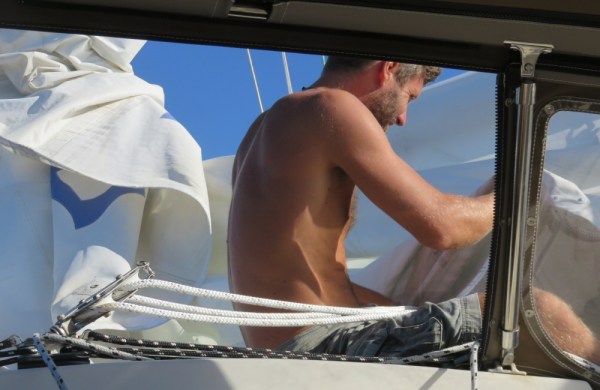
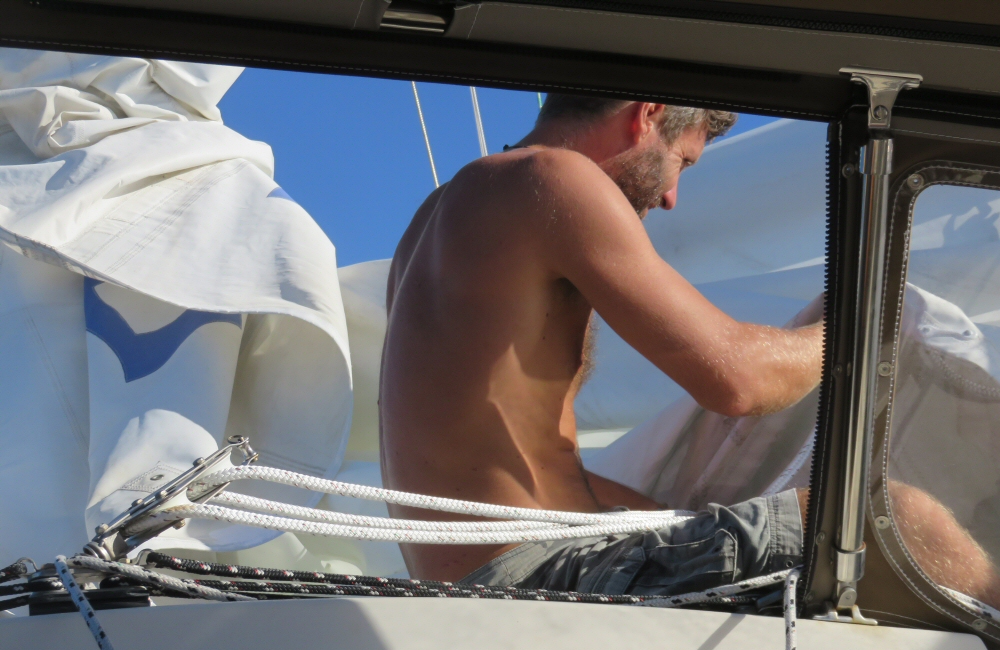
Sail repair at sea
When the winds are up, I’m alert to every noise and movement even more than normal – the consequences of breakages or mistakes are more severe. Even though the wind hasn’t actually been very strong (a “gale” is technically only 35-40 knots), the sense of relief when the wind starts to drop off is really noticeable.
It’s a lot colder down here; we’re now at 29 degrees south and well outside the tropics. I’m wearing full UK-style sailing gear at night; fleece, big jacket, salopettes, woolly hat, boots. There’s a sleeping bag in the cockpit to keep the wind off and provide a cocoon of warmth, at least for a while while I’m sat still, reading, between the regular sail tweaks and routine checks. A double-size serving of coffee or tea in my sea-mug at the start of the watch kicks my metabolism into gear and keeps me warm.
It’s our 8th day at sea since we had a rest stop for a night in New Caledonia and we’re set up with our offshore routine now – I like taking the same watch each night, which is what we’ve been doing since about half way across – from Bora Bora I think. My day starts at 0300 when Eva wakes me for my stint in the cockpit. We always have someone on deck to deal with sail trim and watch out for ships. My watch technically lasts 4 hours till 0700, but nine times out of ten it runs well beyond 0800 while the others sleep on. I enjoy the time with the ship to myself. I send and receive emails at the end of the watch, getting an update on the weather forecast at the same time. When the others are up and we’ve handed over, I try and get on with something below decks. Read a magazine, sometimes watch a film, write in my journal. My ukulele skills are not improving very fast at all! Lately I’ve been going through my music collection, digging out gems I’ve not heard in a long time. When it’s blowing a hoolie, I generally don’t sleep much during the others’ watches, so I grab the odd half-hour or hour when I can during the day. Lunch time is always together, usually in the cockpit, and usually tuna salad with crackers. I don’t want to see another cracker or tuna salad for a long time… I rest for a while, and then I’m back on deck at 3pm for my next watch. Dave and Eva take the opportunity to go below – during the day they are on and off duty as one person. I read in the cockpit, watch the sea roll by … till 1630 which, Rafiki being a fine British vessel, is tea time. After a nice cuppa and biscuits or crisps, we have an hour or so before starting to think about dinner, always a hot meal. The weather hasn’t affected our culinary experience at all – coming into New Caledonia I was on watch dealing with a nasty bit of weather, boat heaving all over the place, rain lashing down, while Dave and Eva were down below preparing sushi rolls with the tuna we’d caught earlier in the day. Gale sushi! We’ve had lasagne, pear crumble, fresh bread … it’s just lunch that’s become a bit repetitive. After supper, I hand over the watch to Dave, and try to get some sleep. I find a cosy corner in the main cabin, positioned where I can just open one eye and see the instruments at the chart table. Combined with the noises and motion of the boat, the numbers blinking away in red lights tell me all I need to know as I doze through the night until 3am again.
So, on this calm morning, I’m sending one of our last position reports, less than 170 miles from the coast of Australia. It’s been a great 24 hour run so far – more than 120 miles. I can almost smell the eucalyptus trees. Getting quite excited now. The initial plan was to make landfall at Newcastle, just around the corner from Sydney. But now we’re making best speed possible towards Coff’s Harbour, 200 miles north, because there’s a deep and nasty looking low pressure system due to arrive off Sydney/Newcastle on Monday. We want to be safely tucked up in port by then. At the moment our e.t.a. is Saturday evening, and we have plenty of fuel to motor all the way if the wind drops. All being well, my next update will be from shore!
As we approached the southern end of New Caledonia, it was evening and getting dark. Not a good time to be nearing an extensive area of shallows and reefs, especially with 30 knots of wind behind us and a chunky south east swell. The original plan was to stop in a protected bay for the night, get some rest, and move on. I generally won’t go near new shores or anchorages at night (even with a full moon), which would mean we’d need to hang around at sea for the night and go in at first light the next day. Spending a night at sea not going anywhere needs a motive, so I called a pow-wow to confirm that everyone did indeed want to stop, and that we weren’t in one of those situations where everyone was going along with the plan just because it was the plan, against their inner wishes. After discussing the pros and cons, we decided to stick to it. We hove to (turned the boat sideways and put the sails in a position where we just drifted slowly), and Dave took the first watch. I never sleep well when we’re getting close to land (fortunately!) so I took over at 11pm and snoozed on and off in the cockpit until dawn, keeping an eye on our drift speed and direction. At the first glimmer of light I loosened the sheets and we charged off again, towards Ile de Pins – Pine Island.
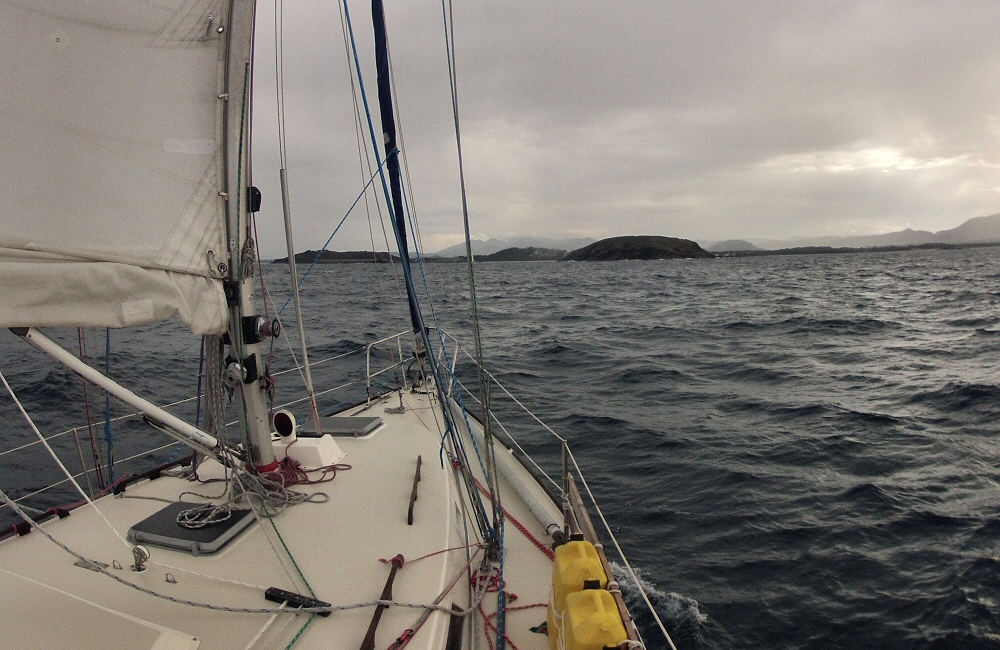
By mid morning, we had the anchor down in Kuto Bay. So quiet. When we’ve been at sea for days, and then come in to anchor, I realise quite how much non-stop sound and motion there is on the boat while we’re on passage. It feels so good to just stand in the middle of the cabin, not holding onto anything, eyes closed, soaking up the peace. A quick tidy up, and ocean going vessel suddenly turns into cosy home again. All I can hear is the gentle swush of small surf on the beach a hundred yards away, the odd car going by, and distant bird and insect noises. The sun has come out – first we’ve seen of it in days, it’s warm and comfortable. Time for a swim! Cold water. And then the luxury of a fresh water shower, the first in weeks.
We went ashore for a couple of hours as illegal immigrants – we’re not checking into New Caledonia as the nearest Port of Entry is Noumea; miles and miles away, and we’re only stopping for a night. Nobody’s going to trouble us here. There are a couple of other boats in the anchorage, but otherwise it’s pretty empty. One hotel ashore is quiet; it’s mid winter and definitely off-season.
The vegetation is amazing. Called “Pine Island” for pretty obvious reasons, the tall spindly pines, not like ones I’ve seen in Europe or the USA, grow in and around coconut palms and twisted tropical deciduous trees. There are low scrubby bushes, and also a type of pine with little spiky seeds/cones that look like mini pineapples, about the size of an olive. Just like the ones we found as kids on the beach in Kenya, but these trees have soft rather than stiff needles. Up close, the needles look like articulated spiders legs with hundreds of joints. I walk around for a couple of hours barefoot, soaking up the feeling of the land through the soles of my feet. The sand on the beach is fine, white, powdery. All across the Pacific so far it’s been coarse, broken shells. My skin enjoys the softness as I wander along. There’s seaweed on the beach; soft and squidgy where it’s washed by the waves, and crispy above the tide line where it’s dried out. Pretty looking gulls with red beaks squawk at each other. Swifts fly around – I wonder are they stopping here en route somewhere else, like us, or is this their home?
Back on the boat I get a couple of jobs done, and then get a call on the radio to say that Dave and Eva are ready and need picking up. The engine packs up just as I get to the beach, right where the swell is breaking – I have to hop over the side in water up to my chest to hold the dinghy steady while I try and restart it. No joy, so I get the oars out and make the pickup under human power as it starts raining.
After a long and peaceful night’s rest, we’re now off again for another ten or so days at sea – the last long passage. We’ve got twenty knots of breeze on our beam, and are flying along at six to seven knots. Yesterday’s swell has died down, and the motion is comfortable. Long may it last. Australia here we come!
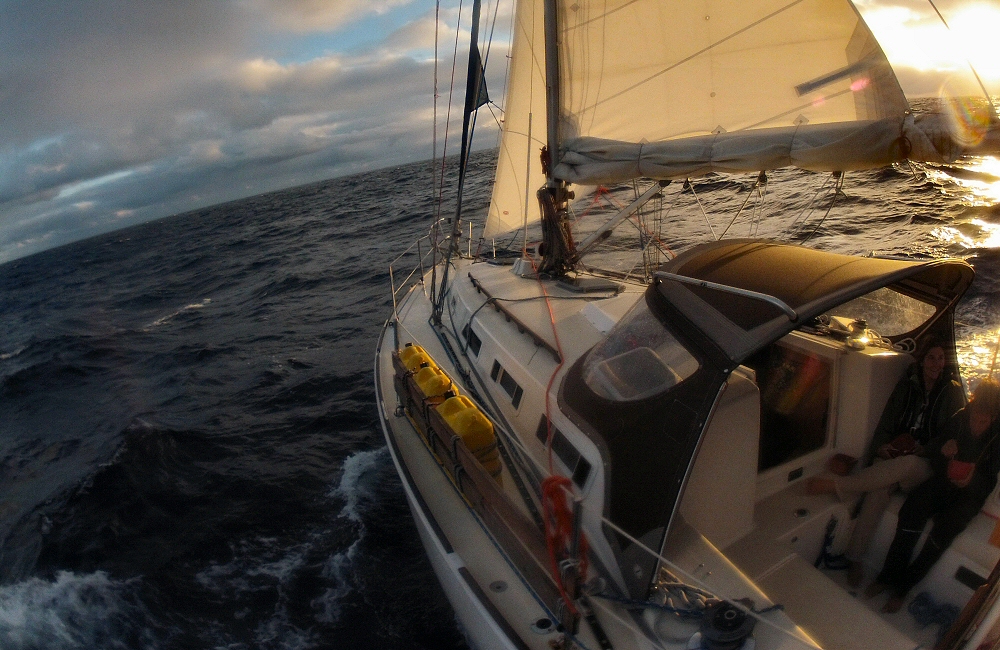
Some pictures from the passage from Tonga :
Sail repair
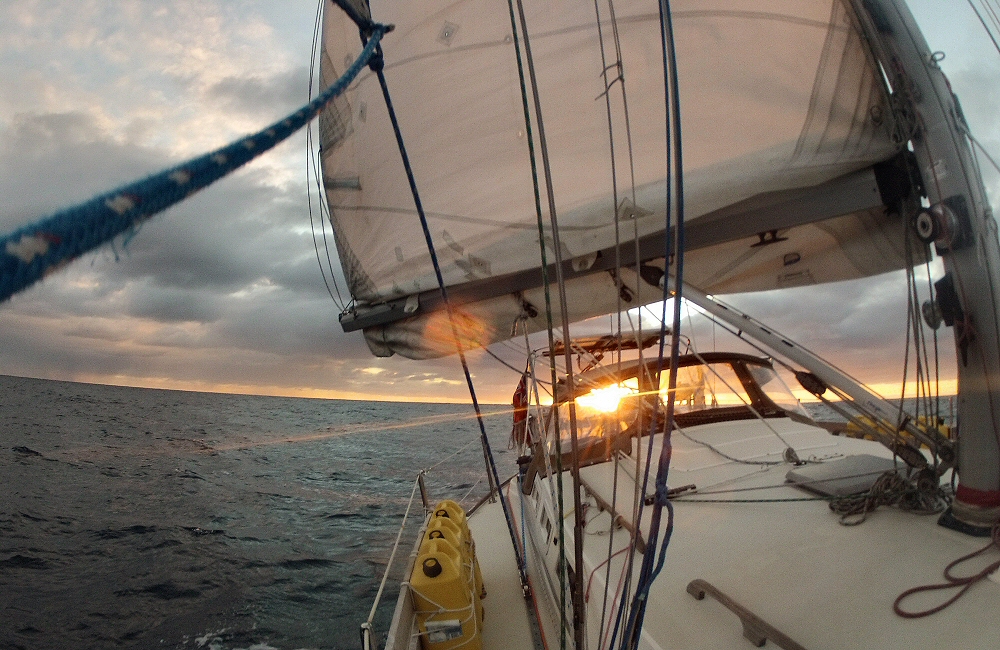
Sunrise, storm jib up
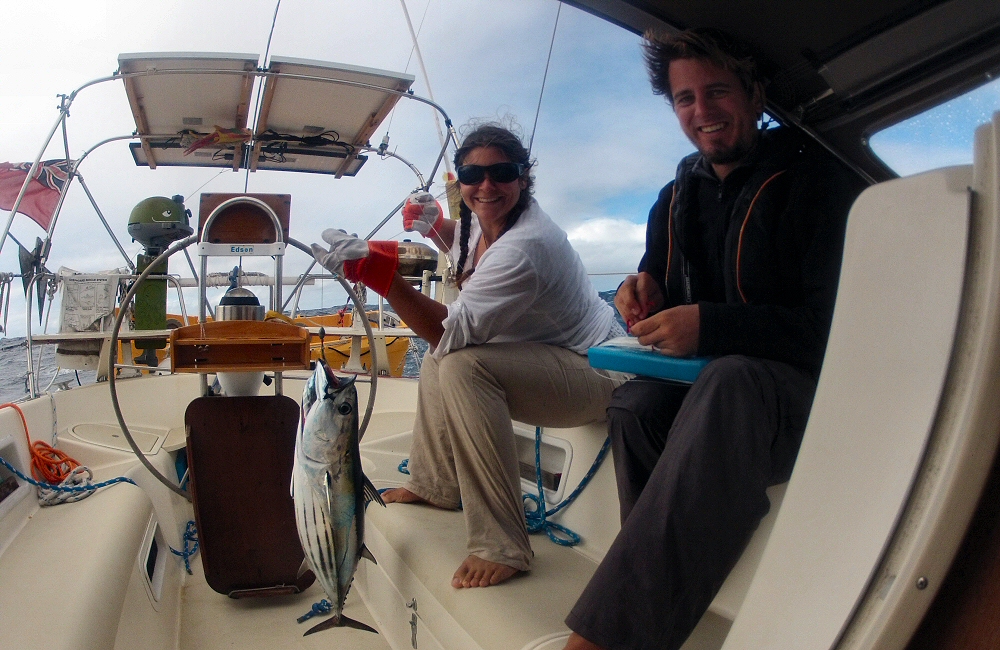
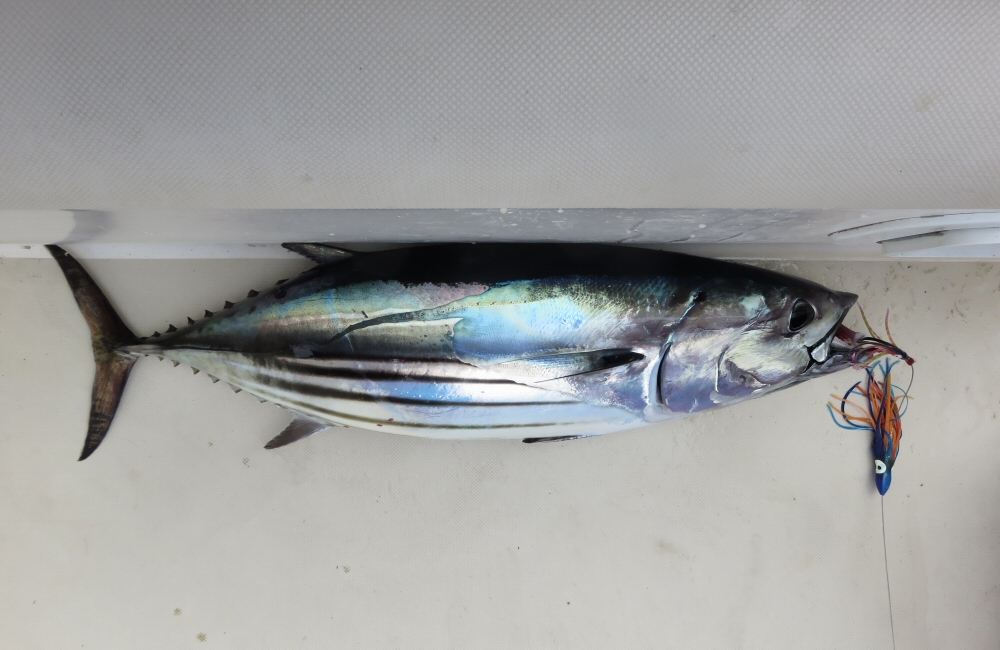
Oh, and we caught a FISH! So there are some left in the Pacific after all … this fella fed us all for 5 meals straight. Tuna for dinner, lunch and breakfast for a couple of days, and sushi as fresh as it gets. Mmm.
Two small black birds shoot up into the air from behind a wave, twisting around each other before disappearing again, temporarily hidden amongst the moving folds of the ocean’s surface. I look to see where they have gone but it’s impossible to find them. There’s so much movement out there, and the birds skim so close to the water you can only see them when they rise and are silhouetted against the sky.
Out of the corner of my eye I see a sparkle. Silver shapes skitter away on the surface, desperately trying to get away from us as we invade their wave. The flying fish are back! I’ve been surprised at how few we’ve seen over the last couple of months. There were loads on the first crossing from Mexico, along with dolphin and whales … but then almost no sea life on the open ocean until just a few days ago. This morning a small pod of dolphin came to say hello just after dawn, too.
The bigger flying fish seem solitary, powerful, confident, professional flyers, sometimes flying so far that they are too small to see before they disappear under the surface. The smaller ones scatter in panicked shoals as we approach, their immature wings and obvious lack of skill getting them over only one or two waves at best. Does a shoal of flying fish become a flock as soon as it takes to the air? For the impressive amount of time they manage to stay airborne, in the transition zone of moving wind and water, they seem as capable as any sea bird. Navigating the rise and fall of the waves just millimetres off the surface, fish or bird – the big school of the sea has taught them the same flying lessons. Except where the bird ends its dance along the surface with a swoop into the air, as though it had just been catapulted into the sky, the fish just disappears into the face of the wave with a little explosive splash. Sometimes there are so many, it looks like a machine gun being fired into the sea. When the sea is rough, their blue and silver bodies are lost from view over a blue and silver ocean, only the re-entry detonations showing that they were ever there at all.
They are amazing creatures, with huge see-through, spiny pectoral fins that act as wings, and a large lower rear fin which works as an engine to get them going. Flick flick flick, back and forth underneath them drawing lines in the sea for a few yards as they build up speed. The line stops and then swoooosh, they are in the air.
Fish becomes bird.
Sometimes, the flight ends too soon, at a distance the fish decides is not yet far enough away for comfort. Still skimming above the surface, his tail connects with the sea and flick-flick-flick, he’s off again. Sometimes he’ll make a sudden change of direction as soon as his engine touches down, his silver and blue body darting off across the waves for another fifty yards, going completely the opposite way. Amazing.
In the early hours of this morning I was lost in thought, mind wandering with the stars, enjoying the first peaceful night watch for a week. Then WHUMP! Something collided with the spray hood just behind my head. Then quiet again. Just the sound of the wind and the waves. I cautiously poked my head around the corner and a huge glistening flying fish lay stunned on the side deck, motionless. He was a monster – perhaps 30cm long, wedged between the diesel cans and a porthole. I dashed below for a camera and tried to snap a photo, just as the would-be kamikaze pilot came to his senses and started flapping about. His back was an incredible, almost iridescent blue, unlike the dark navy blue ones I sometimes find dead on the decks in the mornings. Do they change colour when they die, like mahi mahi, or perhaps there are different species? I opened out his wings to take a good look, amazed by the perfection of each spine and curve. The thick bullet shaped body was pure muscle, evolved over millions of years for explosive speed.
I was tempted to keep him for breakfast, but as he started to flap around more frantically, his mouth open gasping for water, I decided he was better off back in the sea.






 Road and Ocean