Cosmic dance floor

I’d just dozed off, spreadeagled over the forward berth, Rafiki gently rolling along, the soft gurgle of the bow wave singing me a lullaby just on the other side of the thin hull. Fan whirring, breeze on my skin keeping me cool. Looking forward to a good few hours rest before my watch starts at 11…

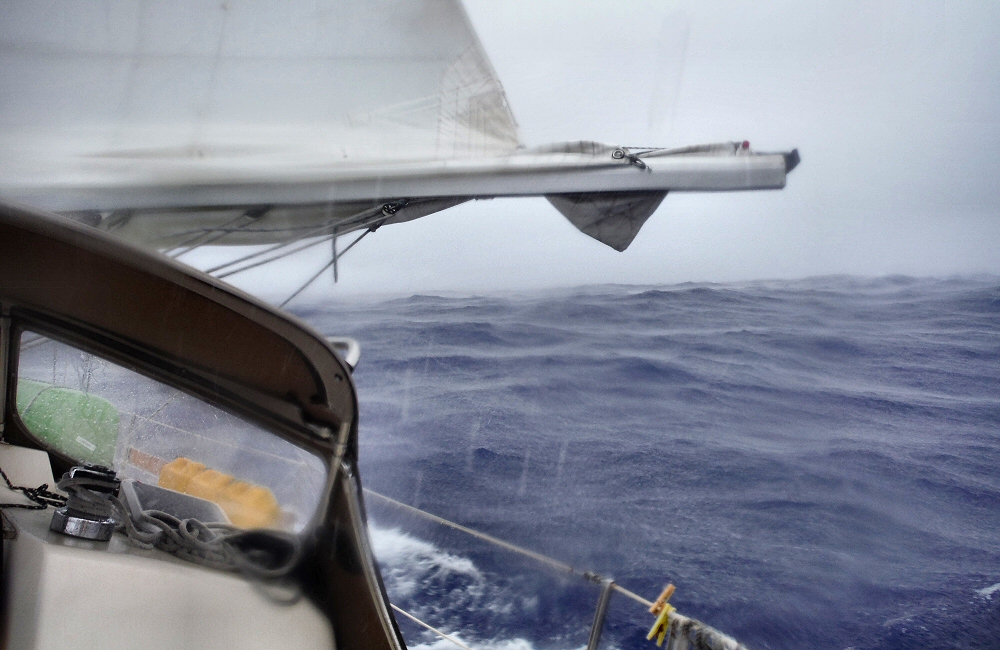
Brain asleep but ears still wide awake (a sailors ears never rest), I hear the surge of water under the bow suddenly get louder. The boat accelerates, charging off down a wave, heeling over. Where there was silence on deck before, wind is howling in the rigging. I’m awake in a snap. Some instinct tells me that action is needed, NOW, dumping a load of adrenaline into my blood. We’ve been hit by a squall. A windy one. A sail is flogging wildy outside, a loud, vicious cracking and banging. Help is needed on deck, fast. Glancing at the instrument panel as I dash out I see we have 46 knots of wind. By the time I make it up the steps, only seconds later, it’s well into the fifties. Eva is struggling to roll in the jib – it’s crashing around at the front of the boat and even though it’s already half furled, it needs two of us hauling on the line to bring it in. Instinctively I’ve taken control of the helm with my free hand to bring the boat up into the wind to make the job easier. Now I need to decide which direction steer in. Only seconds ago I was asleep, and now I’m standing in the cockpit just in boardies, wind howling, in the dark, unable to see anything through the lashing rain other than a big white flogging sail. The rest of my senses are now fully awake, each shouting their messages at my brain, which is trying to decide what to do with all the inputs. It’s a bit disorientating. I spin the wheel to starboard to ease off the wind a bit, the main fills, and we’re back on our way.

And then suddenly the wind is gone. Back down to ten knots, just like that. Surreal. We’re left befuzzled. It can’t have been more than sixty seconds overall, from fifteen to fifty and then back down again. It’s strangely quiet. Heavy rain dampens the sea, and it’s not yet had time to become alive again. I spend some time untwisting the genoa sheets and checking all is OK, change into dry shorts and then head back to my bunk. Rafiki cruises onwards through the night.

I’m woken again some time after eleven by a quiet voice. “Chris … Chris … time for your watch”. Eva had to finish a line of knitting before finishing her stint on deck, so I got an extra few minutes’ rest. Bonus.

It took me ages to fall asleep after the squall, running through the action again in my mind, so I can’t have had much sleep. Feeling a bit groggy. It’s cool enough tonight to need a tee shirt, so I fumble in the dark for one that doesn’t feel too salt-encrusted and grab my lifejacket on the way up to the cockpit. We exchange the usual chit-chat between watches;

“No change in the wind, a few clouds overtook us, no rain this time, looks like the sky is clearing. All well. Have a good watch!”

“Thanks. Have a good sleep!”

In a few minutes, I have the boat to myself. We’re rolling along directly downwind like we have been for the past few days, but the sky is now clear. We’re chasing a bright half moon, dead ahead of us. The moon is chasing the sun, now way below the horizon. It’ll just be me and the stars in a couple of hours. Sitting on the cockpit seat, looking aft at the mesmerising waves, I’m struggling to stay awake. Can’t afford to sleep. Must look out for squalls. They sneak up in minutes from over the horizon, big dark clouds, with a mystery package underneath. Sometimes benign, sometimes nasty. Gotta be ready for each one. Just in case. Mustn’t fall asleep. Tired eyes…

Time for some tunes. For a sugar rush I stuff down some dried fruit. Still loads of pawpaw and pineapple left over from Mexico. The others won’t touch it it’s so sweet. For me, it’s perfect at the start of a night watch. I wrap my trusty big headphones over my ears, select a dance set from way back in the day, and hit play.

Sugar finds its way into my bloodstream, tunes are injected straight into my brain. Boom! I’m up and dancing under a huge sky of stars. The night is so clear that I can see them all the way down to the inky black waves on the horizon; a full hemisphere of wonder. The motion of the boat under the sky makes colossal creatures of the night gyrate around me, as I gyrate around the cockpit; Scorpion, Lion, Wolf, Bear, Swan, Dragon, Dolphin – and a load I can’t identify. The lurching deck also adds a random drunken motion to my movements … or maybe that’s the leftovers of the evening’s most excellent Gin & Tonic being flushed out of my system? It was a special one, with ice. It takes a week to make a drink’s worth of ice in our wee cooler.

Flickers of phosphorescence flash down the sides of the boat, ignited by the bow wave. Like tiny little fireflies rushing into the darkness. Every now and then a shooting star whooshes overhead, ending millions of years of interstellar travel with a beautiful blaze of light in the Pacific sky. Everything seems magically in time with the music as I wobble and wiggle insignificantly but enthusiastically.

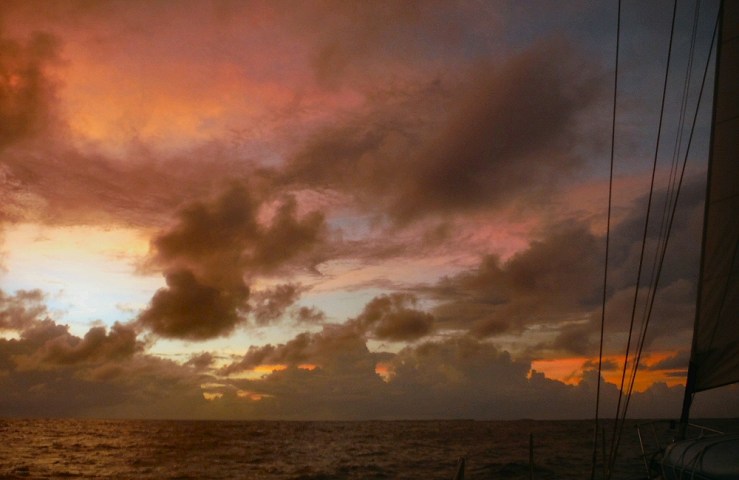
The half moon grows as it nears the horizon, an orange segment on its back, sinking towards the sea. The reflection on the water almost as bright and colourful as a sunset. The backs of waves all the way to the west catch the last flickers of colour – a cold golden – and then the moon is gone, leaving behind the limited, beautiful, monochromatic palette of a tropical night at sea. It’s become a little darker, but not much – now the milky way splashes over the top of the sky, the southern cross at one end and some bright planet at the other. The light at the top of the mast – our own little star – is scratching haphazard patterns in the blackness as the boat plunges and rolls underneath… the ocean using the boat as a pen to write secret messages in the sky above. Or is it just playing “join the dots” with the stars? I jiggle and jive, soaking it all in.

Rafiki joins in with the tunes. Sails go slack and then boom as they fill with wind, like a drum. Each wave brings a squeak and a creak and a whoosh and a fizz – but I can’t hear most of it. Ihe volume is on max, I’m transported to a magic place by the music and motion. Feet planted motionless on the deck – can’t wake the sleeping crew members in the cabin below – I’m still throwing full-body shapes, the boat moving my legs for me. It calls for a lot of improvisation, moving in a way you can’t do ashore … I’m not going to win any points for style but there’s nobody here to watch! Every now and then the boat makes a big roll and I take a break from waving my hands in the air like I just don’t care to grab something solid, so I don’t end up in a heap on the floor. The movement of my muscles and joints feels so good after days of relative inactivity aboard.

The watch goes too fast, it’s past 3am, and soon Dave is moving around below, preparing for his stint. I was hoping he’d stay asleep and I could keep going for a while. But I need the rest so reluctantly say goodbye to my cosmic dance floor, hand over the watch and head below.

“No change in the wind, no clouds, no rain, the moon went down, not much else to report. All well. Have a good watch!”

“Thanks. Have a good sleep!”
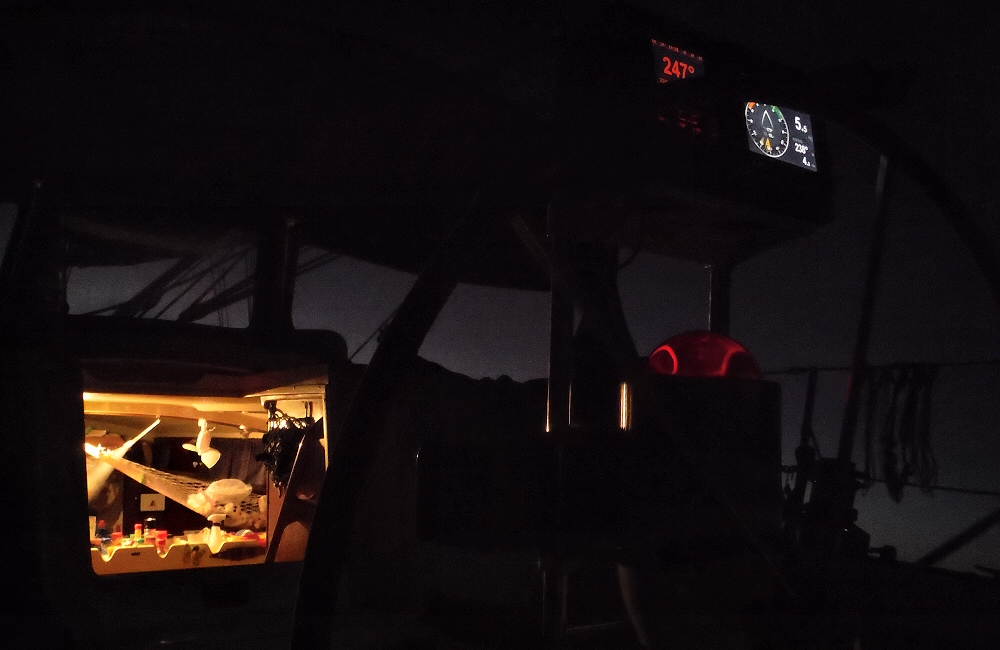
Rolling along at 16 south

Yesterday morning the easterly trade winds arrived and blew the squally, variable weather away – yippee! Under a sky full of the little white fluffy clouds that are the sign of trade winds in the tropics, Rafiki blasted off downwind with a reef in the main out to starboard, and a three-quarter jib on the pole out to port. As the sun made its way across the sky, the 20 knot wind blowing us westward gradually added its own mix of waves to the southerly swell. By evening we were riding on an ocean of heaving water – large, but gently undulating blue, blue waves, not unkind – effortlessly lifting 7 tons of boat each time a wave passed underneath us. So different from that chaos of water we had a couple of days ago.

These waves come either from directly astern; the easterly wind waves, or from the port quarter; the southerly swell. Sometimes there’s a mix of the two wave trains, amplifying each other to make a larger peak or a deeper trough. A wave comes from behind. The stern lifts gently, we start to speed up as the boat slides down towards the bottom, the bow wave surges and gurgles, leaving a carpet of hissing bubbles rushing down each side of the boat. The wave passes ahead, we slow down as we slip down it’s back. A southerly wave comes along. The stern lifts again, but this time, pushed from the left hand side, it slides to the right as it lifts. We accelerate at an angle down the wave. The boat rolls over to starboard, tucking into the down-slope of the wave. The jib, out to port, is now almost side-on to the wind and ready to fall slack, but the autopilot has already anticipated this and the wheel automatically turns a few degrees to bring the stern around and the boat on course again. As the wave passes under us, the boat rolls back upright and slows down. There’s nothing to stop the roll so we keep going, over to the left, in the trough between the waves, ready for the next one.

When the waves are consistent, it’s a wonderful, rhythmic, peaceful yet powerful motion. 20 knots of breeze pushing hard from behind keeps the sails full, boat speed in the high sixes, and the steering responsive. A fast rushing charge down the front of the wave, a deceleration as the wave overtakes. The boat’s motion is significant; perhaps rolling 20 degrees to each side, non stop hour after hour, but it’s not violent or unpredictable. This is what tropical downwind sailing is about. The regular surge and hiss of water as each wave passes under us, making its way to the horizon … white clouds scudding across the sky above … Rafiki alone on the ocean, surrounded only by the white tips of the waves blown off by the wind.

Every now and then we get one of the mixed-up waves; a bit of east and a bit of south. The boat slides, skews and dips in a way that sets off a much stronger roll. Anything not stowed properly below falls with a crash. Usually it’s a carelessly placed mug or plate, sliding across the galley counter into the sink. At least it will be safe there. Lying on the cockpit seats, we dart out a hand or foot to steady ourselves until the boat sorts itself out. It’s almost always two rolls to each side, and then calm again. Sometimes the wind catches us at the bottom of the wave, pushing the boat further over and setting us surfing as the autopilot gets us back on track. What an incredible piece of kit- the autopilot learns from previous motion, a 9-axis gyroscope built into the computer detecting roll, pitch, yaw, rise, fall, turn, acceleration and deceleration, feeding all this into the drive unit to keep us going on an almost perfect straight course across the sea. It’s driven us pretty much all the way from Mexico.

Today, much the same. Roll left, roll right, chill out for a bit, bigger wave, bigger roll. And over again. Except today we don’t have the fluffy tropical clouds. The day started out with a clear sky which I thought meant another day of solid trade winds. A good 20 knot breeze pushed us through the morning to a passage record of 134 miles noon-to-noon, but now we have a succession of tall, billowing cumulonimbus clouds marching overhead, with variable winds. Clear blue skies are punctuated by periods of grey and a little drizzle under each beast. Every cloud that passes over kills the wind – but the waves and rolling keep going – and without wind to keep the sails full they slat and slam horribly with each roll. First the jib out to port, and then the main on starboard, going slack as the mast falls towards the water and then filling again with a slam as the boat comes upright. I feel for the poor things. And me. I just can’t rest when it’s like this. Thinking “there must be a way to improve things. Perhaps a couple of degrees course change? Or maybe sheet in or out a little?” … but often there’s nothing to do. It’s been a lot worse – and I’ve figured out that a reef in the main and a partially rolled genoa take a look of the slamming force away. When the wind fills in again after the rain, all is well again.

There’s a beautiful white tropic bird that seems to be chasing the back of the squalls. Maybe the fresh water brings some kind of food-creature to the surface? Each time the rain passes by, she comes around for another look at us. She’s pure white, apart from large black eyes, a long, slightly open curved red beak, two black paddle feet tucked underneath, and a long pencil-thin red tail. Quite a big bird. I’ve not seen this kind before. I whistle and try to attract her to the boat for some crumbs left over from crackers at lunch, but she’s more interested in diving for the fishing lines we have trailing behind. Luckily for her she misses, and flies onwards, somewhere… no land near here!

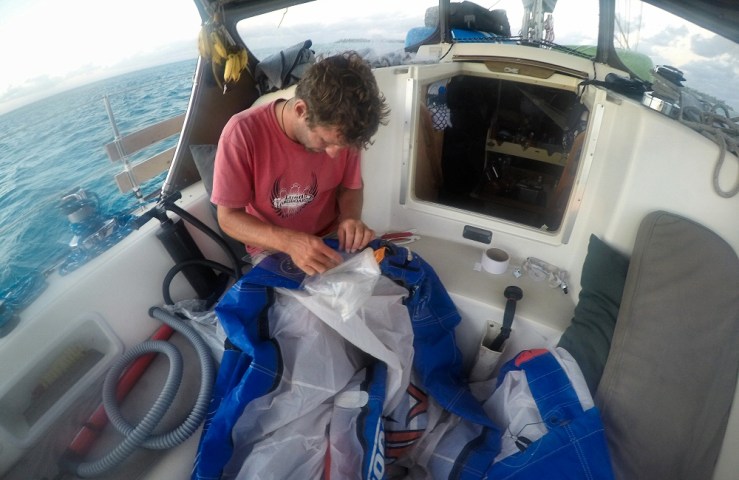
So the day goes on. Rolling, rolling, rolling. Tweaking the course a few degrees back and forth – each rain cloud alters the wind direction as it passes. My batten pocket fix a couple of days ago didn’t work. Next time the sail’s down I’ll spend more time on it. I’ve repaired two mainsail luff slides in the last couple of days; this slamming is rapidly bringing about the end of their careers. But we’re making good progress. 680 nautical miles to Niue. We’re passing over the top of the Cook Islands at the moment – Aitutaki is only 150 miles to the south – just over a day’s sail away. So tempting…. next time.

2015 05 27 2100 2015 05 27 1100

Checking out of French Polynesia

Just a quick update before we leave French Polynesia … and a few pictures while we have internet here in Bora Bora. Had an amazing few weeks with Rose aboard; Moorea for a few days, then an overnight sail to Huahine where we spent a few nights in various anchorages.

2015 05 11 Huahine paddling
Trying my hand at paddling a polynesian canoe
2015 05 12 Huahine
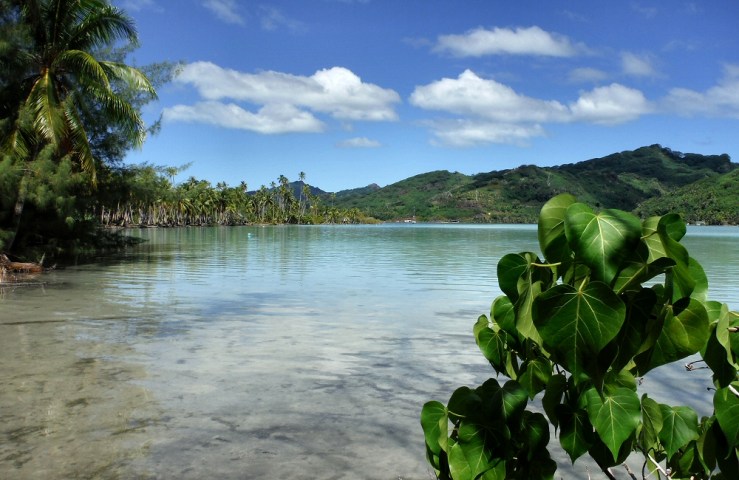
One of our Huahine anchorages

From Huahine, just a short day sail across to Taha’a, where we spent time on the east and west coasts. From Taha’a another day sail across to Bora Bora where we’ve been for the last week. Dave and Eva ashore, Rafiki to ourselves. A perfect time in each others company, could not have asked for anything better. Rose just flew out; I dropped her at the airport in the dinghy. Will miss her…

2015 05 16 1000 Tautau
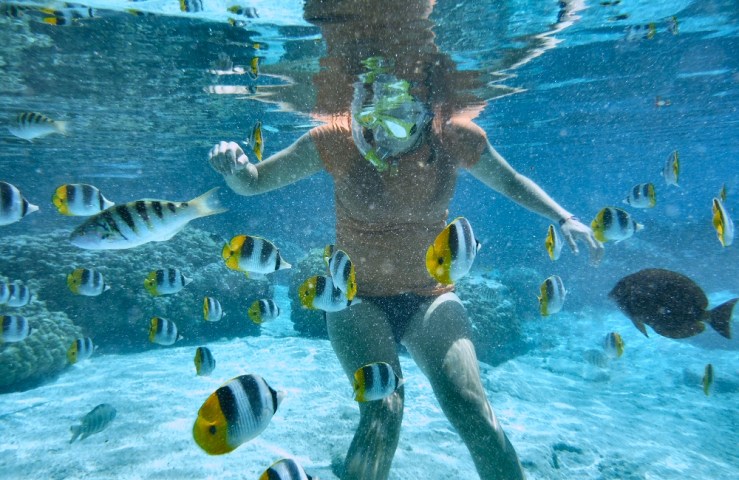
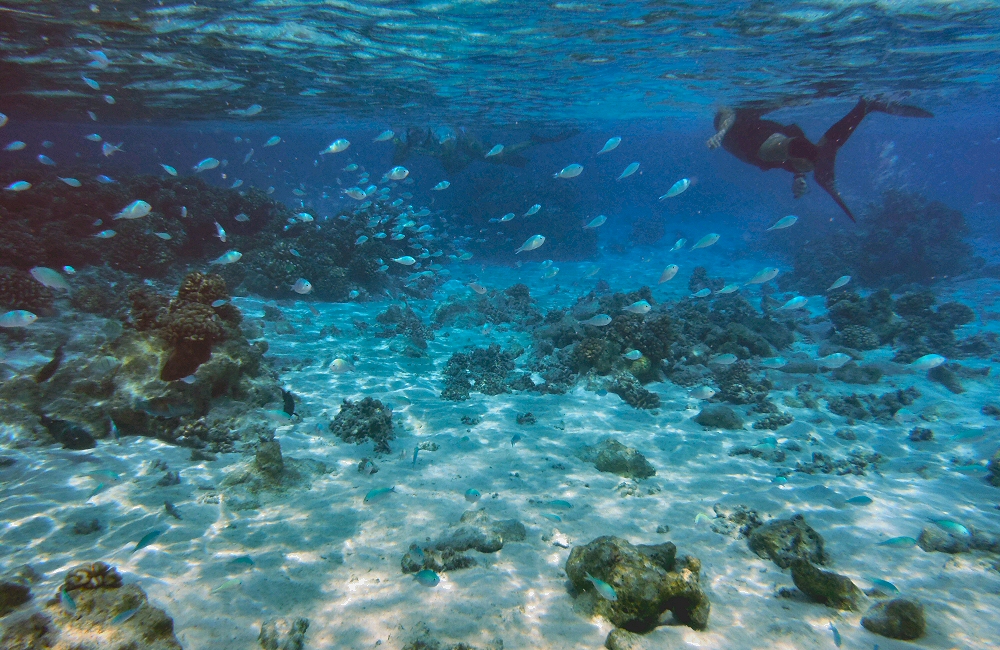
Amazing snorkelling at Tautau, Taha’a
2015 05 16 1500 Tautau Rafiki
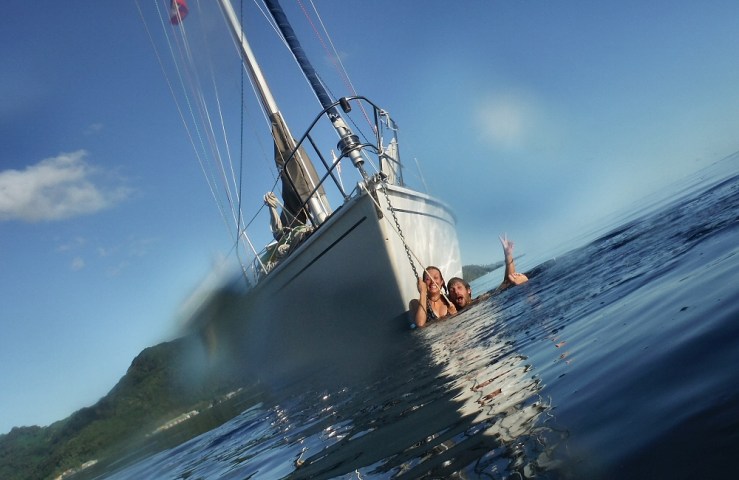
Self timer from a camera on a fender!
2015 05 16 1800 Tautau sunset
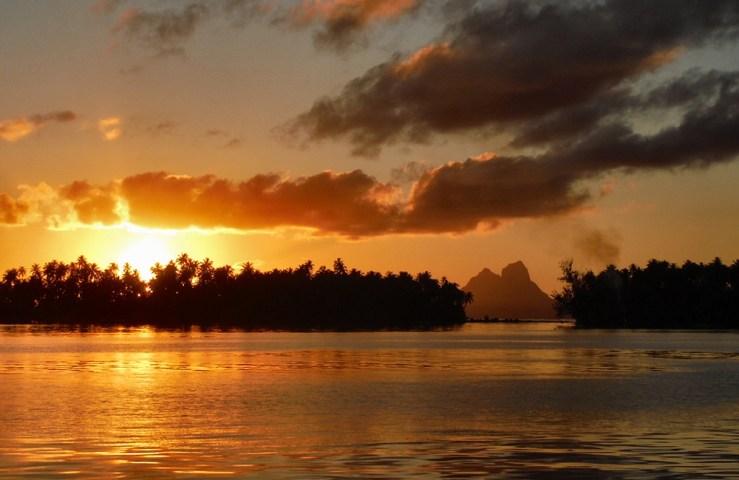
Sunset over Bora Bora from Taha’a
Bora Bora
Anchored in SE corner of Bora Bora

Tomorrow we check out with the Gendarmerie – to let them know we’re leaving the country. We’ll fill up with diesel and food, and set sail for Niue in the next day or so. It’s 1000 miles away, so we’ll be at sea for at least a week. Westward ho!

Opunohu bay

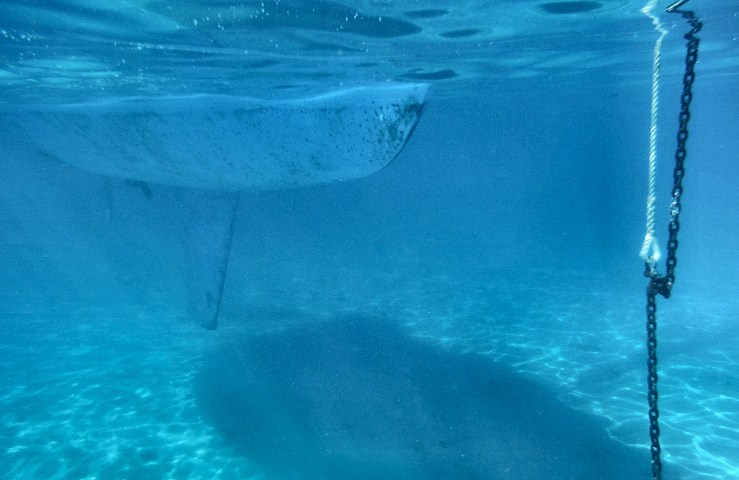
There’s a low pressure system trucking along from west to east, a few hundred miles south of Tahiti, which for us means rain, wind and unsettled weather. We’ve not seen the sun or stars for a couple of days. Only dark, wet clouds, and gusty wind. We moved over from the east side of the Opunohu bay pass to the west side a couple of days ago, a mile or two of winding through the coral reef, following channel markers to stay in the deeper water. The deep channel ends in a shallow patch of sand about the size of a couple of tennis courts, where we’re anchored now… in just 3.5 metres of water. Rafiki draws 2m, so it’s pretty close. But there’s no swell as we’re tucked behind the reef, there’s loads of room to swing as the wind and current shifts about, and the bottom is soft sand. The water is so clear we can see the fish swimming around the anchor when the sea goes calm.

2015 05 10 Shallow sea
Shallow anchorage!

First afternoon we were here there was a load of wind, gusting from all directions, up to 35 knots as it came rushing down off the hills. Anchor held and we didn’t bump into any of the other 5 boats squeezed in here, but one of the catamaran owners was a bit concerned about one of the other boats, and asked him to move a little further. I think he just swam down, picked up his anchor, walked along the sea bed with it, and dropped it a few metres away.

The rain and cloudy weather has kept the temperature down, which means that hanging out below decks isn’t like sitting in an oven, as it normally is during the day. We’ve managed to watch all three Back To The Future movies, Rose baked some muffins, we tidied up the boat, sewed up the rip in my hammock, and fixed one of my kites!

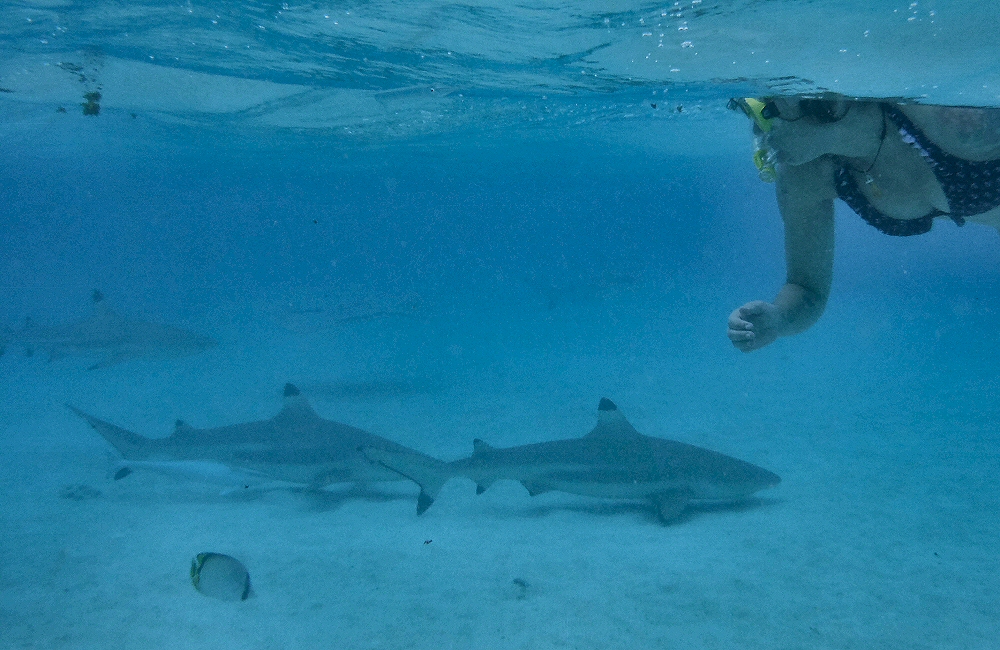
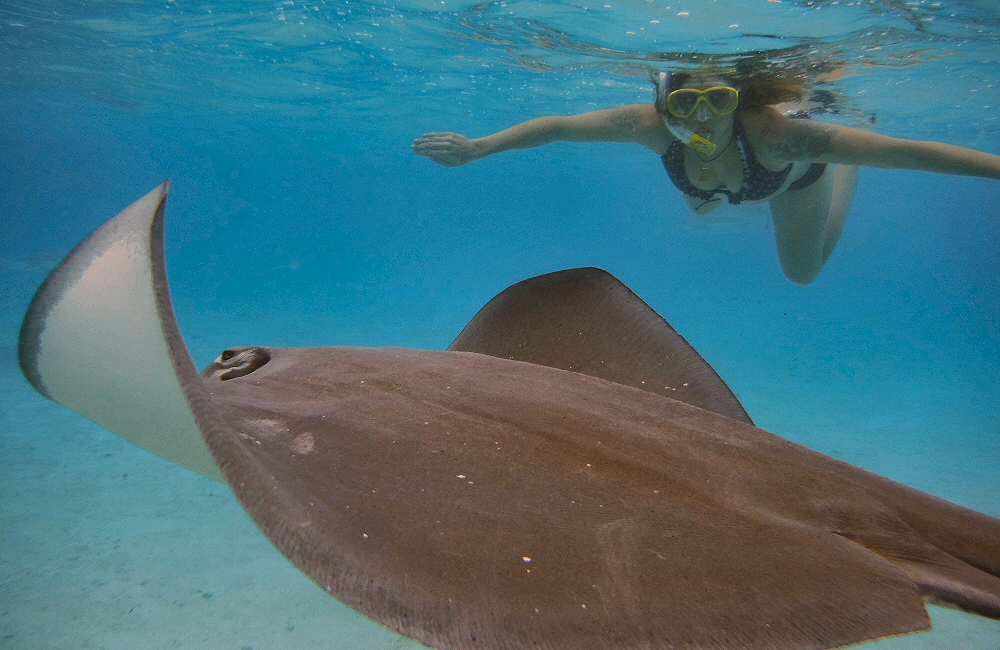
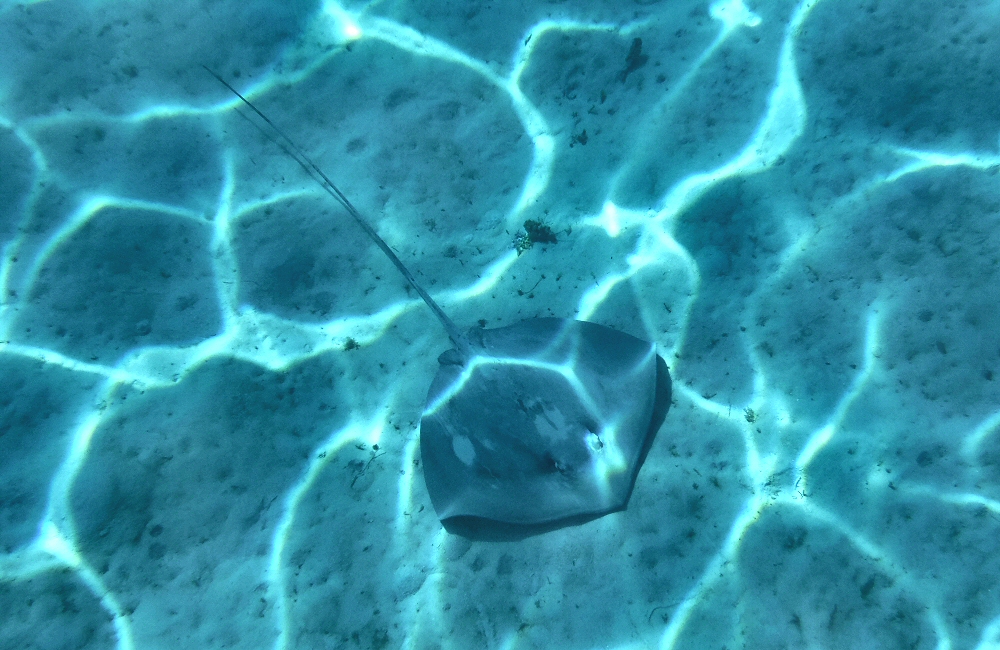
Yesterday it looked a little clearer so we clamped the outboard engine to the back of the dink and motored a mile or two along the coast into the wind and current, to a place where they feed the rays and sharks for the tourists. We arrived fairly early, only one small tourist boat there, and tied the dinghy to a rock. I hopped over the side and immediately came face to face with a large, grey stingray, perhaps a metre across… my heart was in my mouth for a few seconds before I remembered that these guys are not dangerous, and the tour guides have them crawling all over them at feeding time. Still, being next to a big creature in the water – very much their territory, not mine – is a bit unnerving. Rose clambered over the side into the water and we enjoyed an amazing hour or so of snorkelling – loads of rays, sharks, and many many coloured reef fish. Brave little ones swimming round our feet, taking a nibble wherever possible, timid ones hiding in the coral. Bright yellow and black inquisitive angel fish swimming up to the camera, shoals of long silvery pipefish hanging out just under the surface, sinister looking white suckerfish gliding along underneath the sharks, some only just a little smaller than their host. They have a strange sucker on the top of their head, to hold on to the shark belly, and where you’d expect a single dorsal fin there are two – one going out each side so as not to get in the way of the sucker.

2015 05 09 1000 Ray 2015 05 09 1000 Sharks 2015 05 09 1000 Angel fish 2015 05 10 Stingray

Then on to the beach where it looked like there was enough space to launch a kite. I’d repaired my 9m, the wind was a bit light, but I could at least try and get it into the sky to see if all was OK. All bladders held air, and after a few tweaks to line lengths, it was flying! Overexcited and in hindsight more than a little rashly, I charged out into the bay, looping the kite to stay up on the board in the light wind. As soon as I was in the channel though, the current swept me downwind, taking a good few knots out of the wind speed. Not good. No way I was going to be able to stay on the plane to get back upwind to the launch beach. But I’d spotted another beach in front of a hotel further down the coast, so I threw the kite around the sky to generate as much power as I could and – only just about staying out of the water – I approached the reef between the channel and the beach. With the board as protection between my thin skin and the jagged coral I bumped and ground my way over the reef. Just a few inches of water underneath me – a great view of the colourful fish, but sightseeing wasn’t the main thing on my mind at that point. I felt the board get locked in coral, and just managed to wriggle free in time for the kite to power up and give me another surge of traction. Close call. In the channel, and directly upwind of the beach, I dropped the kite into the sea and wrapped up the lines, swimming the last few metres in to shore. Back to safety, and lesson learnt…

Sunday dawned clear and bright. The low has moved on, and taken the nasty weather with it. A good day to sail on to the next island – Raiatea – about 100 miles away so the plan is to overnight and get there in the morning. Picked up Dave, Eva, an ice cream and some baguettes from the little town ashore, and then headed out to sea in a light south westerly breeze.

To Moorea

Early on Saturday morning, a couple of hours before dawn, I left Rafiki tied to a mooring ball, took the dinghy ashore and walked a few miles to the airport to meet Rose. Yippee! So good to see her again – two months has been a long while…

Taxi back to the marina then out to the boat where Dave and Eva cooked a pancake breakfast for us all. Ate the last pamplemousse from the Marquesas today. Rose had a rest, while the rest of us spent a few hours re-provisioning for the next couple of months. Walking into the huge Carrefour supermarket my eyes were on stalks and my mouth salivating – so much tasty looking food. We filled three trolleys and wheeled them back down the road to the marina, and then shuttled all the goodies out to Rafiki in a couple of dinghy rides.

2015 05 02 1100 Provisions
Some of the two months’ of food

Dave and Eva left for a few nights in a hostel so Rose and I could have the boat (our home, after all) to ourselves for a while. We had a few things to do in town, including picking up the propane tank on Monday, so we hung around and relaxed. Early on Sunday morning the swell picked up. Boosted by the spring tide, sea poured over the reef into the channel, right where we had a mooring. I woke up to the sound of water rushing past the hull, as though we were sailing. A bit unsettling as we weren’t supposed to be going anywhere… poking my head out of the hatch I saw we were surrounded by foam and thrashing water; the instruments showed a 2 knot current, surging with each wave that pounded on the reef a hundred yards away. But the mooring was holding, so I just set the anchor drift alarm and went back to sleep. In the morning we could see all the other boats in the mooring field – perhaps a hundred – pitching and rolling in the waves, just like we were. Not dangerously, just a bit uncomfortable. It was a bumpy ride ashore in the dinghy to have a walk and fill up our diesel tanks!

We decided to head back to the marina in town for a night, which turned out to be two as we bumped into D+E again, who suggested a day touring the island in a rental car. So on Tuesday we all piled into a tiny Peugeot 107 and spent the day driving around the ring road of Tahiti. Papeete, on the north west corner of the island, takes up most of the flat part of the island. Around the rest of the coastline, there’s only just space for a couple of blocks of houses, the road and then another couple of blocks before the mountains rise dramatically and steeply inland, covered in dense tropical foliage. Tahiti is made up of two parts; two rounds joined by a narrow isthmus in the middle. The northern island has a road all the way around, but you can only get part of the way around the southern island. The road stops at Teahupoo; a small village that gives its name to one of the world’s most famous surfing waves. I really wanted to see what this legendary wave was all about, so we headed south, left the car at the end of the road and walked out onto the point to watch the surf through the binoculars. Just like the photos on the cover of every other surf mag, the wave was massive and hollow. Awesome, even from a long way away, and not even on a “big day”.

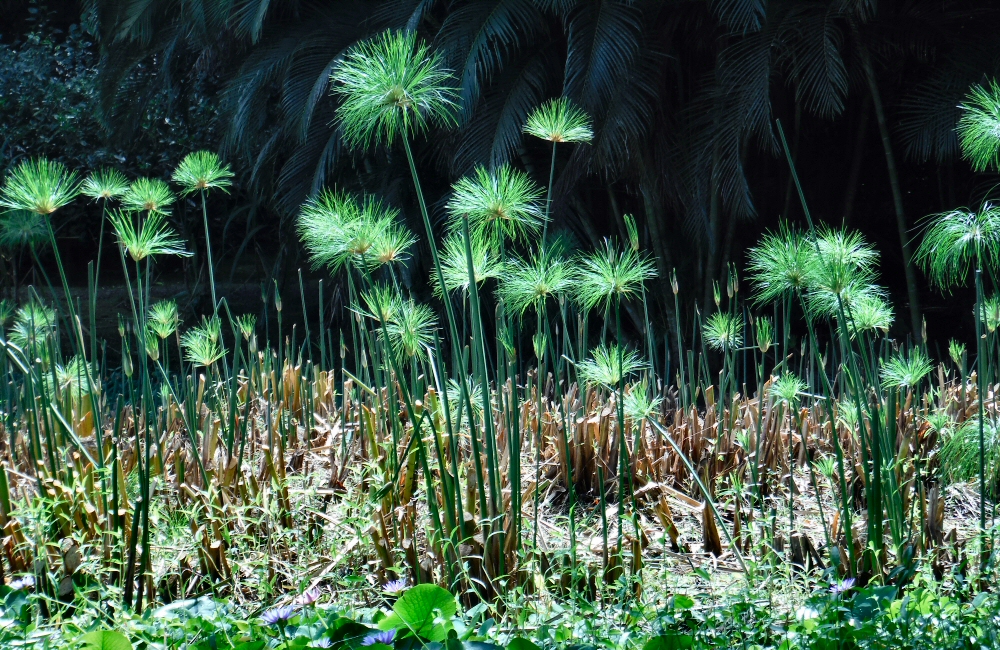
2015 05 05 1200 Tahiti papyrus 2015 05 05 1500 Teahupoo palms

We stopped off at a really well kept botanical garden, with a huge variety of tropical trees, bushes and shrubs. Wandered up to a waterfall, stopped off at a couple of beaches, had lunch in an extravagant French restaurant overlooking boats at anchor in the waist of the island, and eventually made it back to Papeete in the evening.

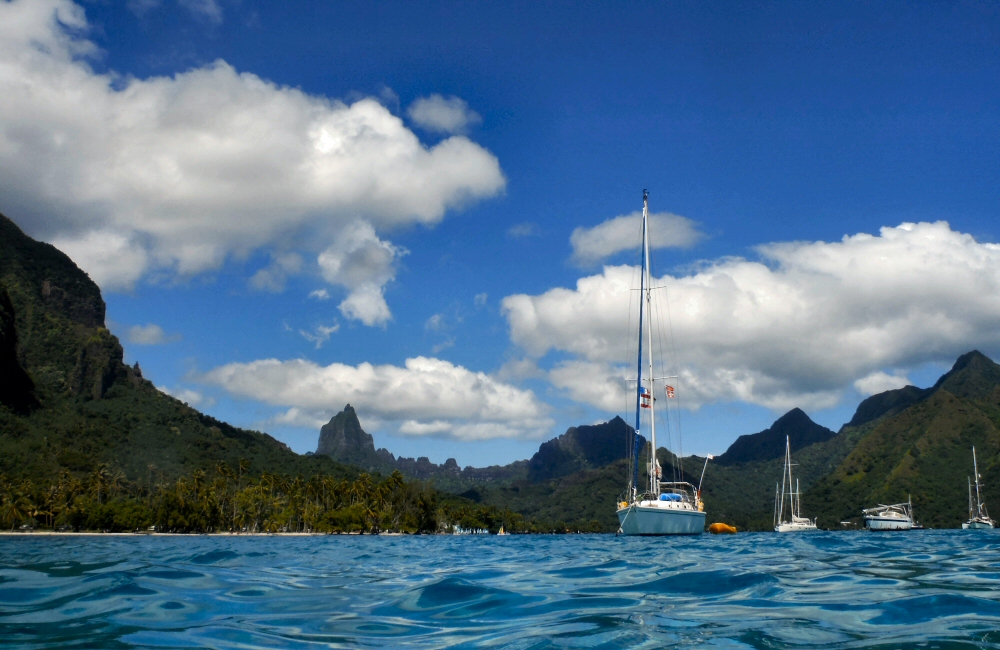
Tuesday morning (yesterday) Rose and I paid up at the marina and then motored the 18 miles across to Moorea under overcast skies. Not enough wind to sail, unfortunately. After about 4 hours, we passed between the green and red buoys that mark the channel at the entrance of Opunohu bay, turned left, and anchored in shallow water just off the white sand beach. It’s not remote and unspoilt – there’s a car park and picnic benches ashore – but it’s still a world apart from Papeete. Steep ridges and peaks surround the bay, making a dramatic backdrop. There’s not much settlement (the hills rise straight from the shore) – only the road which runs all the way around the island lined with a few buildings. Further down the coast, there’s a hotel/resort – which in French Polynesia, out on the islands, means a load of thatched huts extending out into the lagoon on stilts. Tourist boats and jet skis buzz past every half hour, but it’s still beautiful. In the evening we watch lightning on the horizon, and prepare the boat for a windy and wet night.

The thunderstorm ended up passing south of Moorea, so we had a peaceful night. Today the sun is out and a cool breeze is keeping the temperature down, Rafiki bobs around peacefully in now-familiar turquoise blue water, a lush green palm-lined beach a stone’s throw away to starboard, and waves rolling gently onto the reef off to port. As we finish our breakfast of paw-paw and scrambled egg, we watch a fleet of Optimist dinghies skippered by tiny screaming French kids, following the coach boat like ducklings. Snorkelling this morning we saw sharks, a ray, loads of small fish and a huge barracuda-like fish hanging out under Rafiki. So, today we’re just relaxing, and enjoying time together.

2015 05 07 1000 Moorea Opunohu bay
Opunohu Bay, Moorea
2015 05 07 1300 Moorea Oponohu
Opunohu Bay

Tahiti

“Tahiti” – usually means exotic tropical islands, turquoise blue seas, Polynesian beauties, Captain Cook’s adventures – but for me, it’s where we meet Rose! I’ve been getting more and more excited over the last couple of weeks, haven’t seen her in two months, and she arrives at 5am tomorrow to spend a few weeks on board. The plan is to gently explore up through the Society Islands to Bora Bora, where we’ll depart for the 1,000 mile leg due west to Niue. Can’t wait!

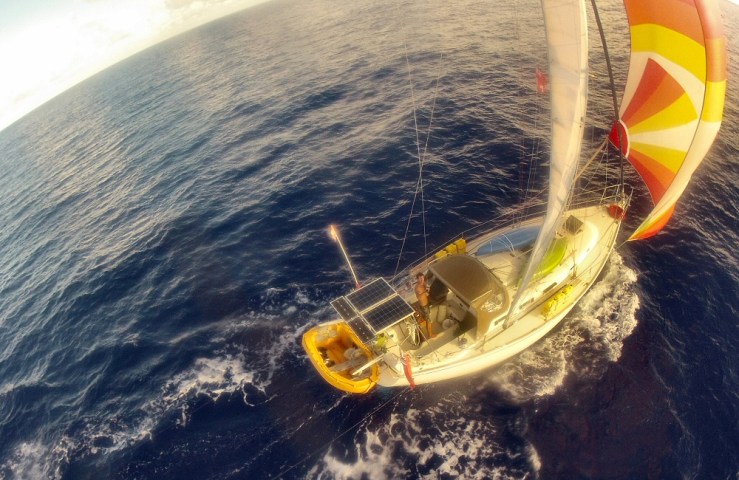
Leaving Toau a few days ago for the 230 mile passage to Tahiti, we managed to fly the spinnaker for a couple of hours before the wind dropped completely. On with the engine… which hammered away all through the afternoon, through the night and into the next morning. Hot and noisy; all the engine covers were open to give it some cooling air, down below decks it was over 37 degrees. The alternator belt was cooking, slipping a little, covering the engine in a fine layer of black dust and filling the boat with smell and light smoke. But the adjuster is as tight as it will go. It slips each time the batteries need heavy charge, as the alternator works double-hard, nothing new – so I have enough spare belts to get to Australia. Will try and find a shorter one in town so I can keep it tight. On deck in the sun it was closer 42, so I lay on the couch with the cabin fans on max, trying not to move, but still sweating cobs. Every now and then I came up for a fresh bucket of Pacific splashed over the head to cool off. Eventually a gentle breeze lets us turn off the engine, get the main up, and fly the spinnaker again. Rafiki goes really well on a beam reach in 10-12 knots of breeze with the big red and orange sail up, charging along at over 6 knots, bow wave gurgling, bubbles fizzing alongside, and a gentle roll as the southern swell passes underneath us. I try to get a photo with the kite, but there’s not quite enough wind to get it up far enough without risking it collapsing, which would mean losing the whole lot in the sea.

Rafiki under spinnaker
Almost a great photo!

We spent the afternoon cleaning the boat, and doing a stock take on all the food we still have aboard. Apart from a few baguettes and a stack of Brie and Camembert we picked up in Taiohae, we’re still going strong on the provisions we loaded in Mexico two months ago. Pasta and rice is running low, and we’re out of eggs, cheese, meat and fresh veg – we’ll stock up again in Papeete for the rest of the voyage through to Australia, in the large French Carrefour, and the local indoor market. Just as we’re transferring beer and coke from the bilges in the bottom of the boat to the fridge, there’s a THUMP on deck, the sound of a line jumping on a winch, and then flapping around.

Skipper’s instinct immediately recognises it as “something gone wrong” … I jump over Dave and up the companionway, and see the spinnaker ripped all the way along the foot and up the leech, flying loose in the wind. Oh no! But it was cheap and old, and has done us well so far. I guess its time has come. With over 70 feet of stitching gone, it won’t be worth fixing unless I can get it done really cheaply somewhere, but even then I’m not sure how long the UV-degraded fabric will last. It’s not a sewing job I’m going to tackle by hand! Dave and Eva are quick behind me, and we get it down without any trouble, gathered away in seconds. There’s enough wind for the genoa now, so we unfurl that and get back to business with the beer and coke. A third of which have punctured and leaked their contents all over the inside of the locker under the floor – the tiny but constant motion of two months on board have worn through the cans which were lying on their side. Best get drinking that beer!

As the sun came up yesterday morning we pulled into Papeete, the capital, and docked in the brand new town marina.

2015 04 30 0700 Tahiti approach
Tahiti approach


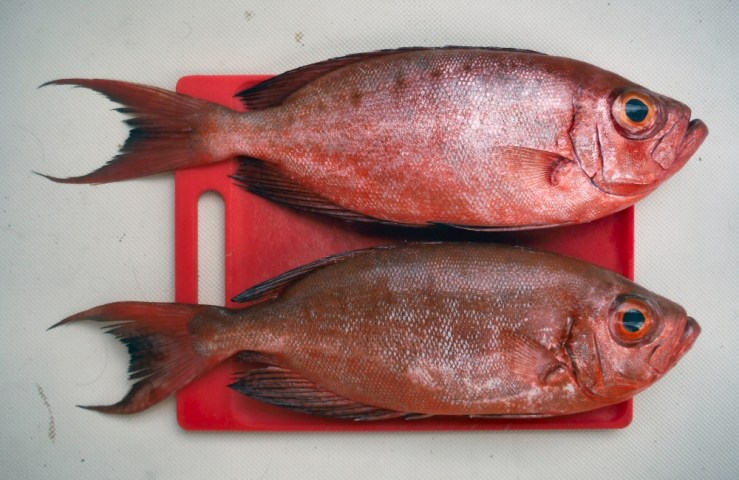
There are a few other boats here but it’s pretty empty – early in the season. I spent a couple of hot hours trekking over to the propane station to leave our tank for a refill, and looking for spare alternator belts without success. Picked up some fish from the market, which I filleted and then grilled on the BBQ mounted to the stern rail of the boat for supper. Mmmm.

2015 04 30 1600 Fish
Dinner – can anyone tell me what fish this is?

The double lane main street runs along behind the palm lined quay, busy with noisy traffic. Behind that, a few kilometres of town, and then the soaring mountains of the island. Another incredible skyline, like the Marquesas, jagged peaks and vertical cliffs – but we can’t see much from here as it’s hidden behind apartment blocks. Last night joggers came out to pace the waterfront when the sun went down, glowing iPods strapped to their arms and fancy neon trainers flashing in the street lights. Two of Freddie‘s sons are somewhere in Papeete – I wonder what kind of lifestyle they lead. A cruise ship came in stealthily overnight and is sitting humming away on the other side of the dock – crammed full of thousands of tourists who will swarm into town today. Every half hour a small plane buzzes overhead, taking off from the airport just along the coast, taking another load of people out to one of the other islands. There are more people around than we’ve seen in months, but it doesn’t feel oppressive, overly polluted or crowded, which I am surprised about. Here and there is evidence of a typical tropical town – wonky pavements, sun-cracked paint peeling from buildings, sand on the road … but it’s generally much cleaner and neater than most.

We’ll move south, closer to the airport, once I’ve had a shower at the marina, and caught up on internet stuff. Now that we have a good connection, I’ve spent some time going back through older posts and adding some photos.

Anse Amyot

After another day in Fakarava, we left through the north pass for a short overnight sail to Toau. On the northern coast of the atoll there’s a small inlet, a half-pass that doesn’t go all the way through into the lagoon, called Anse Amyot that I’d read good things about. It’s only 40 miles from Fakarava, but leaving through the pass on a good tide meant we had to sail overnight to arrive in the light. Lots of wind meant we just had the genoa up, and were still making well over 6 knots, so we arrived off Anse Amyot before midnight and had to stall for hours, sailing back and forth.

2015 04 27 0530 Dawn
Dawn off Toau

A spectacular dawn was soon followed by gusty winds and strong rain. I made an approach to the inlet, but the rain was so hard we couldn’t see more than a few tens of metres, not great conditions for slotting a yacht through a narrow gap in the reef between rolling breakers. So I sent for the shower gel and enjoyed a fresh water shower. Later in the morning when we’d found our way onto a mooring ball, we hopped over the side to the most amazing snorkeling yet. The tide was on the way in, bringing pure, clear Pacific ocean in – so the visibility was stunning. The pictures just don’t do it justice. No wonder this is regarded as one of the world’s top spots for seeing reef fish.

2015 04 27 1000 Anse Amyot 01 2015 04 27 1000 Anse Amyot 02

Back on board we sat through another super-heavy rainstorm, and then explored the bay for a while. I took the dinghy to the nearby beach, but as soon as I’d set foot on the shore the no-nos started biting viciously. I think the rain had set them off. Much safer out on the water. I rowed out into the lagoon, and then drifted back to the boat over the coral, only a few inches below the bottom of the dinghy. Peering over the side I could see everything just as clearly as if I was in the water.

2015 04 27 1030 Squally day
Water still amazingly blue even with a grey sky
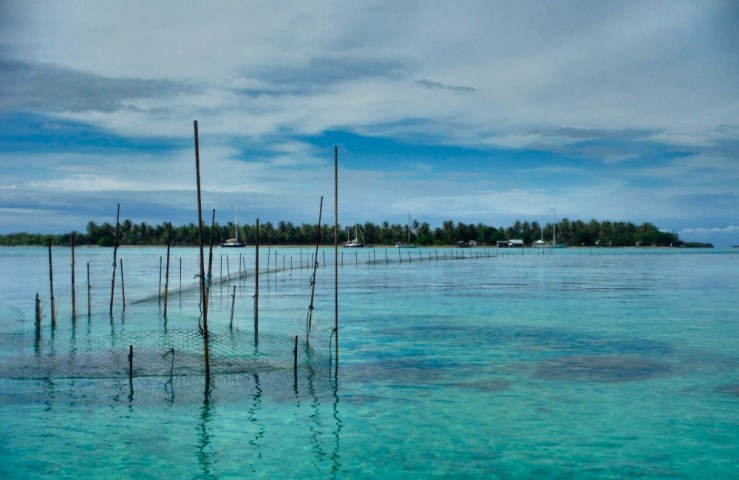
2015 04 28 Anse Amyot fish trap
Fish trap at Anse Amyot

Just the one night here, and then off to Tahiti in the morning! The forecasts show not much wind, but we have plenty of diesel and it’s only 230 miles, so we’ll go anyway, and take whatever weather we get. Looks like the rain has cleared away, so I’m going to see if I can make it through a whole night sleeping in the cockpit without getting wet…

Freddies place

Today dawned completely clear. Just a few tiny clouds way down on the horizon, hundreds of miles away. We’ve not had a clear day like this yet, apart from perhaps when we were at sea, back in March. Early this morning there was heavy rain, waking me up and sending me dashing to shut hatches. Even at anchor it’s hard to get a full night’s sleep! The rain clouds were gone before dawn and now it’s hot. Viciously hot. Even with the sun shades up in the cockpit and the front of the spray hood unzipped to let the breeze through, it’s not nice to be sat up on deck. Even though the view is stunning (yet again), we’re hiding below, away from the sun, at our fourth anchorage in Fakarava (16 13.89 S 145 33.50 W). Just 2 miles up the shore from where we spent last night. Hardly worth getting the anchor up … “we should have just let out more chain to get around the corner” Dave said!

Eva is sorting through some of the gazillions of photos that they’ve taken over the past couple of weeks. Dave’s making a fishing lure from a piece of pine that he’s spent the last couple of days carving. I’m sporadically dipping in and out of a few books – not really in the mood to read “properly” today – waiting for some epoxy putty to cure on the windlass (anchor winch). Turned out that we broke a piece of plastic off during the epic session getting the chain up in Makemo. Once the midday heat eases off, and then we’ll head out to explore.

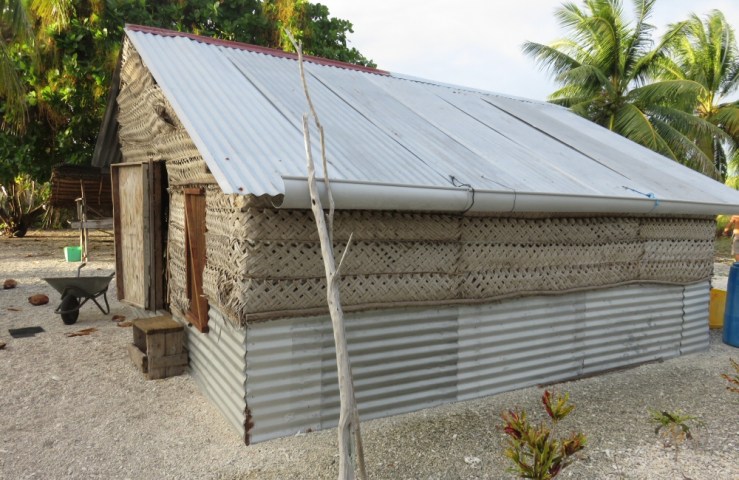
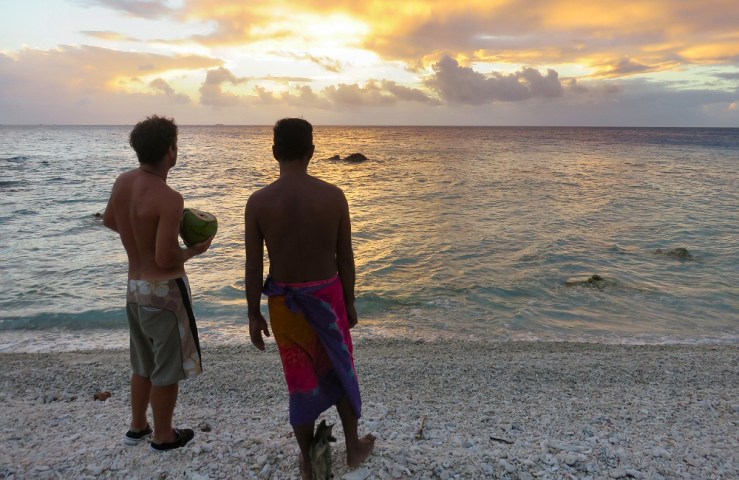
But first, let’s catch up with yesterday. As we approached the anchorage I spotted a dwelling, and then in the afternoon when we went ashore we bumped into it’s occupants. A middle aged man, surprisingly slim for a Polynesian, in a bright yellow and purple sarong. His dog, a timid brown pup trying to be brave by shouting a few hesitant barks at us. And two tiny 3 week old kittens, struggling to scramble over the white coral beach. “Bonjour!” he greeted us with smiling eyes and a warmly offered handshake, strong work-hardened fingers wide apart. We pulled the dinghy up the beach, and wandered through the low scrub to his house. More of a shack than a house; wooden stakes holding up a tin roof, with neatly woven coconut matting as walls. Just one room, with a couple of sleeping platforms of white coral pieces, a cooking area and a couple of open doors. Round the back he had a modern looking water cistern, which he said he’s constantly having to drain because lizards fall in and die, tainting the water. So today he’s “asked for more rain” following the latest suicide. His accent was strong, but I could understand most of what he was saying. Chatting in French, he lopped a couple of coconuts down using a long stick with a hook on the end, sliced the top off and handed them over. Mmm, fresh coconut milk.
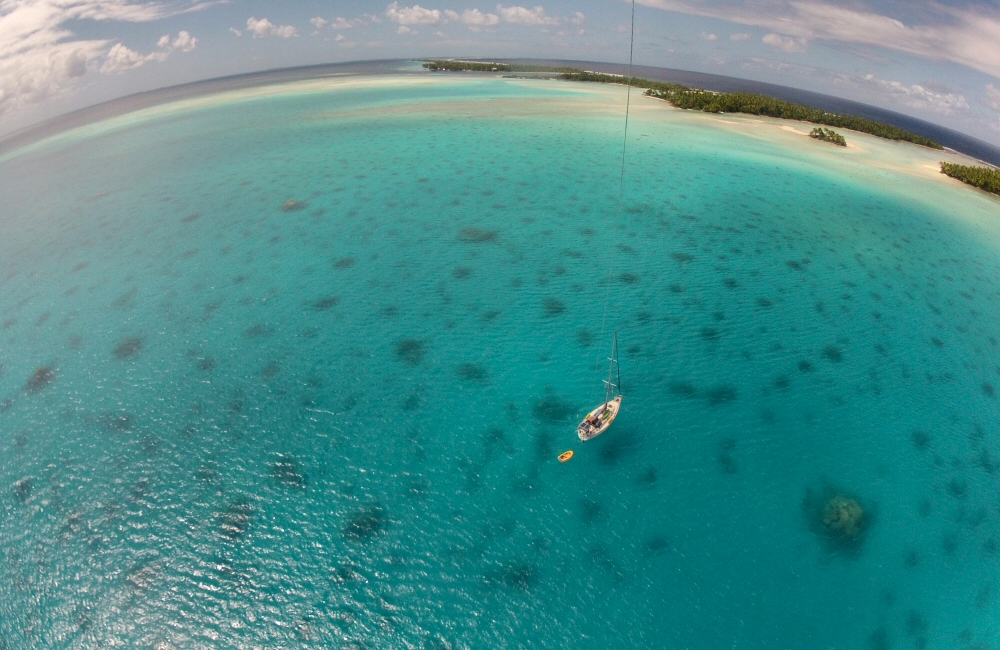
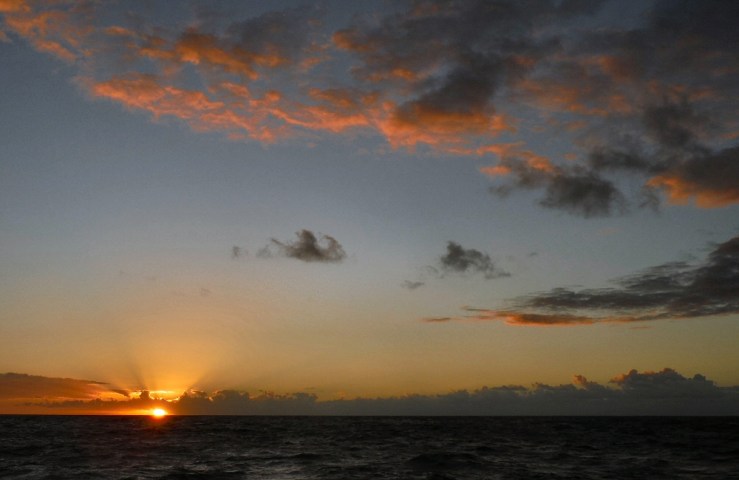
2015 04 25 0900 House
Photo Dave/Eva
2015 04 24 1800 Beach
Photo Dave/Eva

He showed us around his land, which he’d been clearing for years, along with his sons. Removing the scrub and bushes by burning them back, leaving just coconut trees and coral. Here and there he’s planted flowers and other domestic plants, in upturned coconut husks which provide a little something in the way of nutrients. He said he also bought “bon terre” from Tahiti in ton-loads, which was delivered by boat, good soil for getting plants started in this harsh ground. Sprinkled around the base of some of the coconut trees like a white collar was light coloured coral collected from the beach, contrasting with the darker old reef coral that made up the rest of the property. He’s put a lot of effort into making it nice. Would have been fun to stick around for the evening but the sun was sinking, and the no-nos starting to bite so we made a promise to return in the morning, and retreated back to the safety of the boat.

A couple of days ago we ran out of water in the 50 gallon aft tank. The forward tank had a few gallons left as reserve, but not much, so it was a sign to start getting more active with our water making. Back in San Francisco I installed a machine that turns sea water into fresh water via reverse osmosis – basically squeezing salt water through a really fine membrane at super high pressure. It means that we don’t have to plan our voyage around where we can pick up water. It’s been working really well, but the pump does use a lot of electricity. This morning I got the batteries back up to a happy charge level using the engine for a couple of hours, running the water maker at the same time. Once the sun was up high enough to feed the solar panels and provide the hungry machine with enough power, I left it running while I joined the others ashore to explore with our new friend. Took some spare mesh netting as a gift to hopefully help him with his lizard problem.

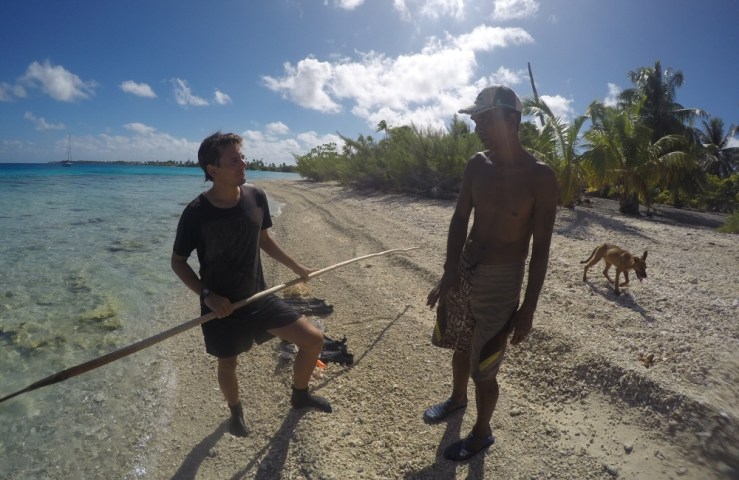
2015 04 25 0900 Learning spear fishing
Dave learns about spear fishing

I couldn’t understand his name (and didn’t ask him to scrawl it in the sand which would have been a good idea) so let’s call him Freddie. It sounded a bit like Freddie. Yesterday, anyway. He called himself something else today. So Freddie, cold beer from Rafiki’s stores in hand, showed us over the motu to the reef on the ocean side, and all over his property, pointing out various shrubs and bushes along the way. The plants his wife put down last year, the coconut trees his sons planted “when they were this high”, indicating a three-year-old’s height with his hand. He says he’s got three houses, one up in the village where his wife is, and one further down south, but he likes it best here – I can see why.

2015 04 25 1000 Freddies Cove
See Freddies place on the corner

But, again, it’s “time for us to move on” (an all too common phrase at the moment) – we’ve snorkeled all the reef here and want to see what’s around the next corner … which brings us to this baking hot afternoon, sat just around that next corner, waiting for the day to cool down.

Fakarava South

Eva handed over the watch to me at 0400, saying we were getting close to land and maybe we should slow down a bit… the south pass of Fakarava was supposed to have slack tide late morning, and we were only 6 miles away, so yes, we needed to slow down. I spent my watch mainly hove to (sails backed and boat not really moving anywhere), waiting for the sun to peek over the horizon and give us the light we needed. Just before dawn, I put the helm across, set the sails, and Rafiki was back in action, taking us toward the pass.

2015 04 20 0530 Dawn
Another dawn at sea

Sometimes passes are OK with some outgoing or incoming current, so it was worth a look. As we approached, the wind picked up considerably, blowing the strong ebb tide into standing waves, so I decided to wait a few hours for slack. We tacked out to sea and back again a few times, the wind building all the time. It was gusting over 40 knots by the time we came around for our 4th peek at the pass. It was choppy – we had a fair bit of water dumped into the cockpit by short, sharp waves, but it looked OK just inside the outer end of the reef, so I went for it. Sure enough, as soon as we were just a bit closer in, the water flattened out and we cruised through. The water was so clear that the section 4m deep looked like we were about to hit the bottom – erk! – gotta trust those charts…

2015 04 20 1000 Fakarava S Pass
Fakarava South Pass, Tetamanu

On the right hand side of the pass is the village of Tetamanu – now in ruins, but with the church still standing, supposedly the first church in the Tuamotus, built in 1874. A series of cabins made of palm and thatch line the waterfront, each one with a small deck jutting out over the water on stilts. When we walk around the village later, we discover that the village is now just some resort accommodation and a dive centre.

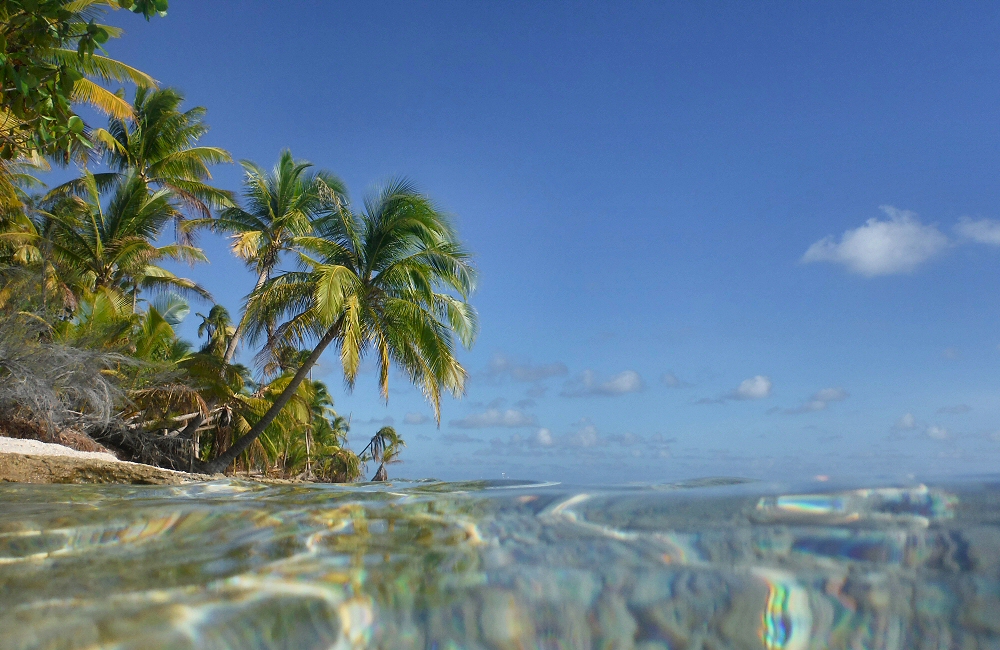
Once through the pass, we go left, around a large shallow patch, to anchor in clear, incredibly turquoise water. Here and there are darker brown freckles – coral heads. It’s so hard to judge the depth of each one, so we meander through the maze, and drop the hook in a space that looks mainly sandy. I dive down and set a float half way along the chain, so as we swing around with the wind, we don’t wrap it around any coral. A squall passes over, raining hard on the pass, but just missing us. The sun chases the cloud away and activates the colours – turning up the brightness and saturation dials to max. Wow. What a place. There’s only one other boat here. Upwind of us are three or four motus – low sand islands covered in green palms and bushes – flowing between them are shallow channels of incredible blue, where water coming over the outer reef makes its way into the lagoon. There are a couple of tiny islands separate from the rest, with just a few coconut trees on each, standing proud on a base of bright sandy colour sand. Their survival in this arid environment is a miracle. Just sand and coral … turned into trunks, leaves and coconuts with a little help from the sun and some water. Amazing.

2015 04 20 1200 Fakarava S anchorage 2 2015 04 20 1200 Fakarava S anchorage 2015 04 20 1300 Team 2015 04 20 1400 Dragging the dinghy

There’s a guy out kite surfing! So I rush to get my gear out of the forward cabin and dash to the beach, buzzing. An epic place to kite. I pump up the first strut. Pssshh. Won’t go. Well, not ideal but maybe I can fly without that strut. Try the second. Pssshh. Arse. I need that one. Ah well, I have a second kite on the boat, it’s a bit big but if it flies, I’m sure I’ll be able to hold it down. Buzz back to Rafiki, pick up my 13m, and roll it out on the beach. Pump, pump. Pssshh. No! Try another strut. Pssshh. NO! Neither of my kites will pump up. Excitement turns into anger and frustration. I’ve brought my kite surfing gear half way around the world to one of the most amazing places to play, and it won’t work. I’m not a happy chappy. Later, I try and repair them back on the boat, but the repairs keep failing. It’s well after dark by now. I decide to go and sit on the foredeck, kept company by our last bottle of cider, and slowly my frustration dissolves into the stunning night sky.

2015 04 20 1600 Kite fixing
Trying to fix the kites
2015 04 20 1415 Fakarava
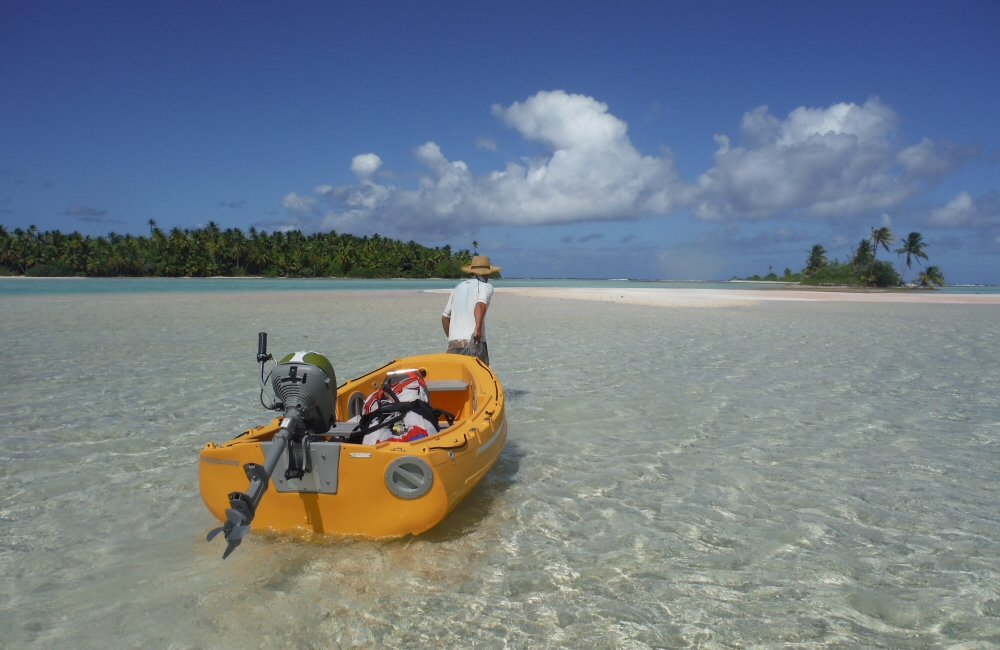
Exploring between the motus

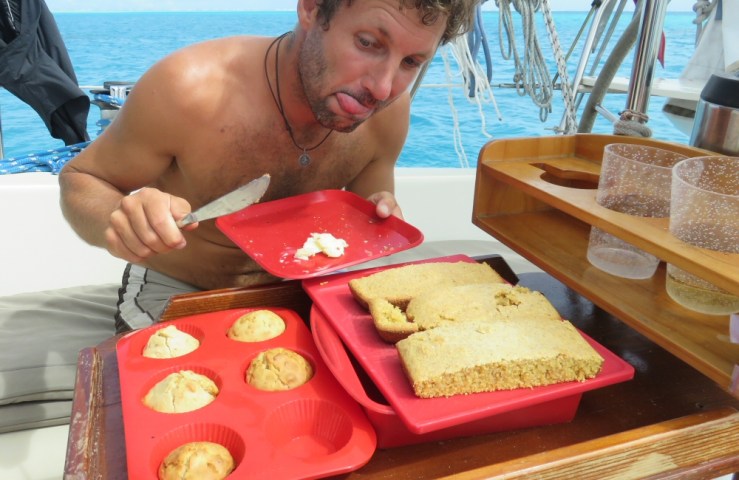
We spend a few nights here, tucked behind the islands out of the worst of the wind. Even though it’s still gusting 30 at times, it’s so much more relaxing to be downwind of land. The water is flat, and Rafiki isn’t bucking around, feeling like something’s going to break at any moment. And if there’s a problem with the anchor, we just drift out into deeper water. Every now and then a stronger, rainy squall passes through. One wet morning I go into a baking frenzy – pineapple muffins, onion bread AND polenta bread, all in one go. We have a very carb-heavy lunch!

2015 04 21 0900 Squall
Morning squalls – rain and wind
2015 04 21 1100 Bread making
… means baking!

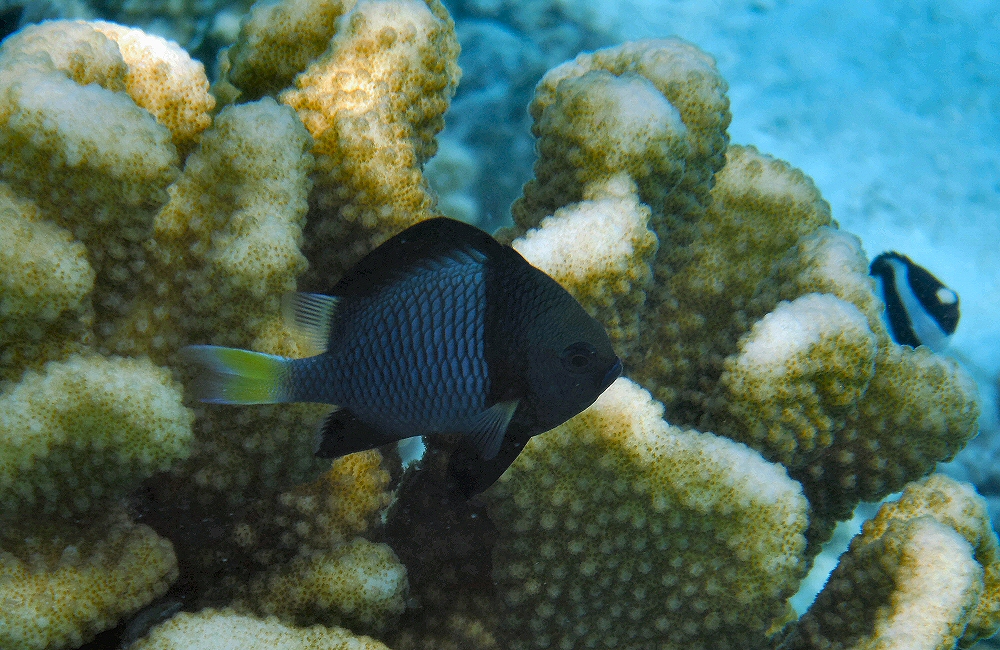
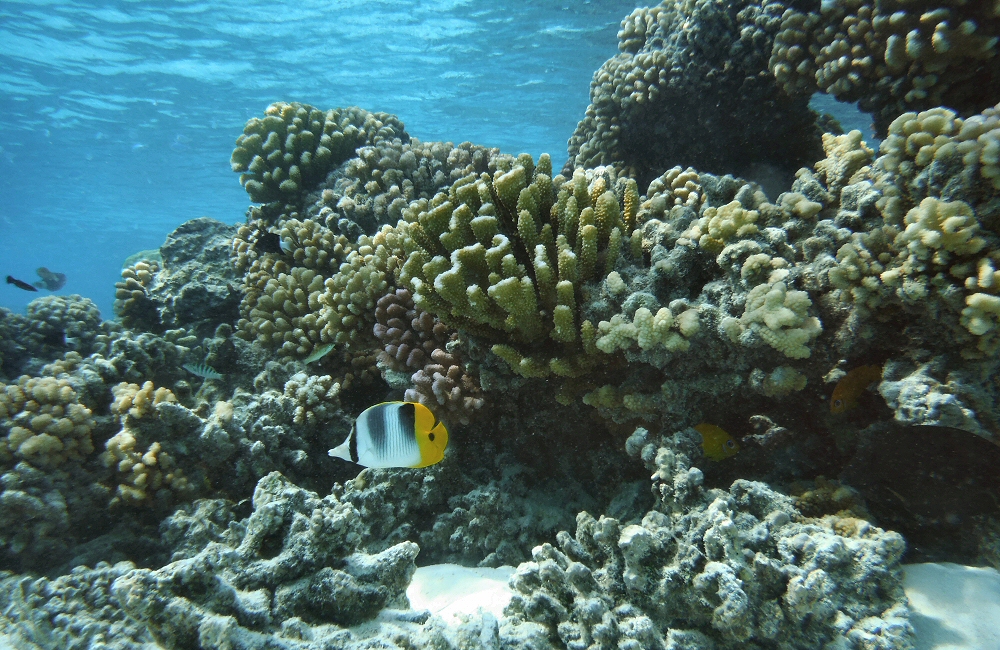
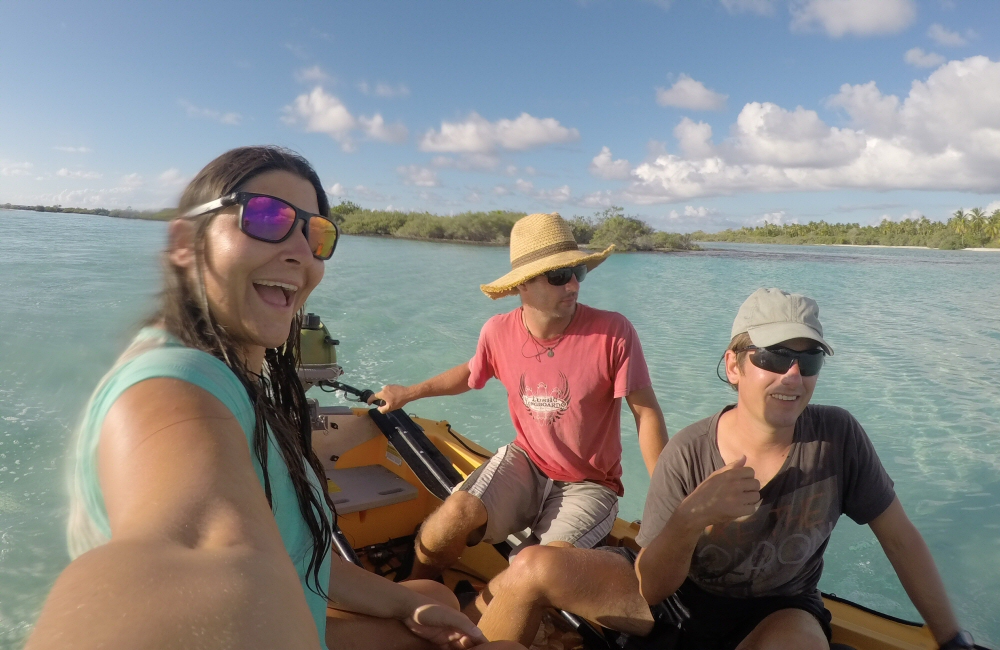
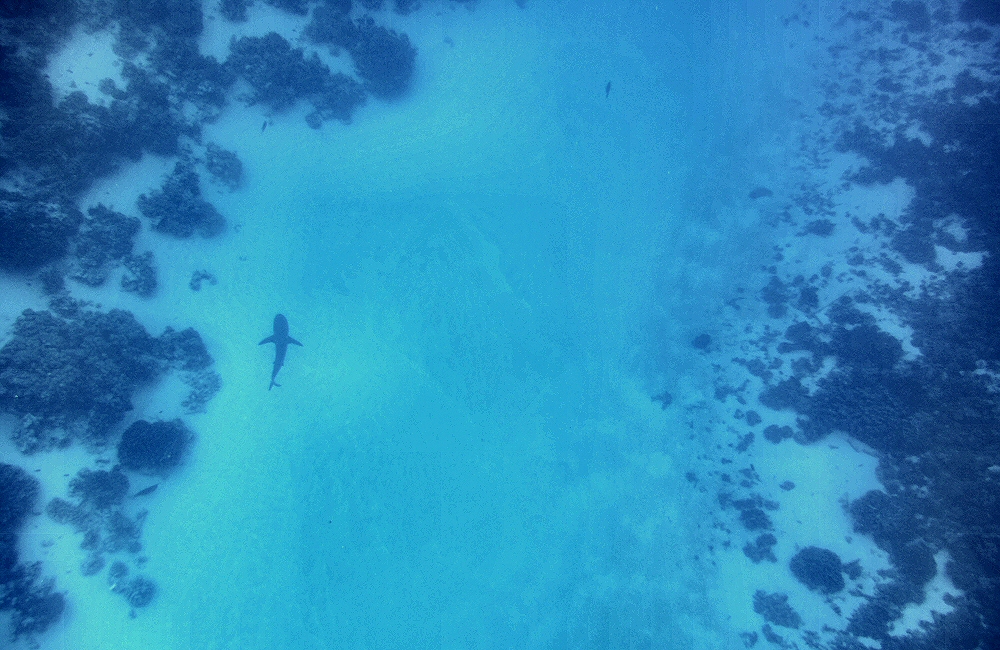
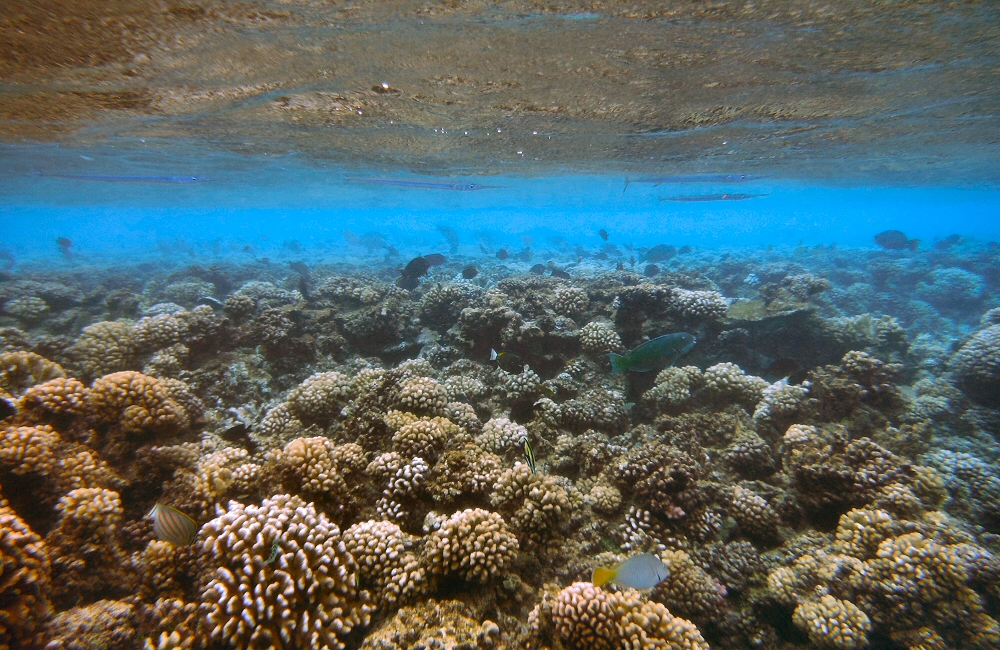
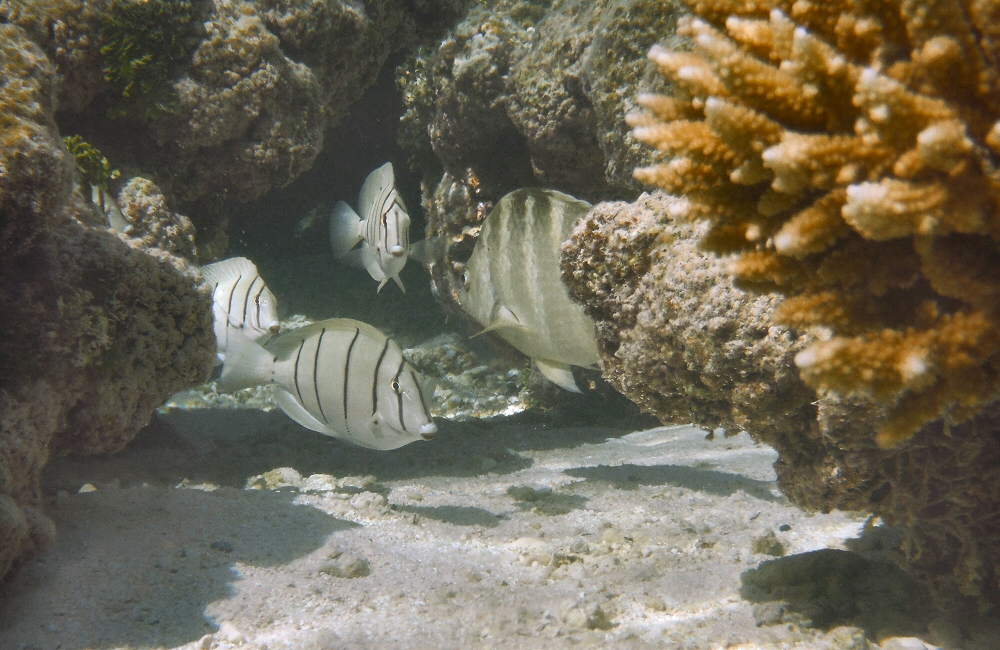
In the afternoon it cleared up, so we took the dink over to the pass, motored out into the swell, and hopped over the side. Wow! Over 30 metres deep and you can see the bottom like it’s only just beyond the end of an outstretched arm. Drifting back into the lagoon with the current was one of the most amazing snorkelling experiences ever. Grey shark were patrolling the middle of the pass, black tip shark being nosey and exploring around everywhere, always seeming to be behind you when you turn around, white tip shark hanging out on the bottom in sandy patches, gently swimming their sinister sharky side-to-side swim. By now we’re comfortable in the company of these fellas. None of them are much bigger than 4 foot, and they are all well fed on reef fish (so we’re told!). As we approach the shallower water, the coral and reef fish become the stars of the show. So many types of poisson, I try to count them, but I soon get confused.

2015 04 21 1400 Fakarava S pass 2015 04 22 1400 Reef fish

We stop off at the cabins and dive centre on the way back to Rafiki, to see what’s going on. Have a beer, and end up deciding to dive the pass next day. In the evening, we hang out with Chris, Jess, Chris, Ari and 2 1/2 year old Isabel on the other boat in the anchorage – Namaste. These guys keep their boat here in the Tuamotus in the summer, going back to California to work for a few months each year. Not such a bad life. They say this is their favourite spot in the whole archipelago, and I’m not surprised. Back on Rafiki, I read the PADI dive book late into the night, reminding myself of how it all works – it’s been six years since I last dived…

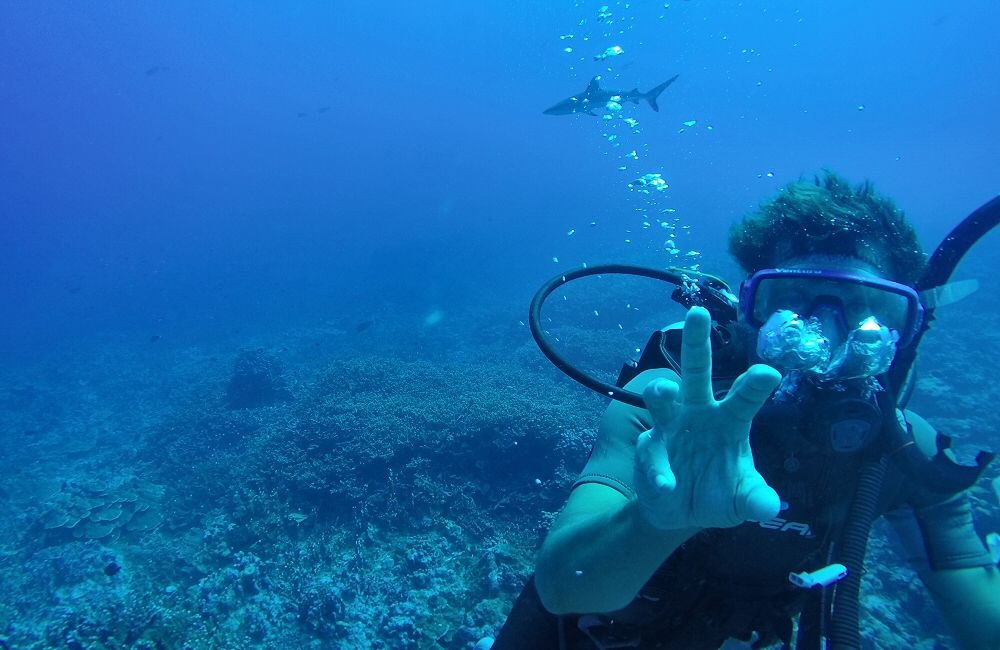
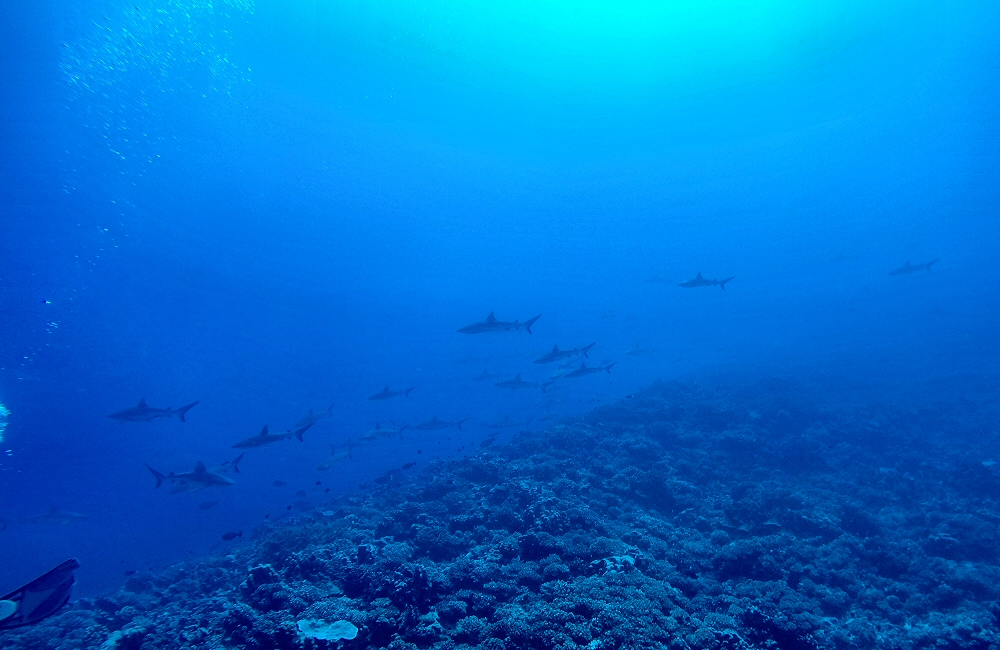
The dive through the pass was amazing. Dealing with scuba gear and being deep underwater came back quickly (thank goodness). After a brief and slightly concerning splash around on the surface, first coming up right under the dive boat and then having my BCD vent air noisily making me think I had a leak, we descended quickly to nearly 30 meters, and then drifted back into the lagoon with the current. Half way through, we stopped and grabbed onto the reef to watch a “wall of sharks” just a few metres away, in the middle of the pass at the edge of a coral precipice. Perhaps 80 of them, just slowly swimming against the incoming tide. They say that when a “big guy” comes through, like a hammerhead or tiger shark, these fellas scarper. Not today though. I’m OK with that.

2015 04 22 1400 Shark dive 2 2015 04 22 1400 Shark dive

That was yesterday. And then today, we made a short trip ashore to explore one of the motus we’d not yet visited, then weighed anchor and headed north into the atoll towards the other pass, where we’ll exit in a few days’ time. Anchor comes up just fine – whoopee! Sky is clear, wind is light. Visibility into the water is good. Beautiful. Along the way, at a reef like the ones we usually avoid, I hold Rafiki on station, bow into the wind, and Eva jumps in to have a snorkel around the coral.

2015 04 23 1000 Fakarava snorkeling 2015 04 22 1500 Boat

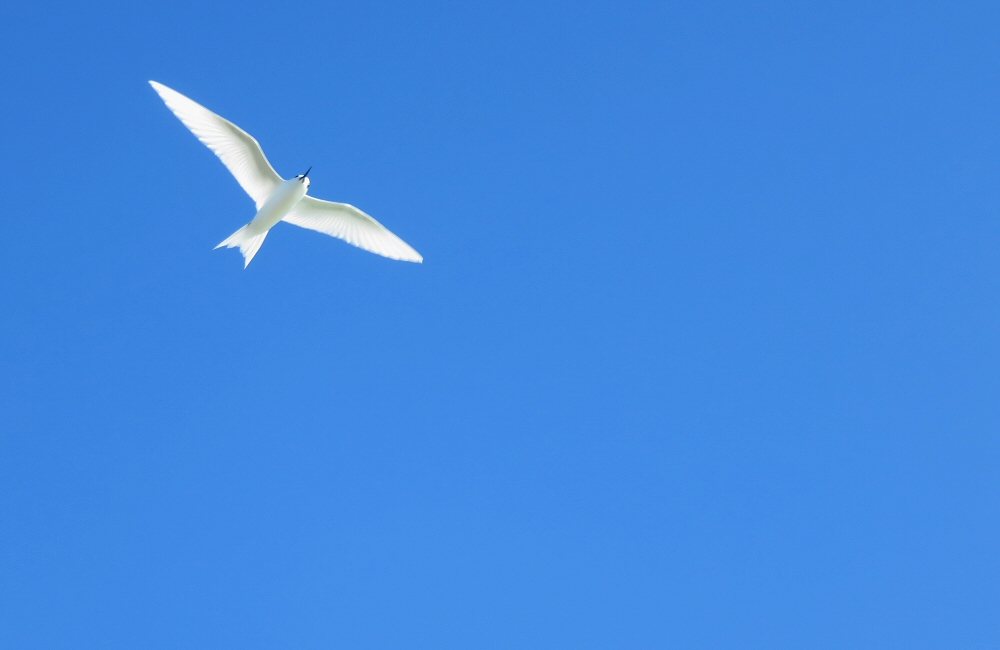
Just in time for lunch, we make it to an anchorage marked as Tukaega (16 20.3 S 145 29.7 W), again in mind blowingly blue water, a couple of hundred yards off the motu. Tucked out of the wind behind a dense thicket of palms and bushes, flat water, few coral heads, just how I like it. Nobody else here other than the fish and a couple of brilliant white tropic birds dancing around each other way above our masthead. They are so white that they reflect the bright blue of the sea on the undersides of their bodies and wings, like the yellow of a buttercup reflected under your chin.

2015 04 21 1500 Tropic bird

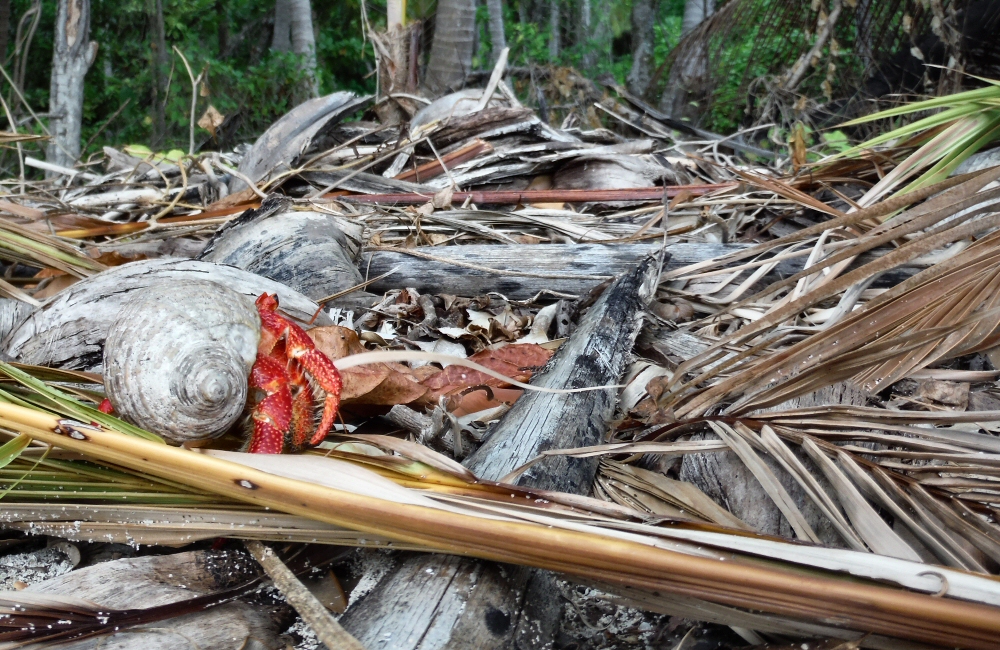
We spent the afternoon exploring – seeing what’s in the water and on the land, soaking up the magic of the place. As I pick my way through the palms, big crabs scuttle away from every footstep, and tiny lizards scoot off into their hidy-holes. I tried to find some nice shells on the beach, but there’s nothing – just lots of dead coral. Sometimes there’s a little shell that looks OK, but it always ends up having somebody living inside.

2015 04 23 1310 Fakarava Tukaega 2015 04 23 1300 Fakarava Tukaega

2015 04 23 Fakarava palms 2015 04 23 Fakarava

It’s now late in the evening (for sailors- it’s just after 8pm); the nearly new moon is bright in the sky, but not so bright that it overpowers the other stars, and we can still just about see the milky way. Jupiter is shining brightly next to Leo, Orion is sliding drunkenly on his side towards the horizon, and the southern cross is happily saying “you’re way south the of the equator!”. There’s enough breeze to keep the mosquitoes away, and to make Rafiki jiggle around so that halyards knock and water slaps cheekily underneath the back of the boat as it rides up and down. Bellies now full of Thai chicken curry, we’re a happy crew.

Makemo

Spent one night at the anchorage off the main village of Makemo, in the company of a French boat and what looked like a charter catamaran that came in through the pass at the midday slack tide. Just after we arrived, the French boat decided to re-anchor a little further offshore, but something didn’t go smoothly and they ended up very, very close to the reef, gunning the engine hard, man on the bow shouting “Avant, Avant!” and “A gauche! A droit!” to the lady on the helm. Fortunately they made it out. When we took the dinghy over that way later, there was only a few feet of water; they must have been scraping the bottom. It’s a lee shore here (wind blowing us towards the land) which is never a nice place to be, so after just the one night, and with a fresh stock of baguettes, we motored / sailed a few hours WNW to anchor at a spot three quarters of the way up the atoll (16 31.2 S 143 49.3 W). I’m also keen to get to uninhabited waters as soon as possible.

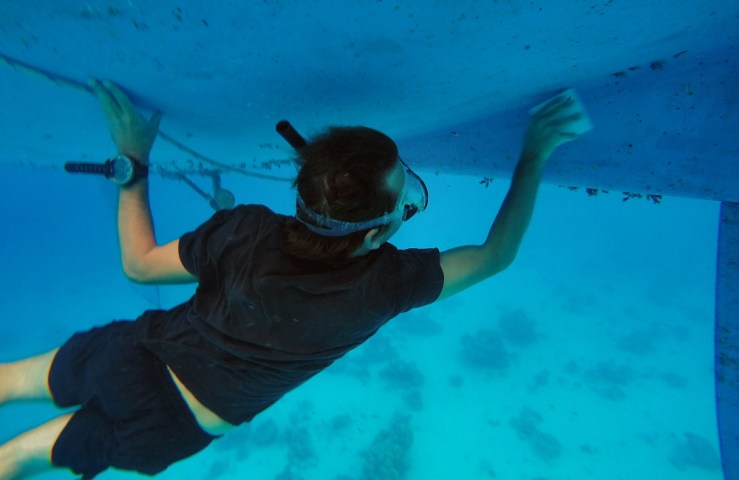
2015 04 16 1200  Cleaning the bottom
Dave cleaning the bottom


The lagoon is generally about 20m deep, with coral shallows rising up vertically from the bottom every half mile or so. The really shallow ones are easy enough to see when the light is good – when the sun is out and high above – but it gets a lot harder when it’s overcast, or if the coral is just a bit deeper. So Dave sits half way up the mast on the first spreader where he can see a bit better, acting as lookout. After a while, we get a feel for the area, can see that each reef is marked on the chart, and the chart is accurate, so we turn the engine off and drift downwind with just the jib up, winding our way through the shallows.

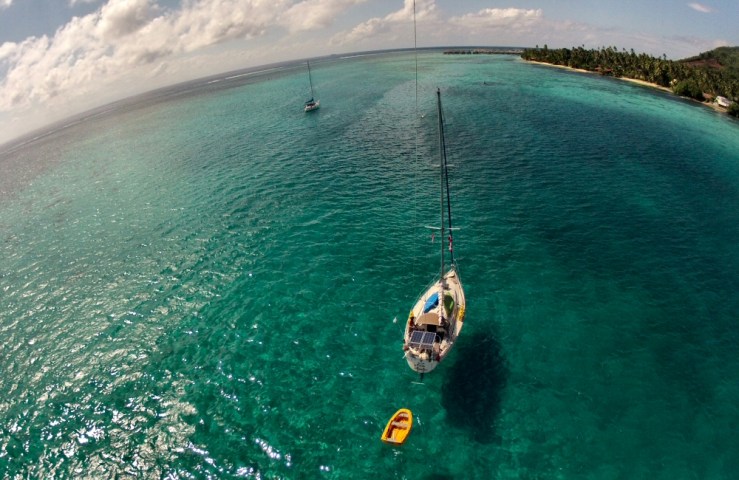
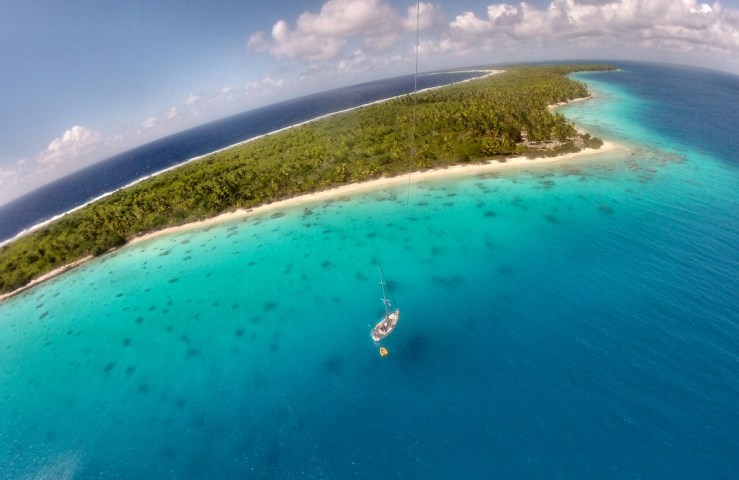
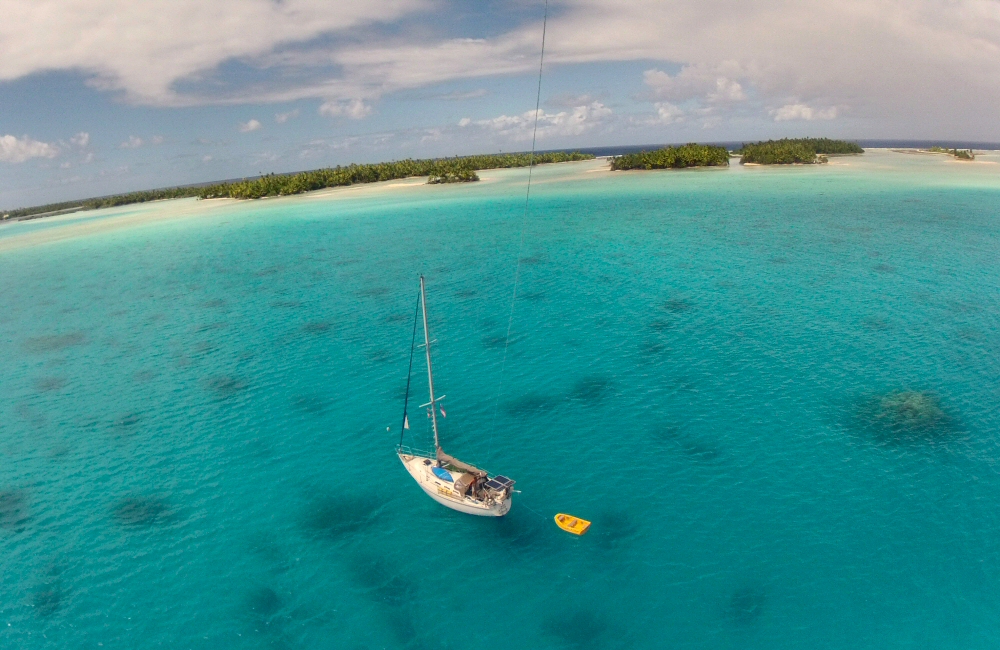
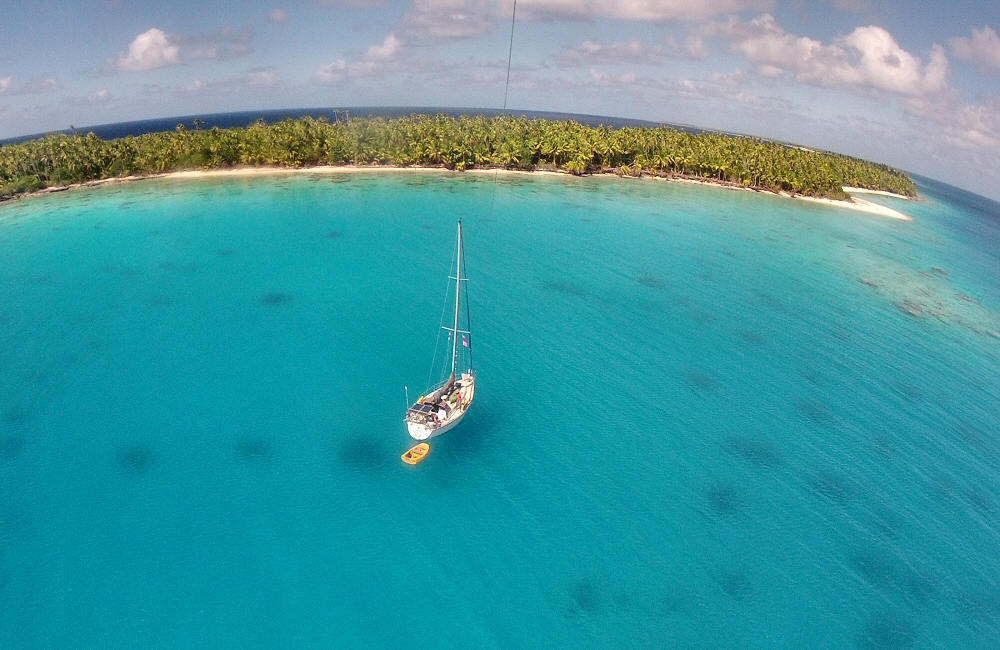
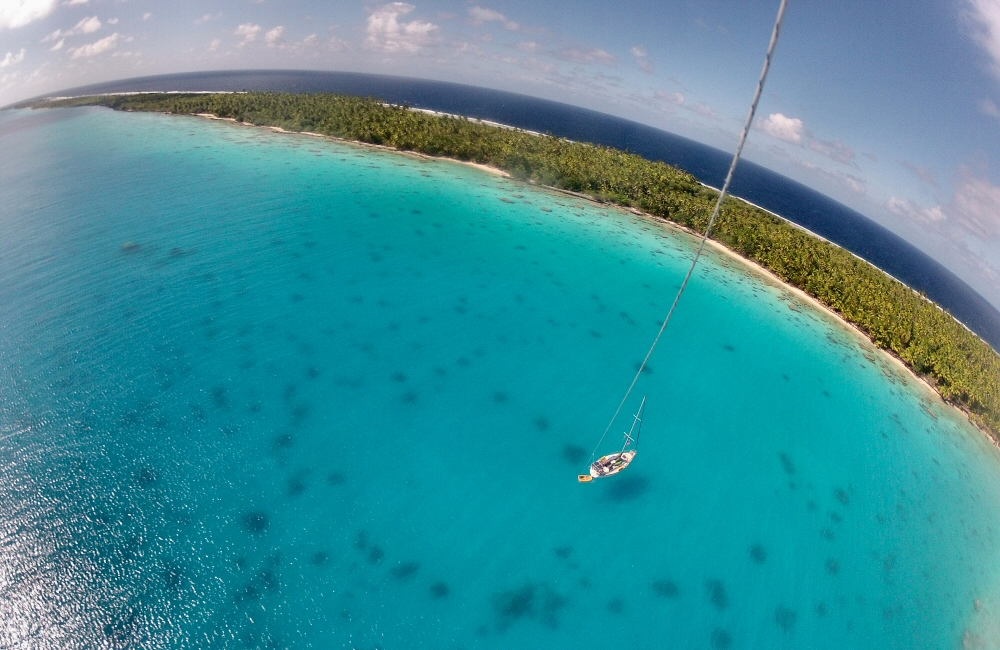
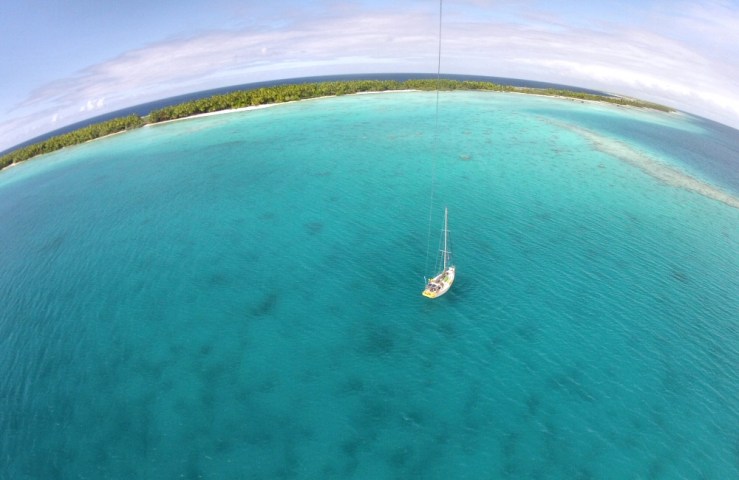
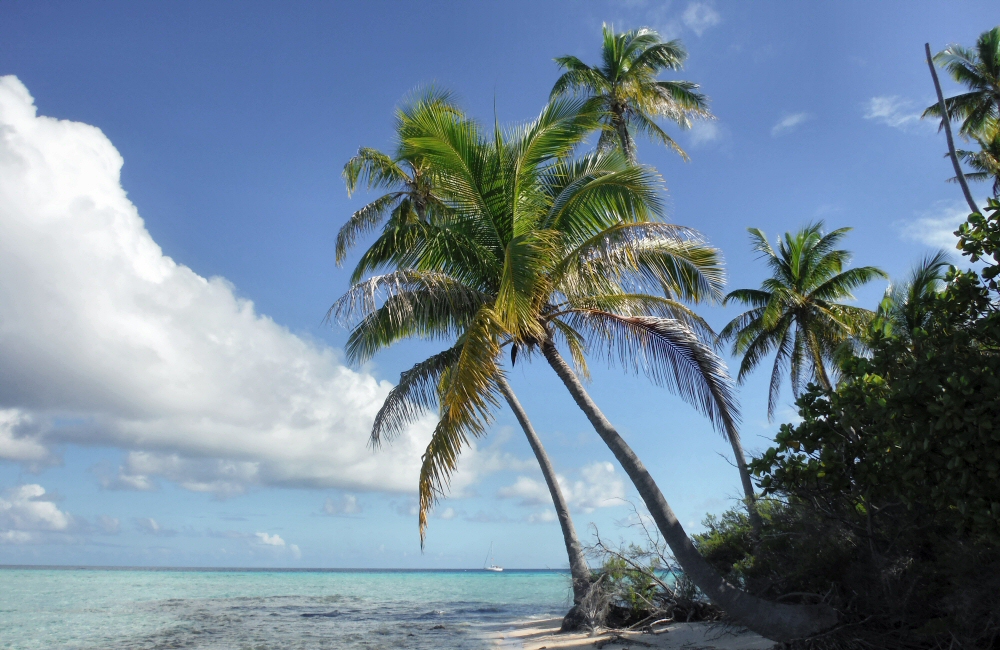
This anchorage is tucked just behind a bend in the motu (the land bit of an atoll), with a reef extending out from shore, which gives us much more protection from the easterly wind. There’s just enough breeze to send the kite up with a camera. Amazing colours – bright turquoise water, speckled with dark spots where there’s a coral head lurking below, then a hundred yards away a fringe of white sand before a thin strip of land, thick with green vegetation – mainly coconut palms, but also other stuff I can’t identify from the boat. Beyond that, the rich blue of the deeper ocean.

2015 04 17 1100 Makemo two
Anchorage at Makemo


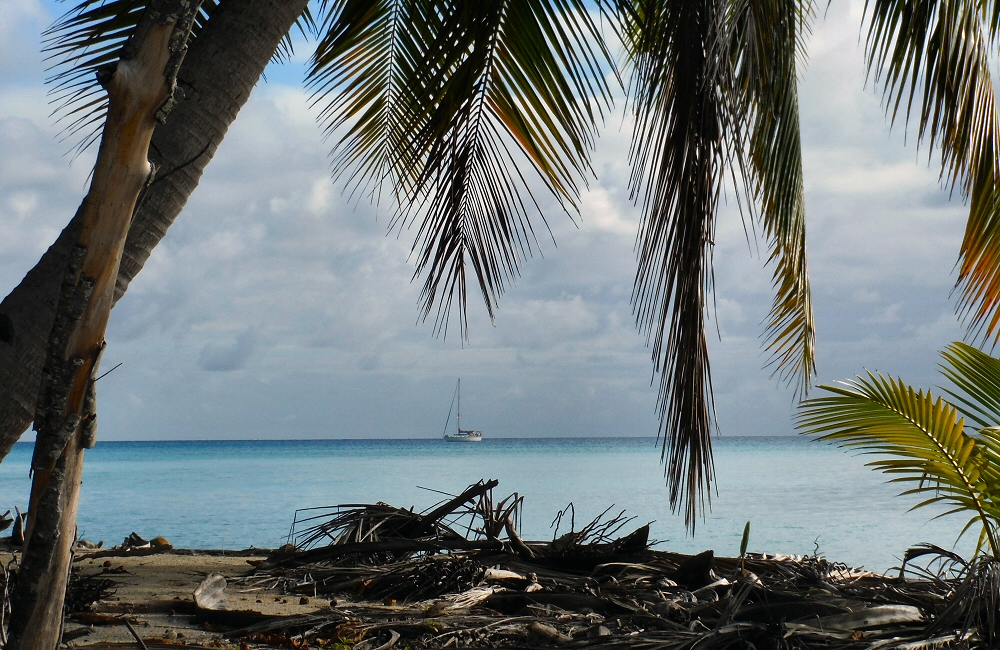
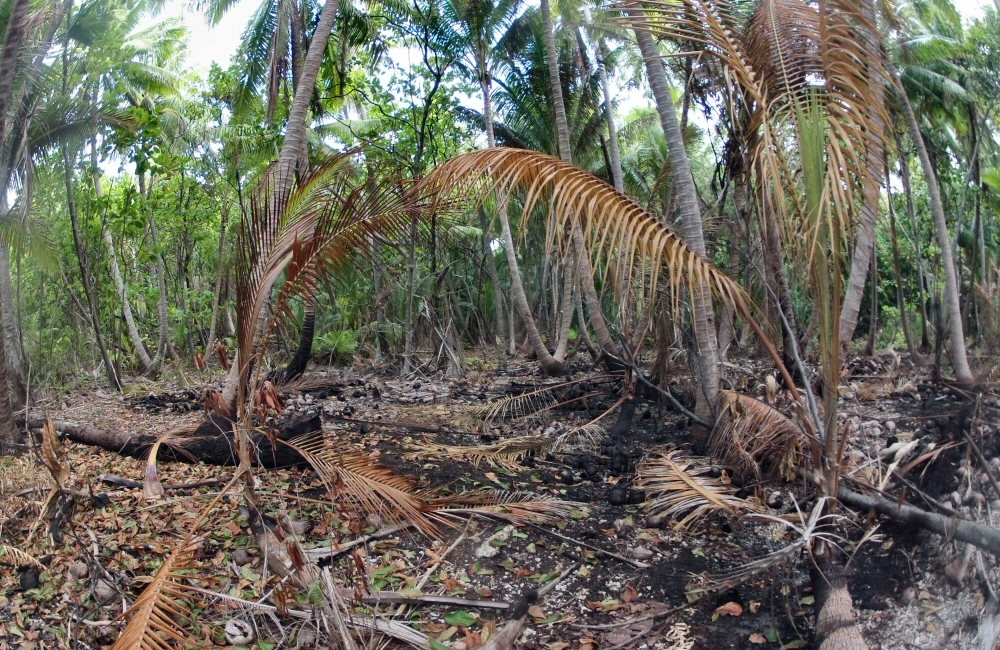
There’s a small ramshackle assembly of sticks and corrugated steel on the beach, it would be flattering to call it a shack, the only sign of human activity in what otherwise is a wild, uninhabited place. Amongst the trees there are piles of half burnt coconuts everywhere, and freshly cut palm fronds, can’t be more than a few days ago that someone was busy here. Looks like the meat and milk has been taken out of the nuts, maybe harvested for export? There’s the ruined foundations of a house – a low, square stone wall, coconut trees growing in and on it. Wonder when it was last lived in? Fast growing tropical bush reclaims abandoned dwellings so quickly, it might only be a few years. Nothing in the way of animal life other than the crabs and rats which scuttle around our feet. I hear no birds. It’s still damp from last night’s rain, upturned leaves holding tiny pools of water, sometimes with a bug in, having it’s morning swim. A bit further along the motu I discover a row of beehives, giving off an amazing smell of honey.

DCIM100GOPRO 2015 04 17 1500 Makemo two ashore 2015 04 17 1500 Makemo two Rafiki 2015 04 17 1500 Makemo two

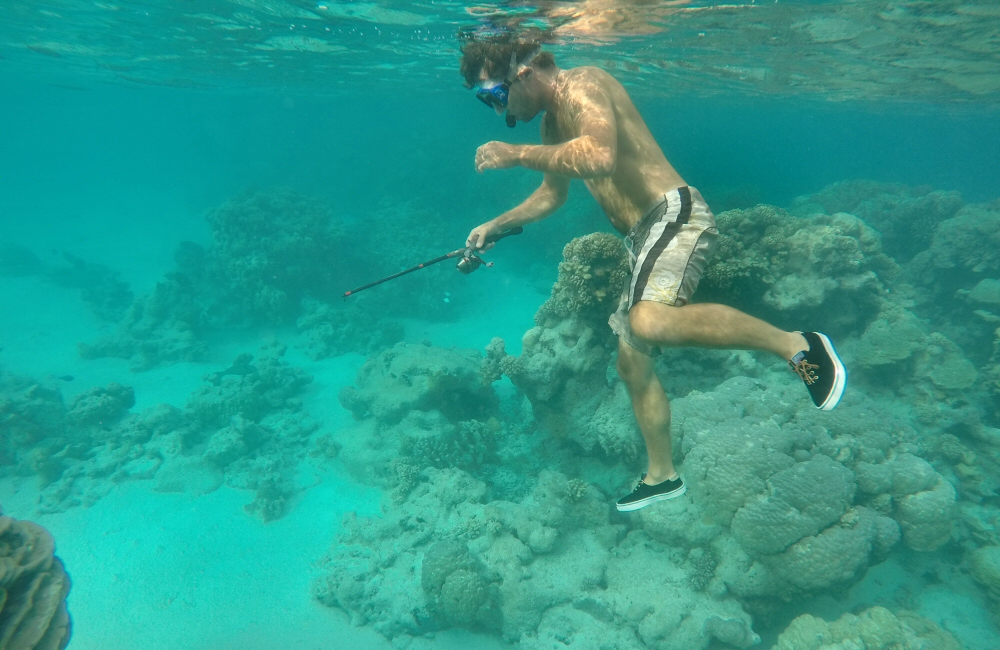
Back in the water we snorkel, but it’s a bit dead – not so much to see. Enough to catch a fish though, which breaks the line, snaps the rod and gets away! In the morning, we motor NW to find a place to anchor by the other (west) entrance to the atoll – Passe Tapuhiria. This time it’s my turn up the mast as lookout. We drag a fishing lure, but as usual it turns out to be just fishing, no catching. We motor around in the reefs and coral on the east side of the pass, looking for somewhere decent to drop the hook. Nothing looks great, so it ends up going down in 13 metres over coral. When the engine’s off I dive down and take a look. Ugh – coral heads EVERYWHERE. Tomorrow we’ll discover that this is going to make a tricky departure.

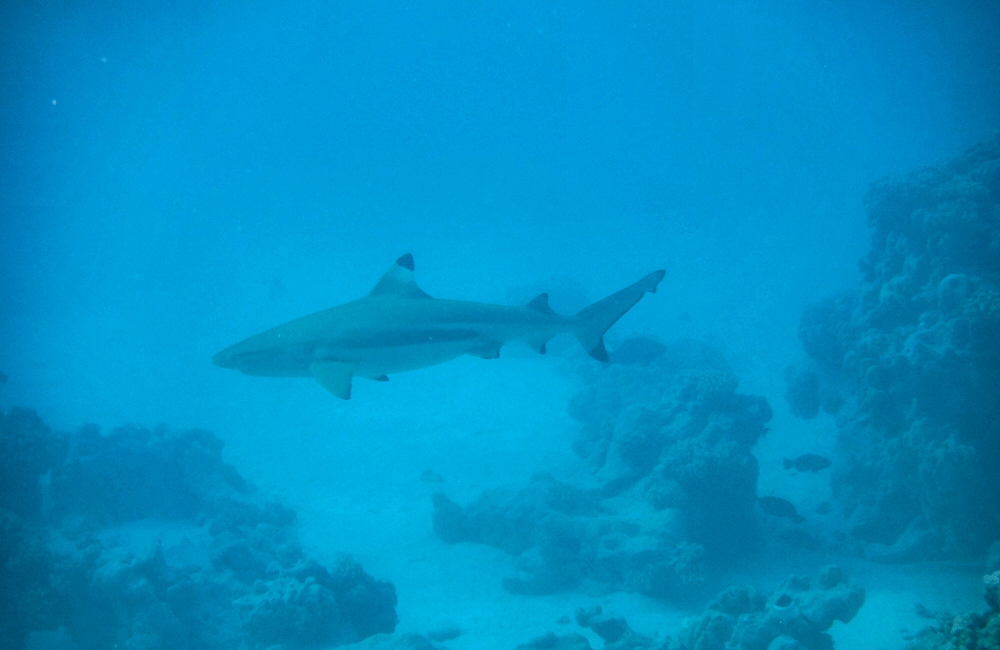
But first, time to see what’s under the waves. Amazing reef fish, SO many different sizes, shapes, colours and characters. And SHARKS! It’s a little unnerving snorkeling with sharks circling around, but these black tips are not known to be aggressive… we stay close to the dinghy anyway.

2015 04 18 1545 Makemo two 2015 04 18 1630 shark 2015 04 18 1630 Makemo snorkeling 2015 04 18 1600 Gone fishing

And of course the obligatory sunset photos …

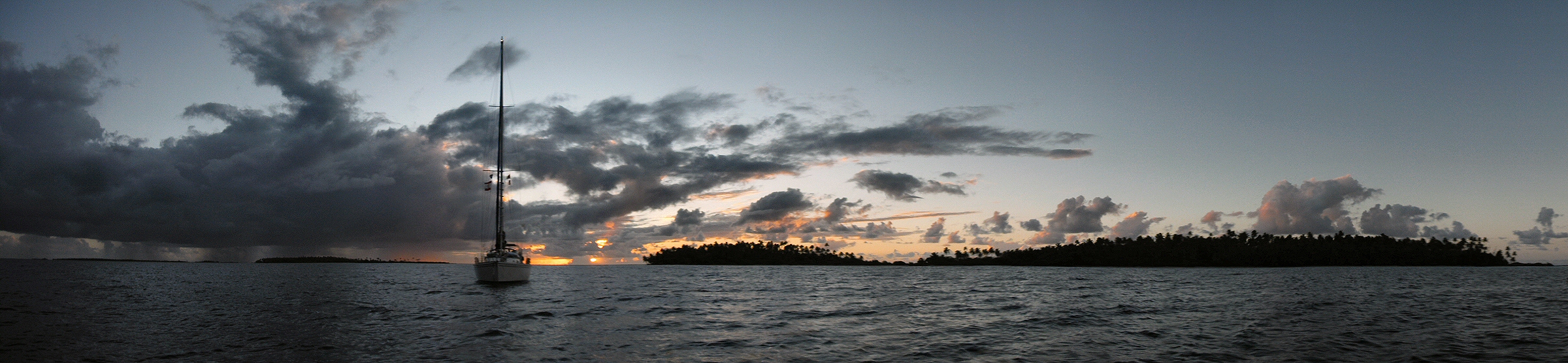
2015 04 18 1900 Sunset panorama
Anchorage at N end of Makemo


2015 04 18 1730 Makemo sunset 2015 04 18 1900 Sunset

Night brings rain and a stronger easterly wind, and because we’re on the western side of the atoll, there’s a good 40 miles of fetch for the wind to build up a reasonable set of waves. Soon Rafiki is bucking around viciously, the chain grinding noisily on the coral, every now and then catching on something and bringing the boat up short with a judder. I let out more chain and stretchy snubber line, which takes a lot of the jolt out, and lets me get some rest. But it takes us closer to the lee shore, and I don’t get a lot of sleep. Just before dawn, wind rises to 30 knots, and I’m looking forward to getting out of here, but worried that we’re not going to be able to get the anchor up.

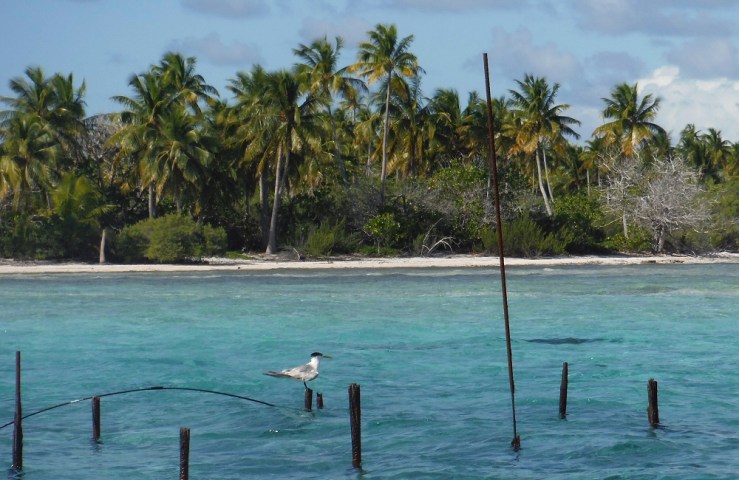
2015 04 18 1530 Tern
Same terns we saw in California


Slack tide is due at 1300, and expecting it might take a couple of hours to untangle the chain from the coral, we start the process a couple of hours earlier. It’s a mission. And nasty, with the bow pitching up and down at least a metre, I’m concerned that when the chain comes up short, the anchor firmly hooked under coral, something’s going to break. Eventually, after an hour and a half of maneuvering backwards, forward, left, right, chain in, chain out, with me in the water with goggles giving directions and heaving on the buoy line, Dave driving the boat and Eva driving the windlass, the anchor comes free. More and more sharks are gathering to watch the action, so I’m glad to get out of the water and motor through the pass and out to sea!

2015 04 19 1300 Leaving Makemo
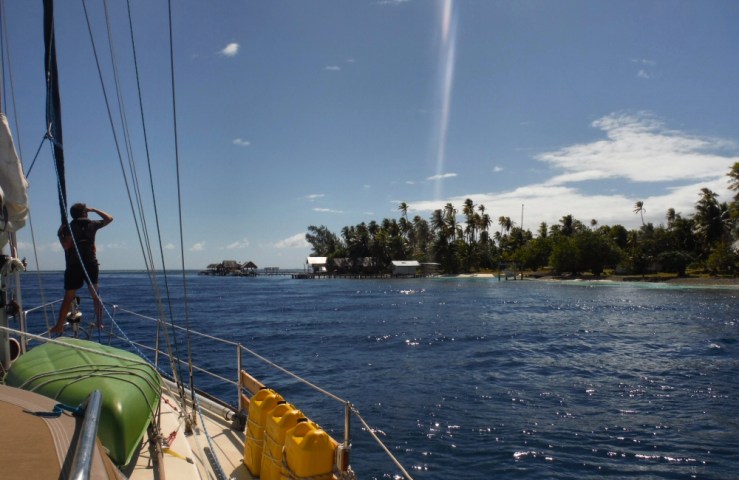
Motu on the west side of the pass out of Makemo


Sails up, engine off, now 90 miles overnight to Fakarava.