Bend

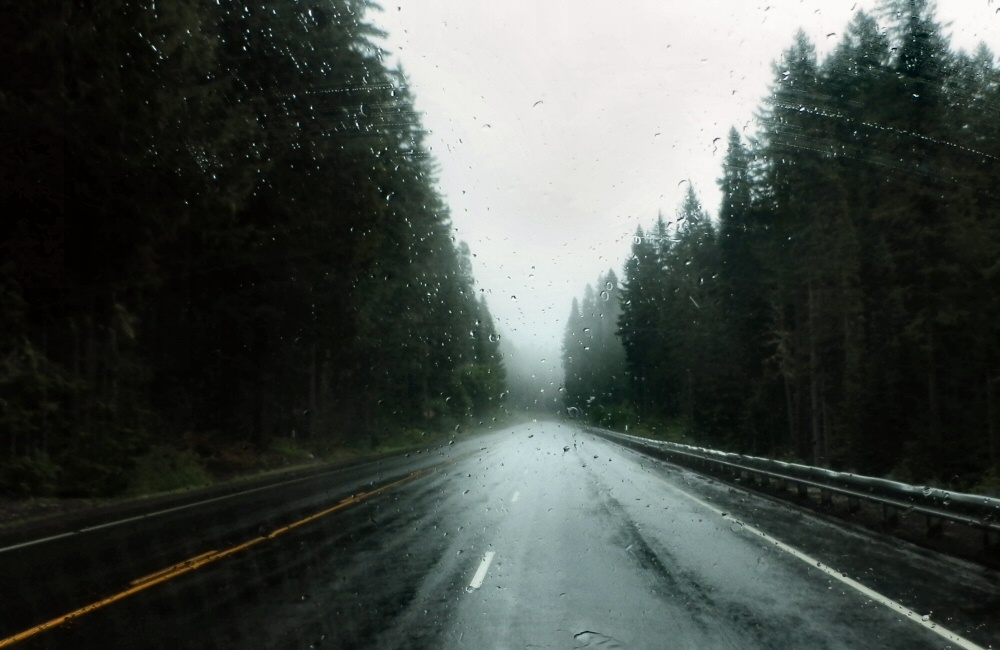
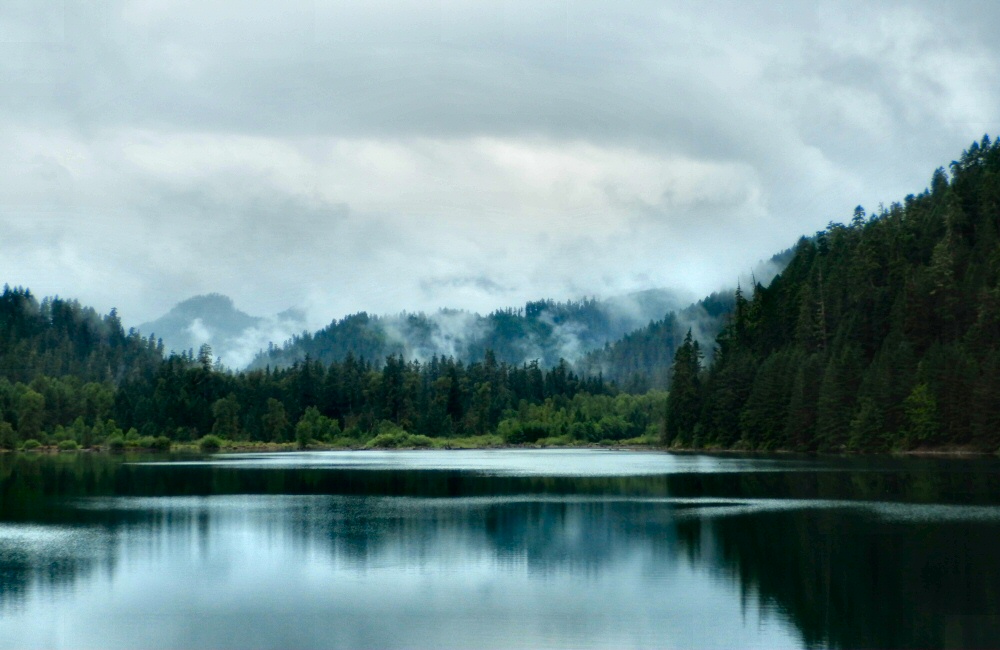
Yes, it’s definitely Hills Creek Lake. We followed it all the way to the end through more typically Oregonian scenery; hills and trees. I don’t think I’ve ever seen so many trees covering such vast areas of wilderness. The original plan was to do a mountain bike loop in Oakridge, just at the end of the lake, with a promised 7 mile downhill section; but the weather was wet and raining so I wasn’t up for a ride. Rose wasn’t up for wet, smelly bike gear in the van either, so we headed on to Bend.

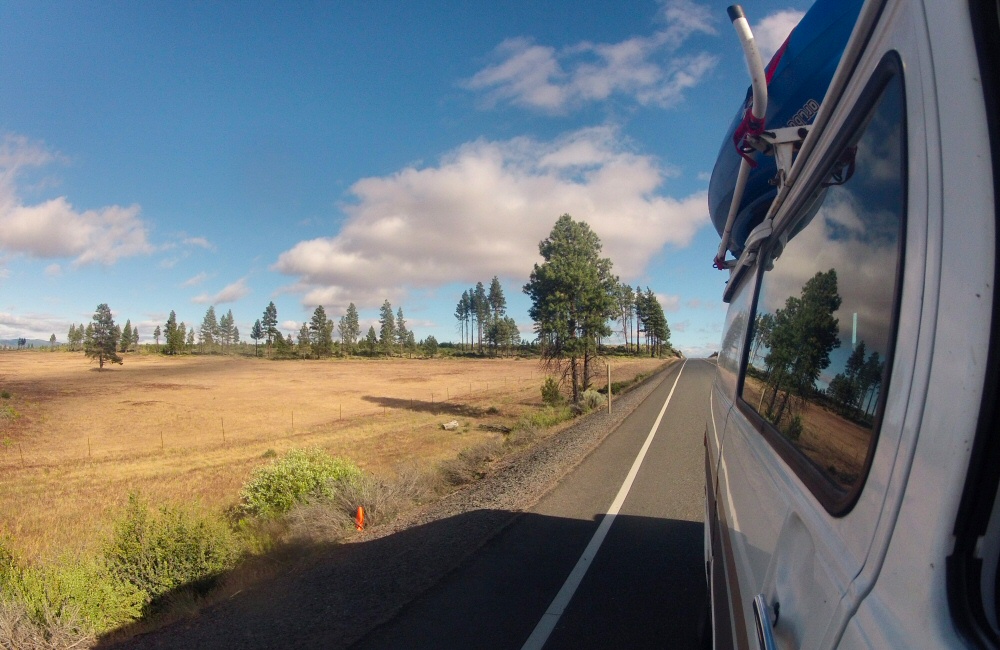
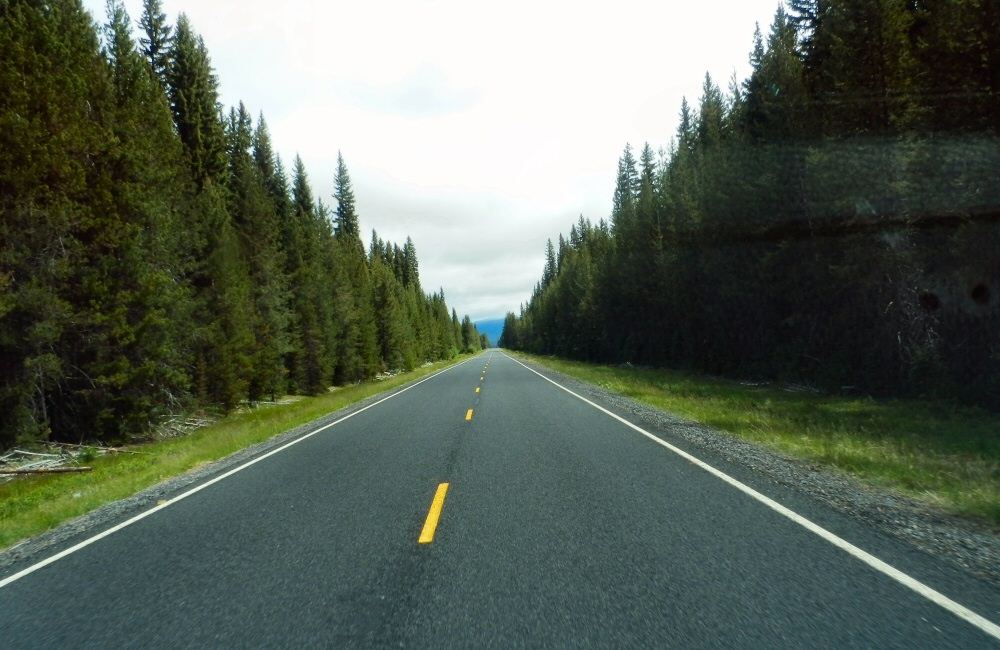
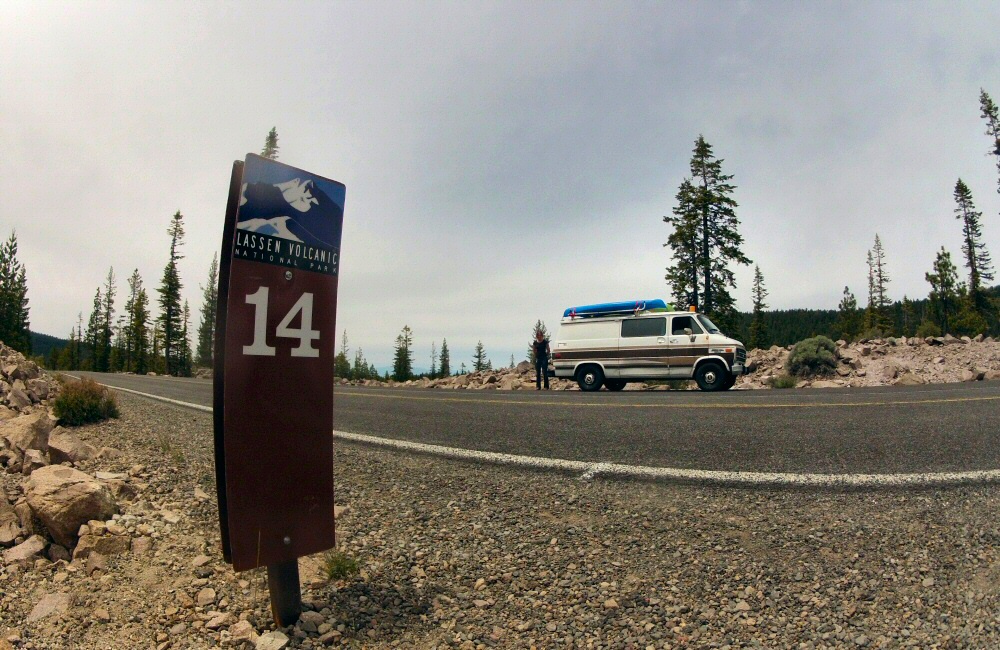
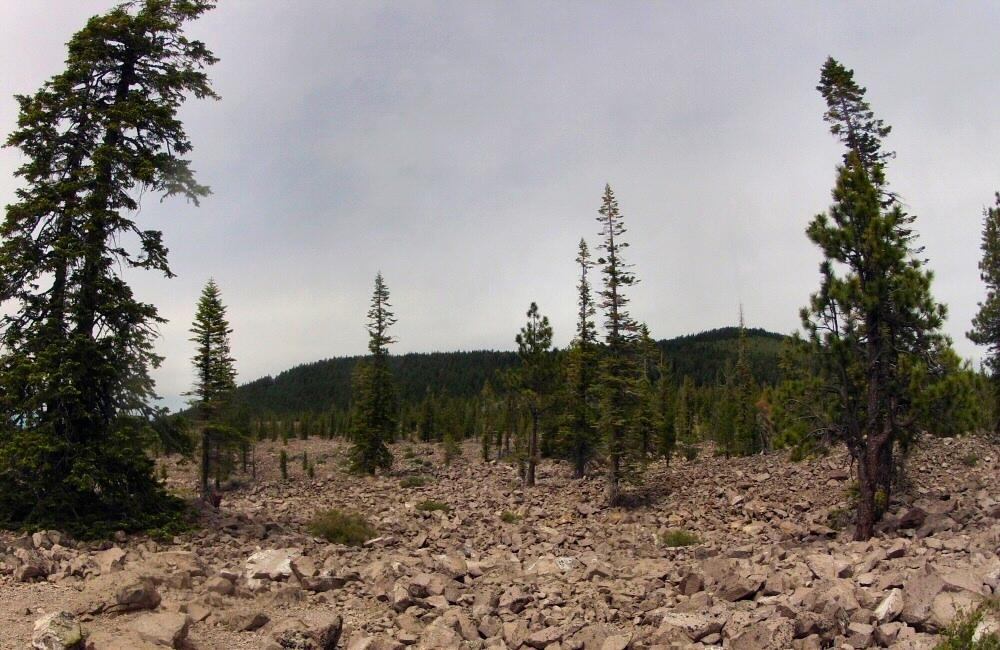
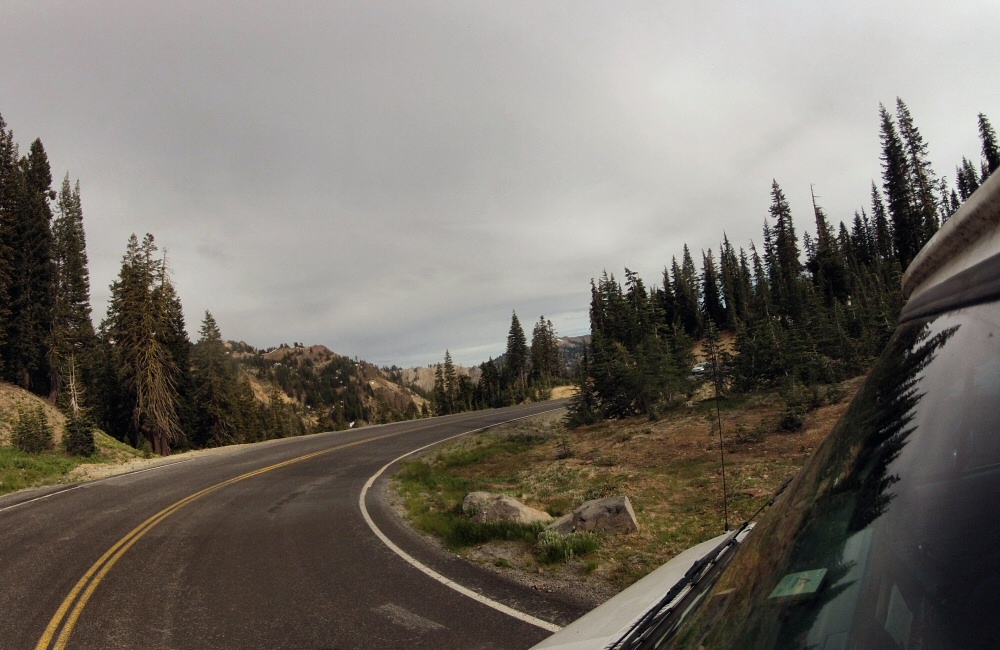
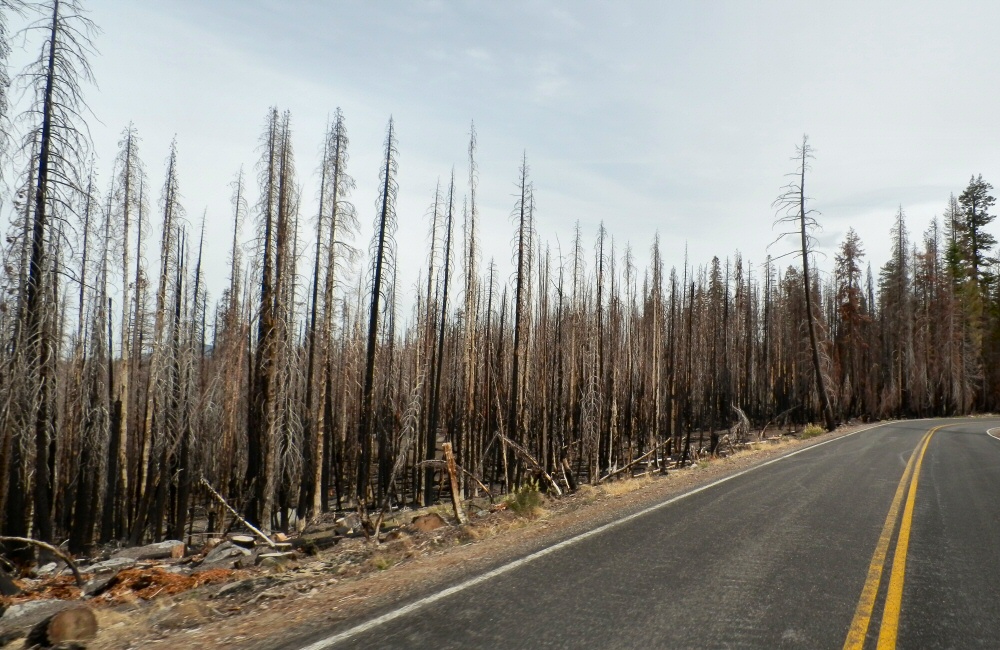
The Oregon Cascades Scenic Highway took us through the Deschutes National Forest, past lava flows and along more empty, tree lined roads. It’s not a place I’d fancy hitching. There’s nobody around! All the talk of an overpopulated planet is a little harder to understand out here. Makes you realise quite how much humanity has flocked to urban centres.

In Bend we stopped off at a bike shop to get an idea of where the best riding spots are (Bend has a reputation for being a biking mecca), to get a real coffee and to check in on some emails. We’ve had zero phone reception for days. No phone reception and no traffic would mean a long bike ride to get help if we had any trouble with the van… but a lot better than the same distance on foot!

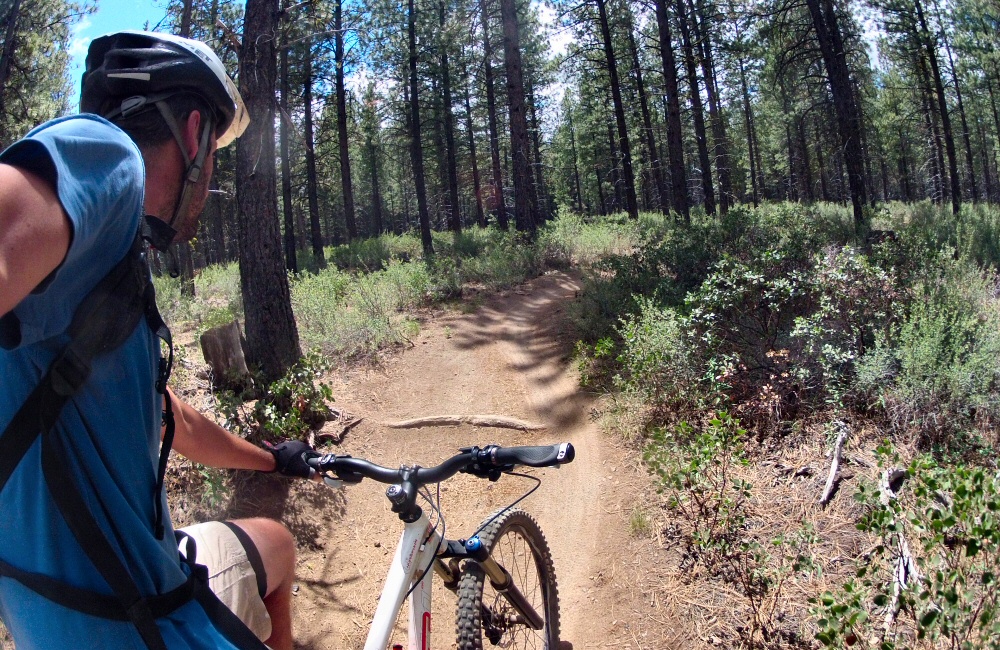
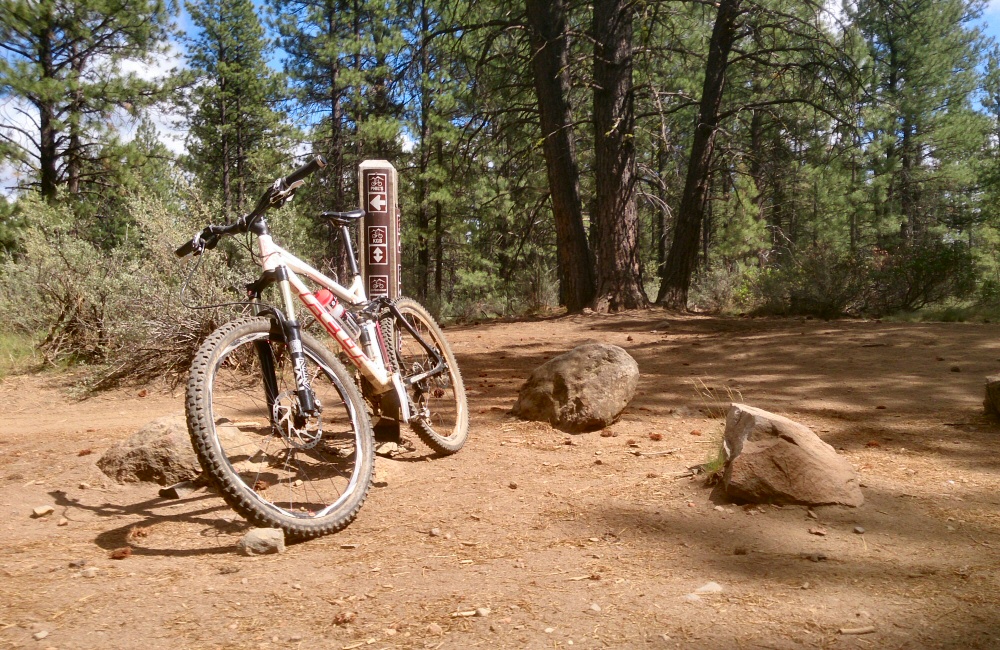
Spent a couple of hours riding in the forest just above Bend; from Phil’s trailhead. There are a load of marked trails here; some of them one-way so you can really crank it. Not especially technical, but very flowy, so it was lots of hard pedalling. I felt the altitude, but otherwise not in bad shape. Out on the trails I met a couple who’d come down from Seattle for a few days biking holiday, and a guy who’d moved to Bend from Idaho 6 years ago and says “it’s the best thing he’s ever done”. Otherwise it was pretty empty. Great to be back on the bike in the dust.

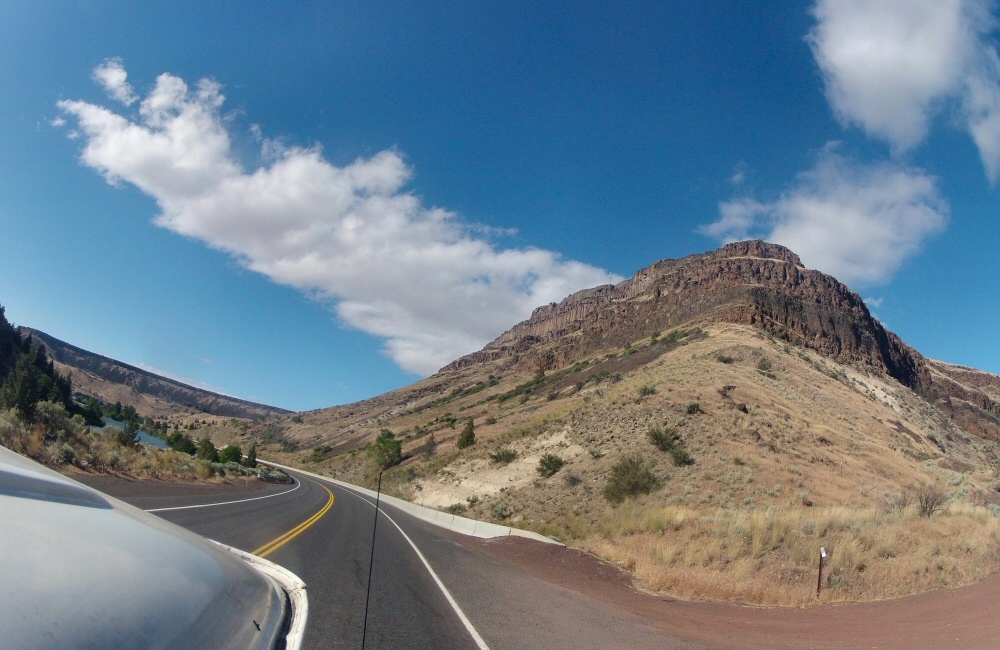
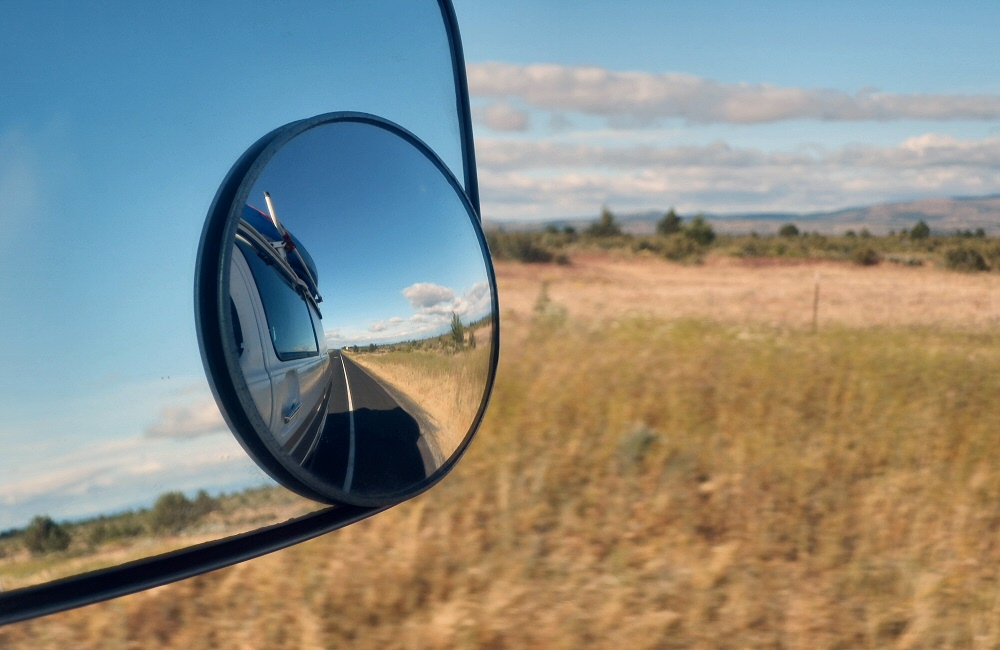
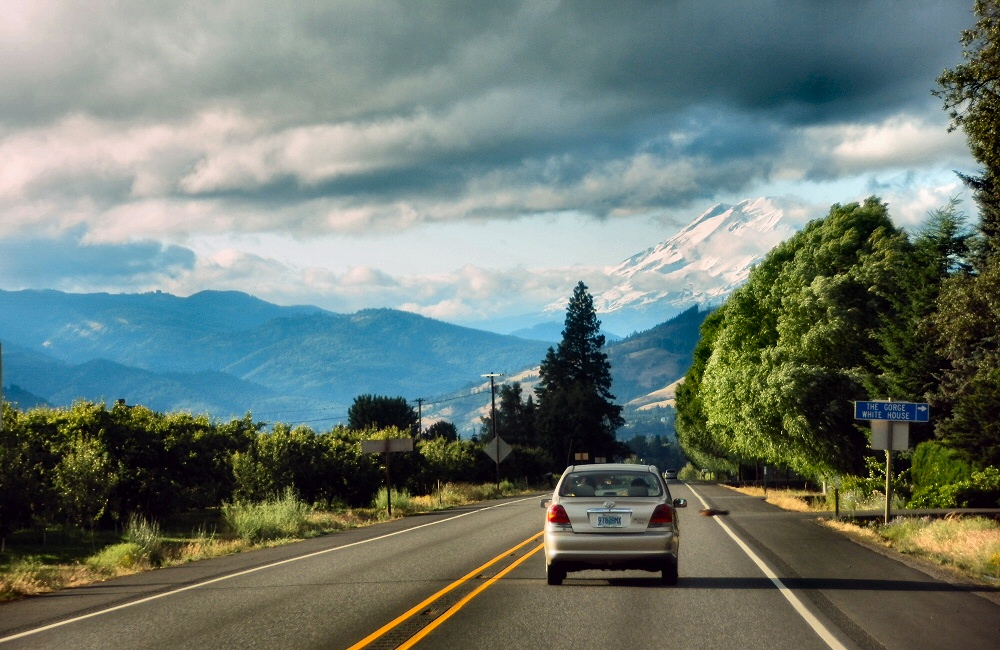
From Bend we headed north through Madras and over the Warm Springs Indian Reserve. I’m not quite sure what an Indian Reserve is; all we saw was lots of open land and yet again, new and impressive scenery. Beyond the Indian Reserve we headed up into the hills, into the cloud and rain again, before going over the summit at Barlow pass and down the Hood River gorge in the late afternoon light.

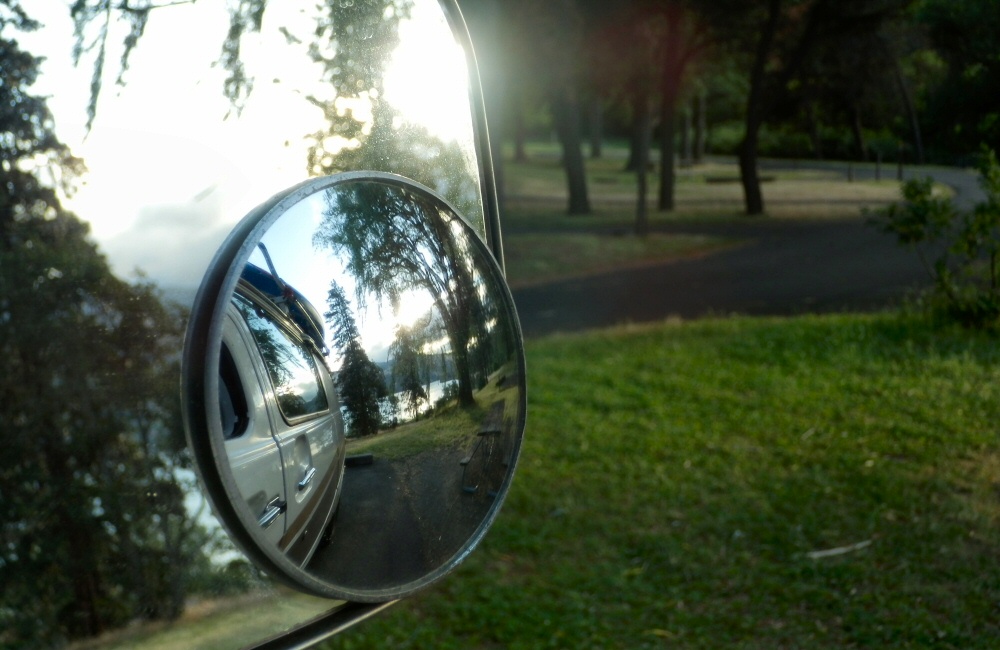
A shower was on the to-do list for today so we found a State Park campsite just along the freeway from Hood River (the town), at Memaloose. This place is windy! I was expecting wind since it’s one of the world’s top kite surfing spots, so shouldn’t really have been surprised. A train track ran along the bottom of the campground, so every hour or so during the night there was a thunder of engines followed by the rumble of hundreds of rolling stock going past. I (as usual) slept through everything but Rose found it a bit harder.

DCIM100GOPRO DCIM100GOPRO OLYMPUS DIGITAL CAMERA OLYMPUS DIGITAL CAMERA OLYMPUS DIGITAL CAMERA OLYMPUS DIGITAL CAMERA OLYMPUS DIGITAL CAMERA DCIM100GOPRO 06-17 Bend Phils Trail 2 OLYMPUS DIGITAL CAMERA 06-17-01-Hills-Creek-Lake-camp

Into Oregon

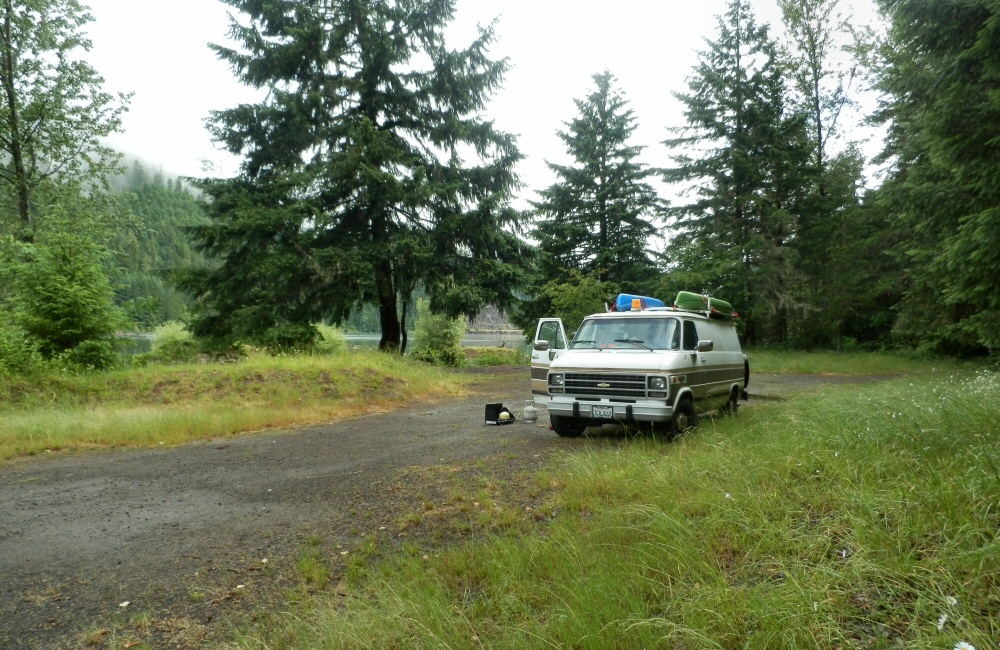
We’re sitting in the van, in the rain, near what I think is Hills Creek Lake, just south of Oakridge. I’m not 100% sure though. We’ve come over the top of the mountains from the south on an unpaved road, with only a national road atlas to go by. We’re definitely in Oregon, anyway. I thought that this atlas would only show the major roads (Oregon is about 12 inches top to bottom on the paper), but when it comes down to it on the ground, there really are no other roads here. It’s pretty wild. The atlas shows when roads are paved or not, and there’s not a lot of options between gravel and the interstate freeway.

So anyway, we had our second night in Lassen and then headed back into the park on Sunday to have a look at Bumpass’s Hell hot springs area. Now that’s more like it; lots of big, bubbling pools, steam and hot ground. Definitely tops my list of geothermal sites. No molten lava though. I might end up having to go to Hawaii for that.

DCIM100GOPRO OLYMPUS DIGITAL CAMERA

We had an early start, and were out of the park by mid-morning. As we dropped back down into the valley towards the I5 (Interstate #5) the temperature soared. Hot, sticky vinyl seats, sunburnt driving arm, windows open for breeze, dehydrating more and more every minute… We stopped off to buy provisions and a few things on the “left it at home” list- stuff like a chopping board, cutlery, washing up bowl.

OLYMPUS DIGITAL CAMERA

Onward. Northbound we rounded Mount Shasta, leaving it to starboard in a rush of gasoline fumes and noise. It was one of the places I’d wanted to spend some time around, but with our tighter schedule due to van repairs, we had to move on.

OLYMPUS DIGITAL CAMERA DCIM100GOPRO

Lava Beds National Monument seemed like a good place to stop for the night, so we headed off the highway and soon found ourselves buzzing along a gravel track, kicking up a right dust storm behind us. The road went on. And on. And on. Hmmn. Our fuel gauge was hitting the red and we were still deep in wilderness. Not ideal. At a cross roads just 4 miles away from the Lava Beds area we found a “road closed” sign which meant that we had to take a longer way round, and meant we’d miss the stuff we’d come for, including lava tubes that you can explore in. And it meant that we were touch-and-go with fuel. We emptied the 2-gallon spare into the tank and crossed our fingers. Eventually we crept into the small town of Tulelake, where the local store was still open and also had some gas. Result!

OLYMPUS DIGITAL CAMERA OLYMPUS DIGITAL CAMERA

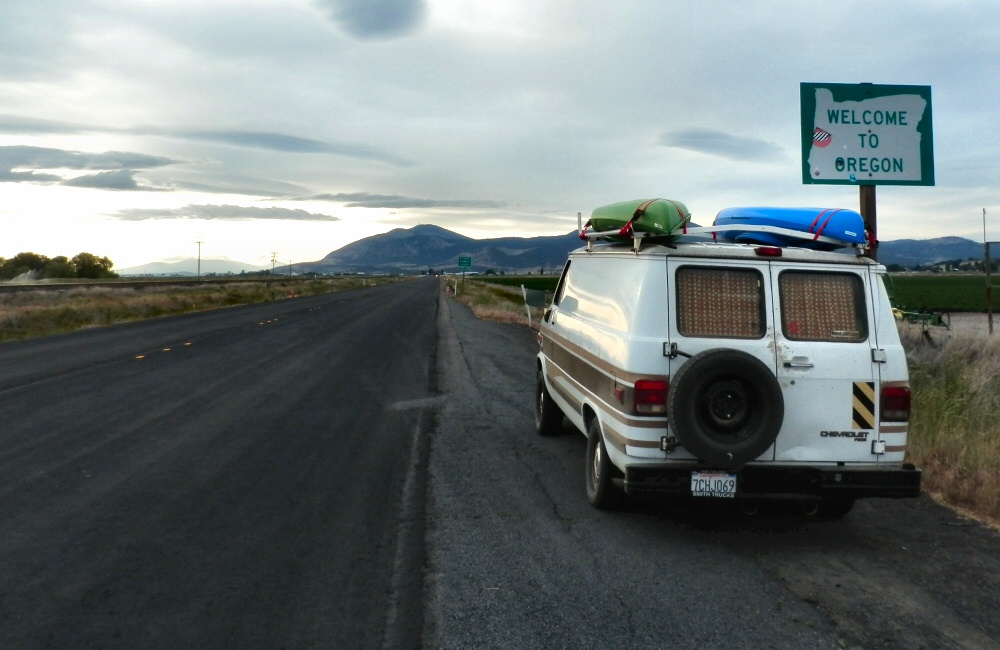
We trucked on, over the Oregon border, up past Klamath lake and found a nice quiet spot just off the road on a “winter recreation area”. I couldn’t quite figure out what this was; a large expanse of concrete with a winter shelter at one end. I think it’s where people park in winter before heading into the back country on show shoes, skis or snow mobiles. No snow around there now.

Wow, so that was all just yesterday.

This morning we continued north to Crater Lake National Park – Oregon’s only National Park. The ring round around the lake was shut; so we had to continue on the main road which did run along the western rim for a bit so we did get to see the awesome views. The deepest lake in the USA at over 500m, and also the clearest water; they say algae grows over 400 feet down! It was cold up there though; still snow drifts metres deep, and frost on the windward side of the trees.

DCIM100GOPRO OLYMPUS DIGITAL CAMERA OLYMPUS DIGITAL CAMERA

We only stopped for a few photos, then headed on to Toketee falls. Toketee means “pretty” in Chinook; they certainly were. The walkway stopped high above the plunge pool, I hopped over the barrier and scrambled down to the water for a very quick, very fresh swim. Such a beautiful spot; shame it wasn’t warmer.

DCIM100GOPRO

Next was a spot supposedly just 4 miles up the road; Umpqua hot springs. After at least half an hour and many miles into the mountains later, we still hadn’t found it. On the way back down we spotted a sign in marker pen pointing up a road we’d not yet tried. Someone trying to keep the hot springs secret!

Not far down the bumpy gravel road a chap was sitting at the side of the road with a broken motorbike. His chain had come off and a load of links were bent. I stopped, we had a wrestle with some tools to the point where it looked like he could at least limp back to the main road. We left his bike by the side of the track, he hopped in the van and we headed up to the springs together. A bunch of folk were living there full time, in tents by the river. The springs themselves were 4 or 5 separate pools perched on the edge of a cliff, the hot water feeding the top pool. Each pool further down was a little cooler than the one above it. Nice to have a soak for a bit.

Jim (with the motorbike) decided that he could probably make it back to Eugene to get a new chain on his own, so we left him to it. He ended up leaving his towel in the van; luckily he’s from Vancouver so we’ll drop it off in a few days’ time.

Just half an hour later we were on gravel tracks again, heading north, aiming for Oakridge. This time we made it all the way over the mountains without any closed roads or fuel scares, and here we are by the side of Hills Creek Lake, bellies full of steak sandwich. I’m pretty sure it’s Hills Creek Lake. We’ll find out tomorrow!

Lassen Volcanic Park

Finally, after 4 days waiting for the van to come out of the garage, I got the call from Joe to say it was all done. I picked it up, paid the bill, we packed up and got on our way in the late afternoon. It was nice having a few days going slow in the marina, but both our minds were ready to start travelling; and we want to spend some time around the Vancouver area before catching up with family in the Rockies at the start of July, so we don’t have all the time in the world.

After 6 hours of hot driving up through the vast agricultural central valet of California we pulled into a campsite just inside the north western entrance of Lassen Volcanic National Park, in the dark. I like arriving at new places in the dark, as long as we have somewhere safe to park, because the next morning is much more of a surprise. The campsite was fairly full, but still space left for us.

This morning we spent a few hours sorting out the van, preparing it for living in. Tins in one box, quick-access food in another, fixed a new magazine rack to the wall, shuffled stuff around. It feels like we’ve got a lot of stuff, but nothing I can think of that’s not going to be needed. Two bikes plus biking kit, two kayaks with paddles and buoyancy vests, a bag of climbing kit, my kitesurfing bag tucked away under the bed, a tent and backpacking kit, cooking gear, a stack load of books and a bag of clothes each. As everything finds a home it will probably feel more organized. We’re using the gas tank from the boat as I hate the thought of having to throw away loads of the disposable propane tanks that they seem to use for everything here. Hopefully we’ll be able to find places to fill it up.

OLYMPUS DIGITAL CAMERA

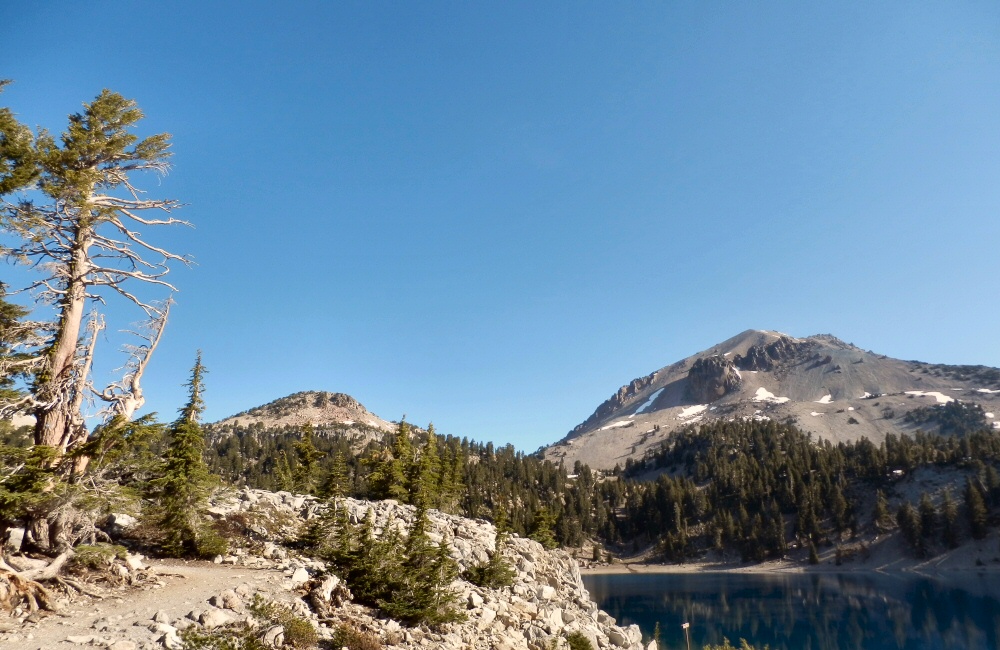
We hiked up Lassen peak today; the highest point in the park at 10,000-odd feet. Starting at around 8,000 meant that it only took just over an hour and a half to get to the summit, where it was a lot colder than the car park. Still a fair bit of snow around. It’s funny seeing other walkers stepping oh-so-cautiously along easy snow sections, sometimes sliding down on their bums or crawling on all fours. Reminds me of one of my first trips to Scotland with Ian and a couple of other buddies from Sheffield. We went to Glencoe, aiming to climb Stob Corrie Nan Lochan, but it was far too warm and wet for any mixed rock and ice routes, so we just hiked up a snowy couloir in the rain. Ian taught me that walking in soft snow is all about confidence, you need to commit to each step and understand how the snow moves under your feet; you’ll never slide far, especially if you’ve got a walking pole or ice axe for balance.

The road through the park is closed in winter and is used as a cross country skiing loop. That’s got to be dramatic. Lassen volcano last blew its top in 1915. The summit was strewn with new rock, less than 100 years old, and the crater looks pretty gnarly now with lots of freshly (in geologic terms) hardened lava.

Whenever I’m wandering around on the slopes of a dormant volcano, I wonder how much warning you get before an eruption. These days there are so many tourists around, if it blew up now we’d all be in a lot of trouble. I’ve not seen any signs about eruption warnings. Back in the bay area there are loads of signs “You are entering a Tsunami hazard zone” when you go anywhere near sea level.

In the distance is Mount Shasta; another volcanic cone rising from the flat plains. It looks a fair bit bigger than Lassen, and probably has deep snow on its upper slopes. Not one to tackle this trip though.

DCIM100GOPRO DCIM100GOPRO DCIM100GOPRO DCIM100GOPRO OLYMPUS DIGITAL CAMERA OLYMPUS DIGITAL CAMERA

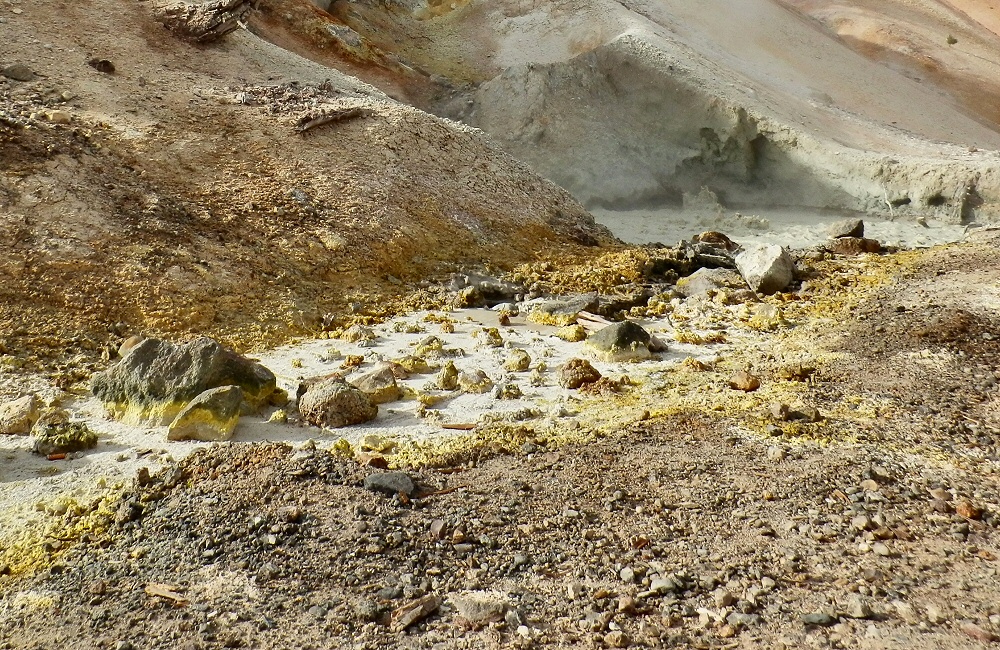
Tonight we’re parked just inside the southern entrance to the park. There’s a small “walk-in” campsite by the parking lot and a bunch of RVs dotted around. Seems you don’t have to pay if you’re not using the campsites; but we still get the convenience of water and toilet block. Just up the road is a hot, bubbling mud pit and sulphurous steam vents.

OLYMPUS DIGITAL CAMERA

Funny to think we were seeing the same steaming ground and smelling the same eggy hydrogen sulphide just last week in Iceland.

DCIM100GOPRO OLYMPUS DIGITAL CAMERA

So far the “volcanic” aspect of Lassen hasn’t really been impressing me; we’ve seen a few dormant, non-smoking volcanoes and a few steam vents. Perhaps it’s because we’ve just been in Iceland. Tomorrow we’re going to take a look at Bumpass Hell which is the largest geothermal centre in the park – which does look quite impressive from the photos I’ve seen.

The park has a relaxed feel, it’s not busy; in fact two of the camp grounds in the centre of the park are shut (Silver Lake north and south). It’s half way through June so I’m quite surprised. There’s no snow on the ground at those sites. Shame, as they looked nice.


Still waiting …

It’s now Thursday evening and we still don’t have the van back. Turns out that the bushings in the lower suspension arms won’t come out – too corroded – so they had to be sent off to a local machine shop to get the oxy-acetylene blowtorch on them. They should come back from the workshop tomorrow, and then the van gets reassembled and sent off for wheel alignment. We’re now running 4 days behind plan which sucks a bit – it’s eating into time we’d rather spend exploring.

But, we are getting a load of jobs done. I’ve fixed the roller furling drum; the bottom half was rotating which meant that furling / unfurling was risky. Don’t want to get a jam up there. I fitted a bright LED spotlight to the shelf above the table (at last!) so that we have a light in front of us (rather than behind our heads) for drawing and computer work.

DCIM100GOPRO DCIM100GOPRO

I changed the engine oil and filter today – that was a bit more of an effort than I expected, but no major hurdles. Since the engine is low in the boat (as with all boats) you can’t get a tank in underneath and just drain it like you can with a car, so you have to pump the oil out manually. The pump I bought ages ago does the job, but it takes ages. At least it works.

I’ve also replaced the pump that drains the inside shower tray; the original couldn’t prime itself if it was just air in the pipes. There’s a local “consignment” store just around the corner which sells a load of second hand boat parts, which is pretty handy. All our electric pumps aboard are now ShurFlo, which means they have the same attachments and should be interchangeable if we need to switch one out for another.

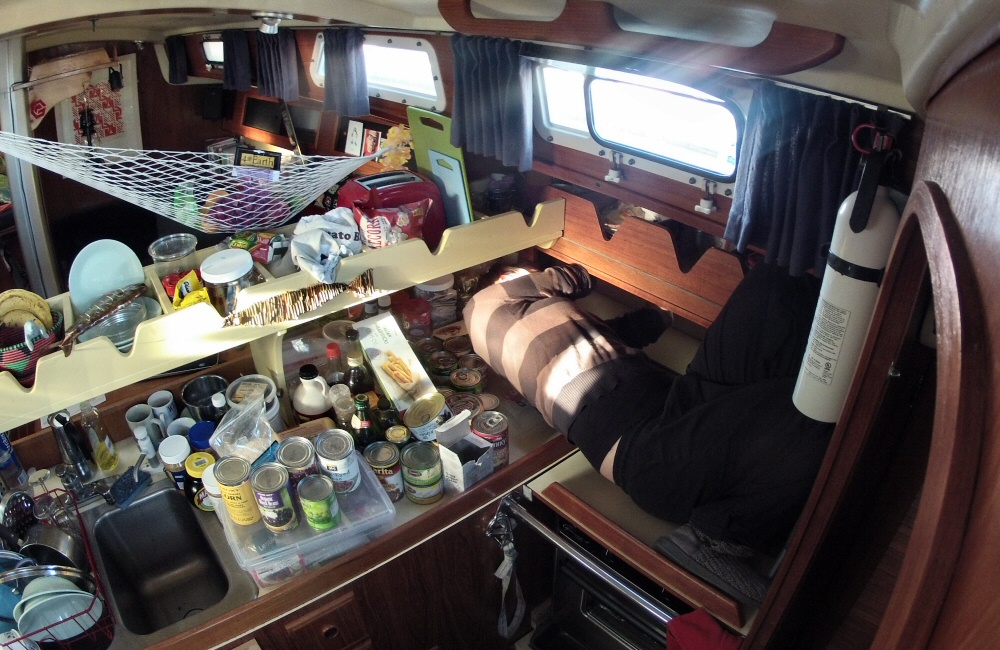
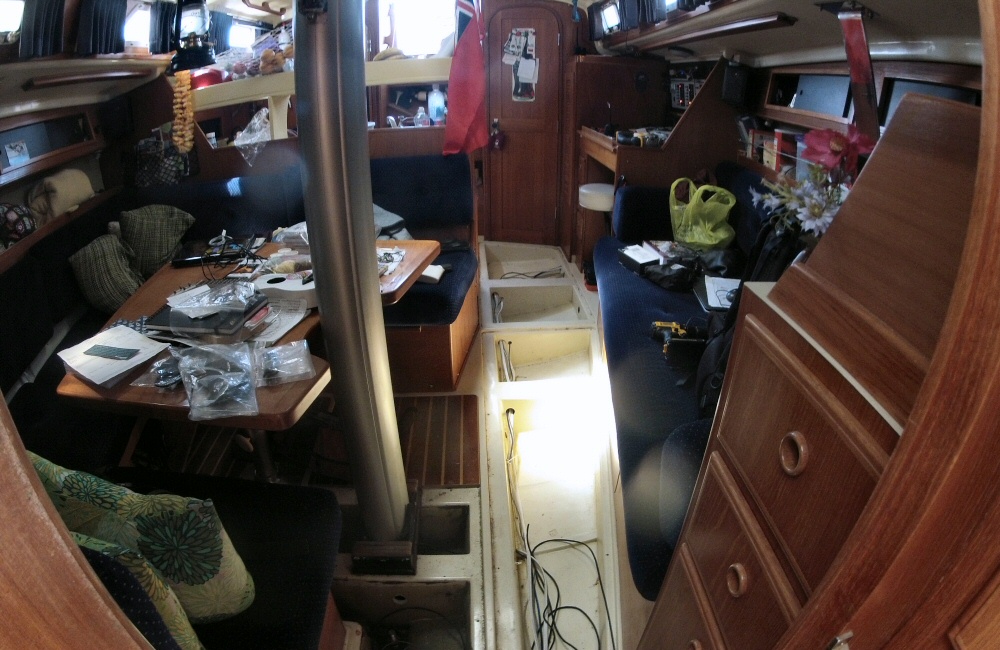
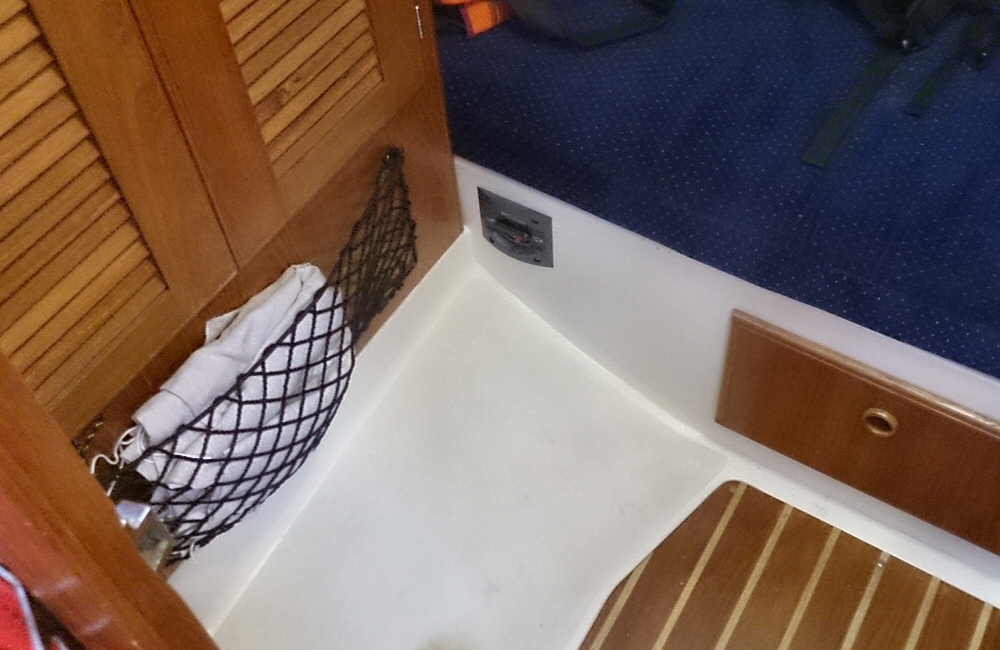
We’ve been sorting through lockers, clearing up and tidying up, making a fair bit more space for filling with things like food. Rose has been fixing the windlass power cables to the top of the lockers so it doesn’t waggle around and chafe, contorting herself into crazy angles to get at screws in the back of small spaces.

Hopefully we’ll be on the road tomorrow … before the Friday traffic … Rose overheard some kids in a mall the other day saying that it’s only a couple of days till their summer vacation, I’m hoping that we don’t get caught in holiday traffic heading north.

Posted in USA

Windlass installation

Over the last few months I’ve found loads of information from various forums and blog posts online … apart from windlass installations on the Pearson 36-2, so here’s some information on how I did it, in the hope that someone else out there will find it useful.

Seeing as we’re going to be headed much further afield soon, and anchoring out a lot, a windlass was on the “need” list. I also wanted a spare bower (main) anchor, so decided to get a new 20kg Rocna and keep the old 35 lb CQR as the spare. I decided to err on the side of caution and buy 5/6″ chain; 150 foot of it. To haul all this lot up, I chose a Maxwell RC8 windlass; because it had the ability to take a winch handle in emergencies as standard, whereas others needed an expensive add-on. The windlass only comes with a toggle switch and I wanted something to use up at the bow, so bought a couple of Maxwell foot switches.

I already added a dedicated engine battery under the aft cabin bunk, and as the windlass is always going to be running when the engine is on, I decided to take power directly from that.

There were a couple of options for mounting the windlass;

1) behind the anchor locker, with the gypsy poking out on deck
2) in the anchor locker itself, angled back for the right chain pull

Unfortunately there’s not enough space to mount this windlass through the deck behind the anchor locker opening; the front of the windlass would extend a couple of inches forward of the rear edge of the hole. I could have modified the locker lid and build a frame / bracket for the front end of the windlass, but thought that was a bit “hacky” and would have looked a real mess. Ended up with the second choice, which also keeps the windlass nicely out of the weather.

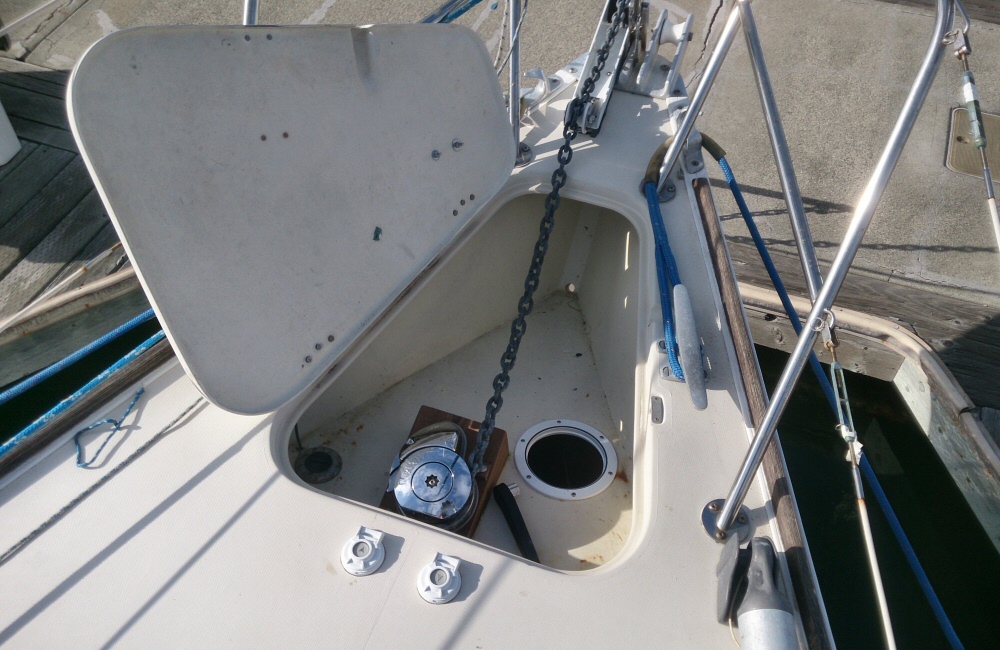
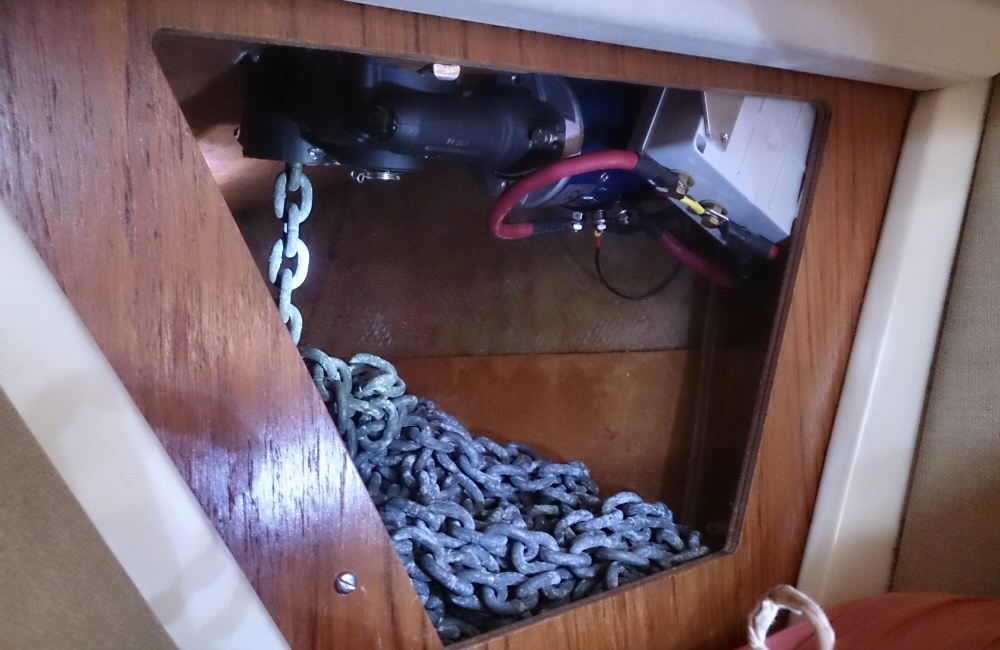
Chain locker

I turned the space in the bow, under the anchor locker, into a chain locker. Having the windlass drive and wet chain in the same airspace isn’t ideal, but needs must… Ideally there would have been a way to lead chain aft so it’s not all in the bow, but the water tank under the v-berth prevents that. The combined weight of anchor, windlass and chain puts the boat bow-down a good 3 inches or so (!) which is far from ideal – but we’re still a long way off our cruising weight so as long as I load as much as possible towards the stern we should be level again; outboard, life raft, 20 gallons of diesel … not ideal to have weight in the ends but again, not many other options.

I reinforced the sides of the locker with 3mm ply glued to the inside of the hull, and gave it a good coat of epoxy. The water-fill pipe also comes through this space, and since I didn’t want chain sliding around to chafe through the pipe I wrapped another layer of fatter pipe around it. This new chain locker should drain into the bilge; it’s now all sealed around the edges apart from a hole at the lower forward end. Any green water over the bow will go into the deck locker and then overboard through the bow drain; I’m hoping that very little should get below.

Mounting the windlass

Having the windlass mounted in the locker, which is quite a bit lower than the deck, meant I needed a mount that knocked the angle back a good 20 degrees or so to make sure that the chain ran on and off the gypsy at the right angle. The floor of the locker itself ramps downwards towards the bow too. I got a local carpenter buddy to make this up for me from laminated teak for a hundred or so bucks (teak is expensive!). The teak is bolted to the bottom of the anchor locker with 4 large coach bolts, and plenty of epoxy. Sticking this down was pretty committing! There were loads of interesting angles to calculate here; coach bolts, windlass mount bolts, a hole for the windlass drive, and a hole for the chain.

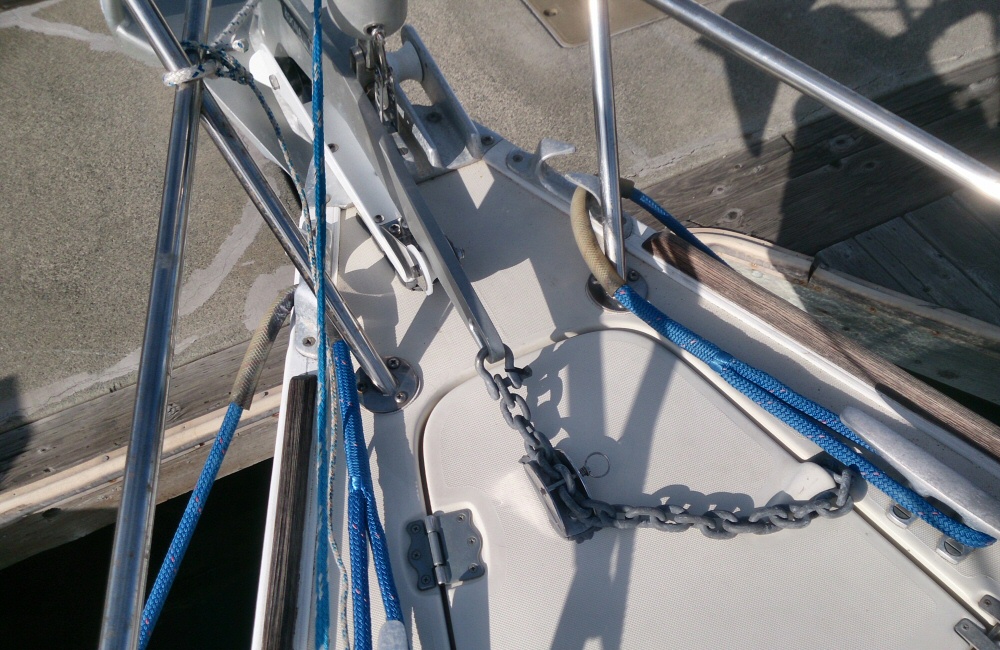
Because the whole assembly is tilted back a fair amount, part of the chain hole (hawse pipe) sits above the back of the drive motor below, so I extended the hawse pipe section with some PVC pipe, the bottom of which you can just see in the photo of the chain locker. So far I’ve not had any trouble with this feeding in or out. However with 150 feet of chain we do get pile-ups every 50 feet or so. Having someone down below to knock the chain pile aside was not an option so I cut an access hatch in the bottom of the anchor locker, just to the right of the teak windlass mount, which makes it easy to deal with chain pile-ups from on deck.

Anchor and roller

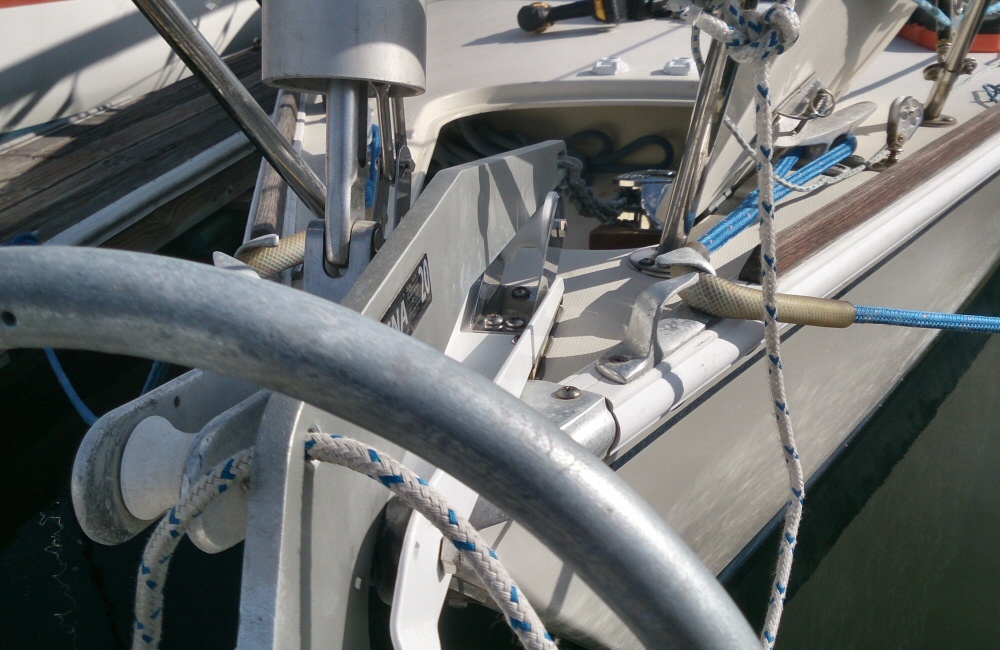
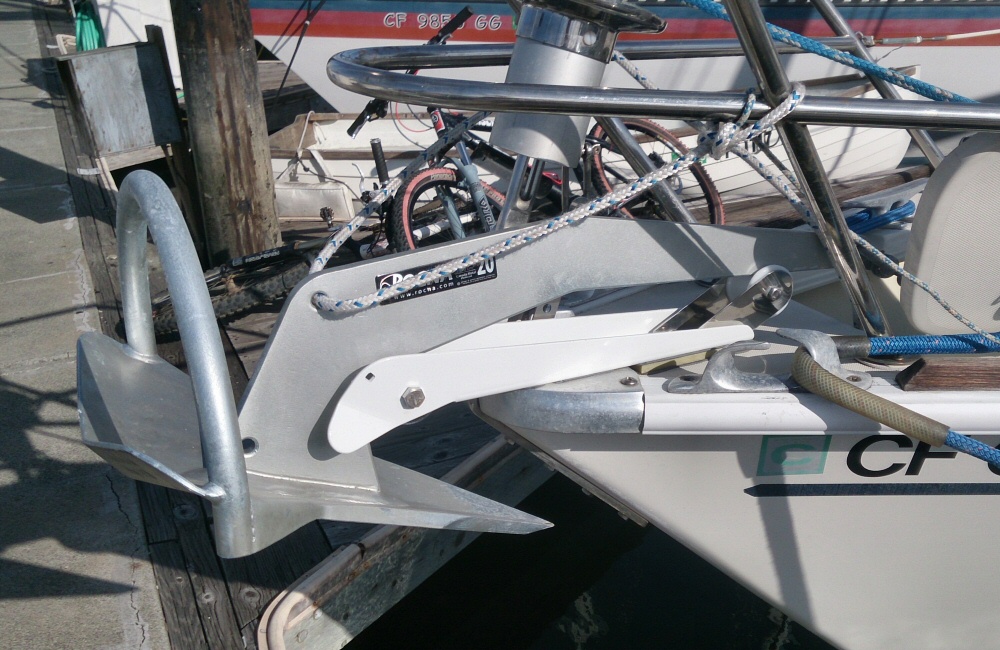
From the photos you’ll also see that I’ve mounted the anchor on the port side of the bow. This is because I wanted an anchor roller designed for a Rocna rather than use the under-engineered alloy roller that comes standard on the Pearson 36-2. I bought a Windline (URM-2?) off eBay, and added a Lewmar roller on the aft end to carry the chain clear of the forward end of the locker. The windlass is fairly deep in the locker, so the chain would have taken a nice chunk out of the deck, as well as rubbing directly on the back end of the main anchor roller. Not good.

Controls

I added the foot switches on deck, which is just where I’ve always seen them when I’ve been anchoring on other boats, but in hindsight I should have put them in the locker itself, seeing as you have to have the lid open to operate the windlass anyway – it would have kept them out of the weather and out of the way. Some folk would have a control on a cable instead. I might fit one as well; as backup in case the switches fail. Maybe. I haven’t yet mounted the toggle up/down switch that came with the windlass; if this goes in the cockpit somewhere then that will be the backup option. The windlass has a clutch so you don’t need power to drop the hook, but there’s the possibility that we need to get the anchor up in a hurry to leave a lee-shore anchorage, and I don’t want to be messing with wires; I like to have backups for safety-critical kit.

Which brings me onto the manual lift option on the windlass itself. The centre winch handle hole is for the clutch, and the one on the outside of the gypsy is to haul the chain in manually. As I write this and look at the pictures in detail, I see that the handle isn’t going to go all the way round in the space- doh! At least it can come up bit by bit.

Power

Power to the windlass is via 1 AWG welding cable running directly from the engine battery under the aft cabin bunk, via the circuit breaker, through lockers and cavities along the starboard side of the boat at eye level, to the bow. The cable run was pretty straightforward; accessing each bulkhead with a 25mm hole saw was simpler than I thought it was going to be.

Does it work?

For passage making, the anchor is stored on the roller and lashed with line. There’s also a chain lock bolted to the top of the locker lid. When we get to an anchorage, we undo the chain lock, loosen the line, slide the anchor forwards a few inches and re-lash it. This gives enough room to open the locker lid. Dropping the anchor then means undoing the line and slipping the clutch on the windlass.

So far so good. We’ve not had lots of use out of it but everything works exactly as expected. When we’re just using 50 feet of chain, there’s no need to knock over the pile in the locker as it comes in.

I’ll post another report once we’re 50 anchorages into our trip 🙂

Anchor 01 Anchor 02 Windlass Windlass switch Chain locker Anchor 04 Anchor 03 Anchor locker


Waiting for the van

I dropped the van off at the garage first thing Monday (yesterday) morning to get them to do a check-over before we head off on our 6,000+ mile loop of Canada and the US, hoping that it was going to just be one or two new bushings and an oil change. Got a call from the guy in the ‘shop with the news that we need a whole bunch of new front suspension parts since it’s so worn out. New tie rods, lower control arms and bushings, if I remember correctly … and two new tyres. Plus the rear brakes are almost out. We’re going to be doing a load of mountain miles where I definitely don’t want sketchy brakes, so we’re going to get new drums and liners. It’s all going to add up to nearly the cost of the van (ouch!) – but we did get a good deal on the van to start with, and hopefully should be able to recoup this cost when we sell it.

It’s also delaying our departure date; we were planning to head off today but it’s now looking like the van will be done late tomorrow, and as we want a full day of driving to get quite a long way north before our first stop, we’ll probably set off on Thursday morning. No big deal though, we’re catching up with a few things, I’m enjoying reading and not really doing much else at all. Starting to settle nicely into a very relaxed way of being.

I’d get cracking with a load of boat jobs to save us some time in September, but I left my toolbox in the van. Ah well. We had a pedal around Alameda island today; across to the West coast to see the beach. Looks like a great kite surfing spot. Of course my kites are also in the van…

Catching up with buddies

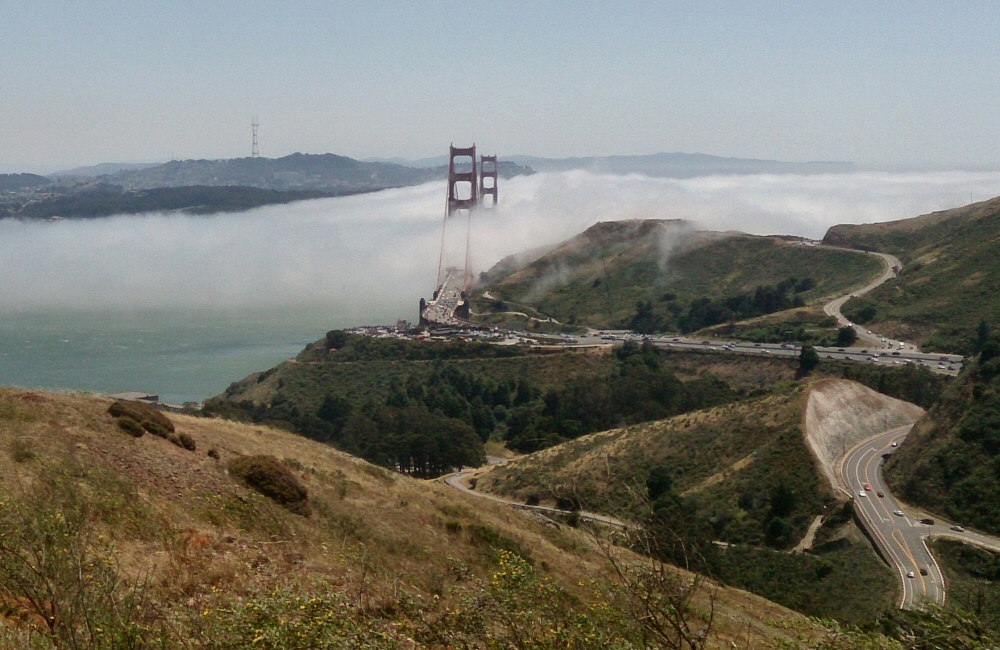
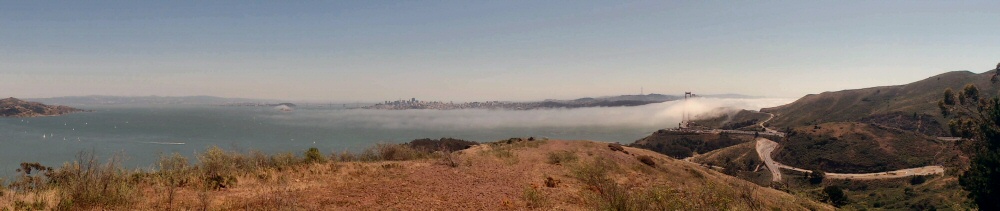
We parked the van by the side of the road in Tennessee valley last night, after dinner at Salman and Betul’s. Our first full night in it! Very comfy. I fixed my bike wheels (finally) – tightened up the hubs. Mikey and Ross would be proud of me. I used all the right tools, too – no bodge job this time. We met Maude at Bayside café for a solid American breakfast, where we also bumped into Joe. Met Amanda and her buddy David for lunch, and headed up to the hills behind Sausalito to check out the view.

Bay panorama

Then on the way back to Alameda we stopped in to see Ali, Kate and their kids.

Good times seeing some of our US friends. It feels a little strange, moving on from San Francisco after just 6 months. We’ve just started to settle. But that’s why we’re moving on. Another month here and we might not get out!


Mainsail in for repair

Dropped off the main sail at a local sail loft today. I’ve been toying with the idea of a new main; the one we have is sooo baggy and is getting a little tired. I also want something with a third reef for when it gets really windy. But I thought I’d also see what a sailmaker had to say about it, in case it was worth repairing. They gave it a good looking over on the loft floor and we decided that it was worth putting some money into this sail rather than buying a new one. It’s not a top end sail, but it’s got plenty of life left in it.

It’s still going to be baggy – that’s due to the lower quality fabric rather than stretched seams, so it can’t be fixed without major surgery. This just means that we won’t be able to sail as close to the wind as we could with a new, tight sail, which in turn means that it’ll take longer to get to places to windward. But we’re not planning to sail much to windward, and we did actually manage fine coming back from Santa Cruz, so that’s fine. The repairs work out about a quarter of the price of a new sail too – bonus.

He’s going to;

  • Add a third reef
  • Stitch a new leach line in to replace frayed canvas
  • Stretch the luff rope that’s shrunk
  • Add anti-chafe patches where the sail touches the spreaders on a run

Looking forward to picking it up in September!

Iceland

“Land of Fire and Ice” they say… I was really looking forward to seeing some red hot molten lava. We ended up with a few days of rain showers and no sign of “fire” … so a bit disappointing in that respect but man, what awesome scenery! I’ve seen plenty of mountains before, but Iceland was definitely different.

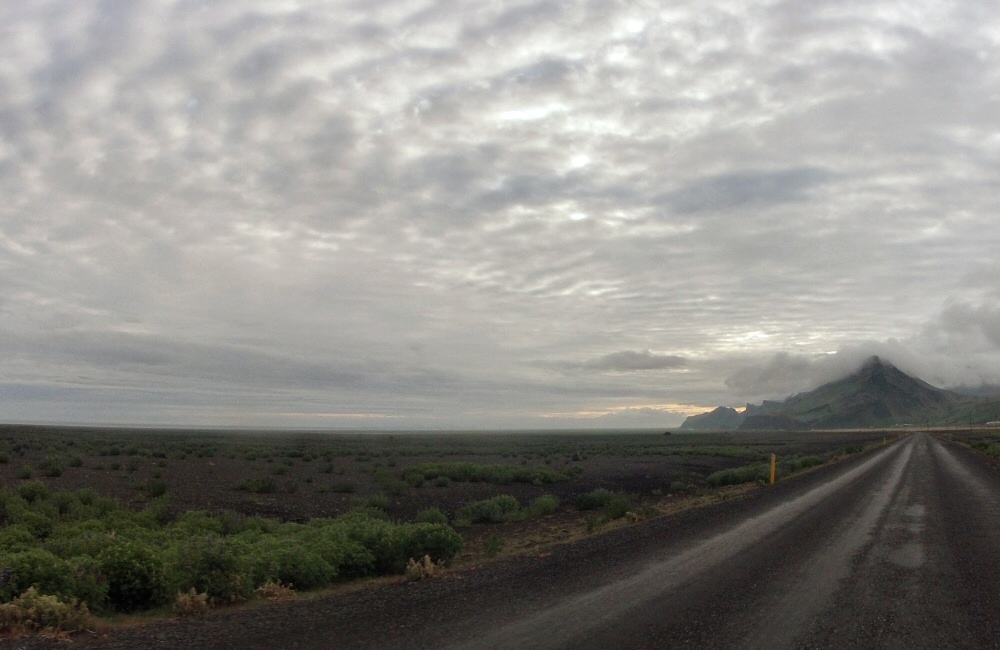
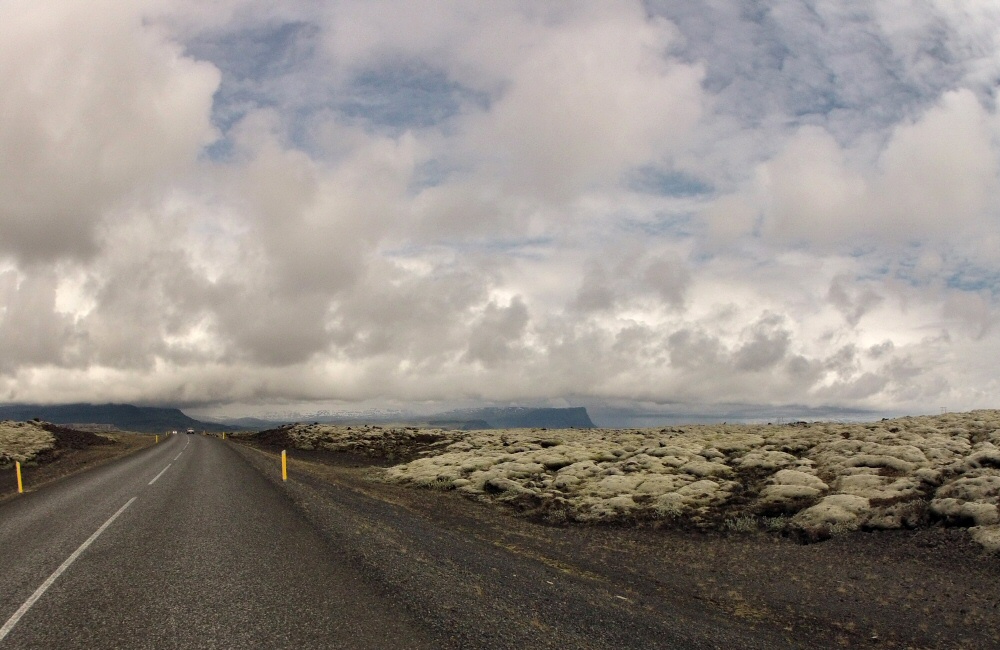
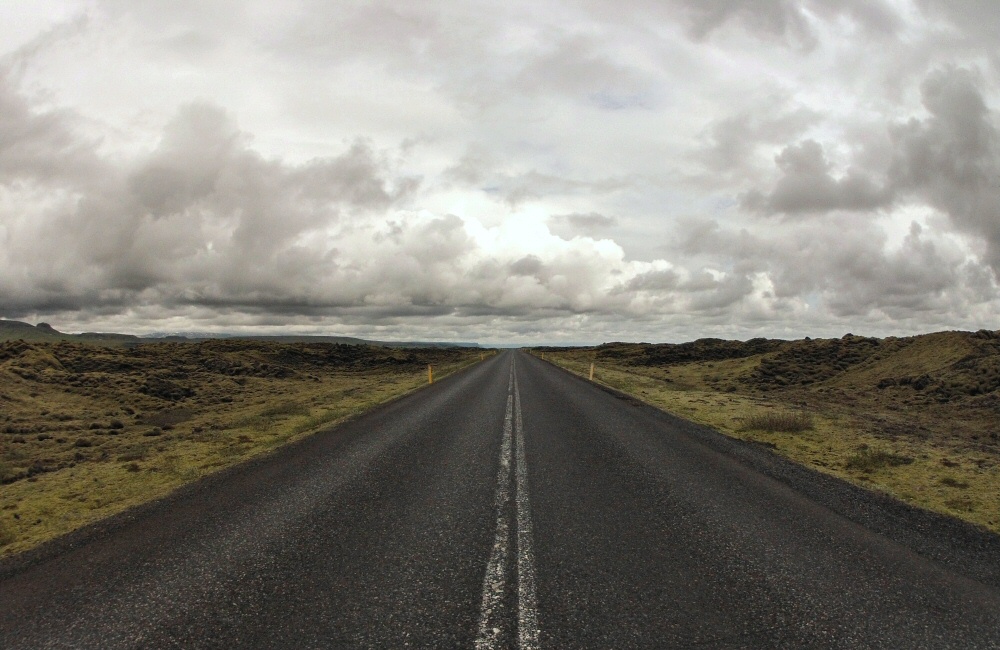
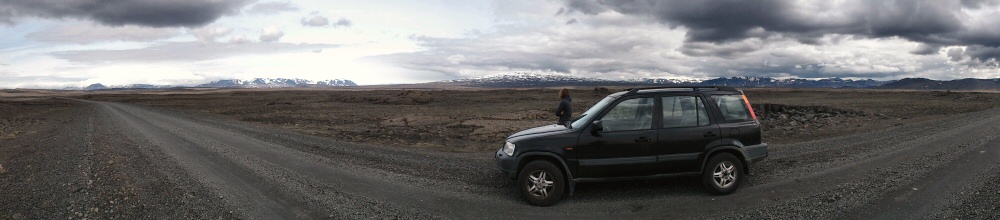
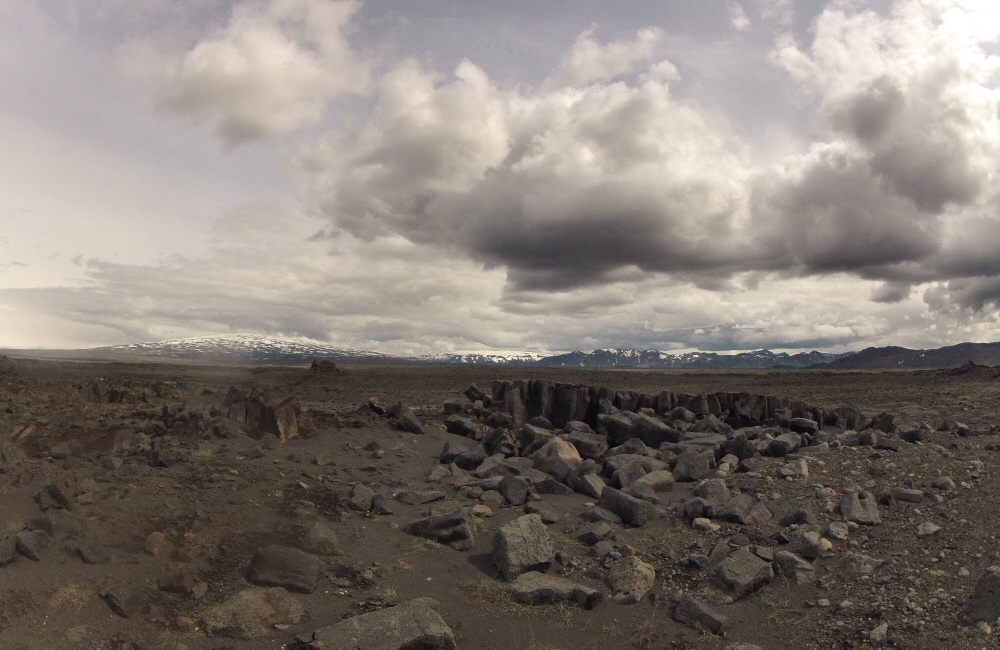
Huge, flat plains ring the mountainous highlands in the centre island; we saw two distinct types. One; solidified lava flows which look like a monstrous, cracking tarmac road, and the other; miles of desolate volcanic gravel washed down epic rivers fed by ice and snow melt. Out of these plains rise vertical cliffs and steep, black crags. More often than not the tops were in cloud which gave a distinct feeling of us existing in a thin slice of planet between the underground and the sky. You can almost believe the Icelanders’ stories of trolls and elves in the distant, inaccessible mountains.

DCIM100GOPRO

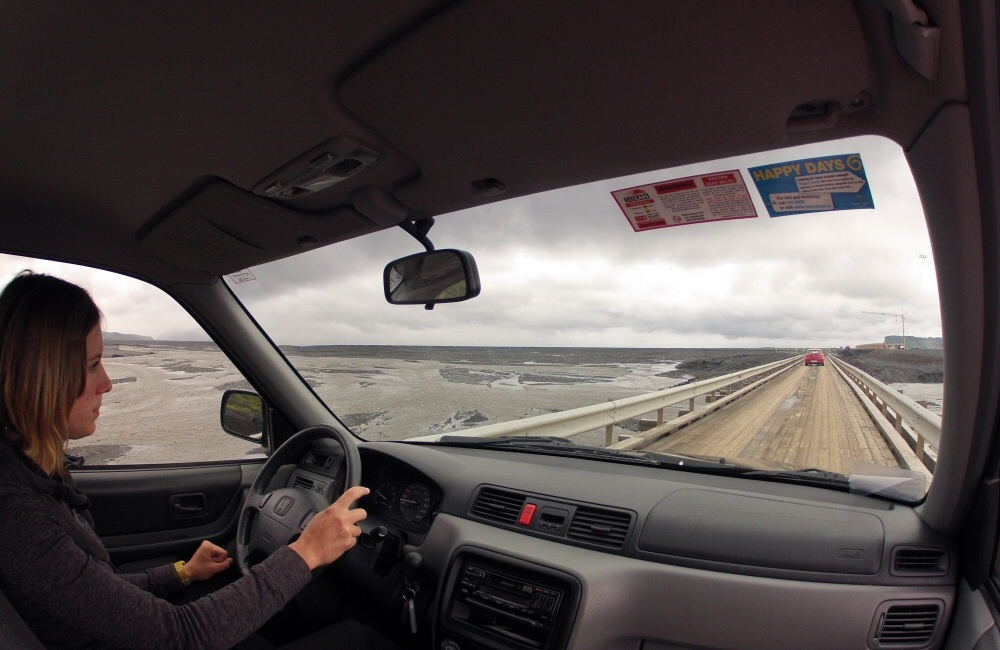
There’s one main road which runs all the way around the island. It’s called road number 1, and narrows from two lanes down to single lane to cross many of the bridges. Iceland’s population is only 350,000 and two thirds of that is in Reykjavik, so I can’t see road number 2 coming along any time soon. The rest of the island is rugged, inhospitable mountains, plus a bit of farmland. We spent our first day in Reykjavik, and then rented a 4×4 for a couple of days so we could explore.

Day 1

Headed east along road number 1 with the goal of getting to Skaftafell. It was pouring with rain for most of the morning, so although we passed a bunch of interesting sights (which in Iceland is usually waterfall, geothermal vent or hot spring) we didn’t stop. We had the car for two days and figured that as it was light all the way through the night, we could check them out on the way back if the weather improved.

The road wound over the plains, the sea to our right and the mountains to the left. Generally we were quite a way inland so we didn’t get to see the ocean. The lava was covered in a deep, soft layer of moss – we had to stop and get out to feel it – such a surreal landscape.

DCIM100GOPRO DCIM100GOPRO

In between the rain squalls we had views for miles and miles. The air is so clear. Reminds me of the skies in northern Scotland and the Isle of Skye.

DCIM100GOPRO DCIM100GOPRO

After a good few hours of driving the weather improved and the views opened up even more.

Glacier

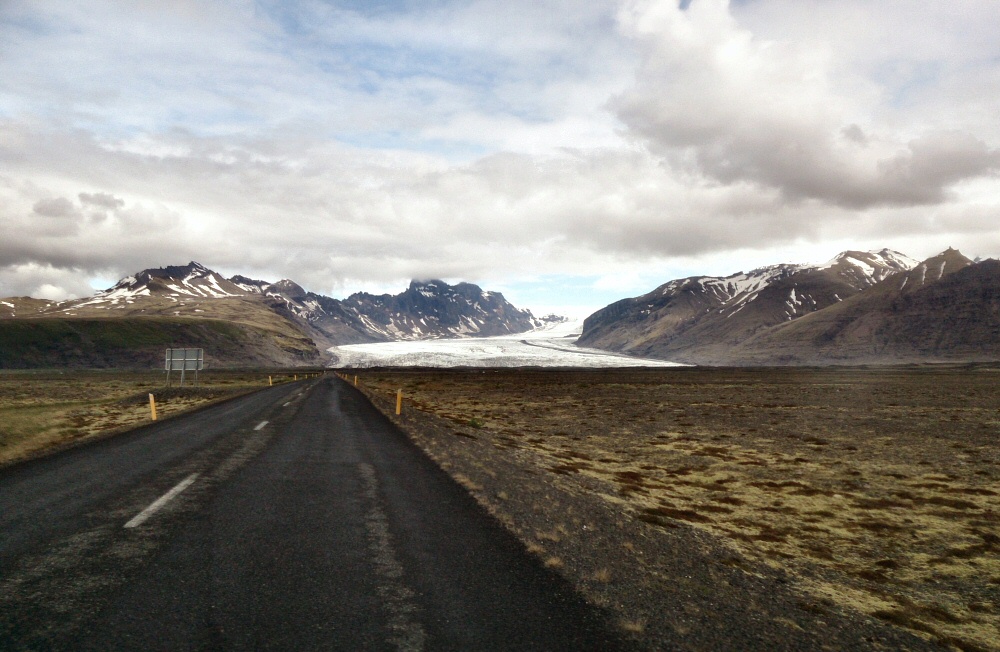
We parked up near the snout of the Skaftafellsjökull glacier and tucked into lunch. I’d read in our guidebook that a typical Icelander’s lunch is made up of rye bread, some Harðfiskur (hard, dried fish) and some Skil yoghurt, so that’s what we’d brought along. Rye bread, fine, we can deal with that – I quite like it. But boy the Harðfiskur was horrible. I tried a few pieces to see if it was a taste that grew on me but nope, it wasn’t happening. The rest of it went in the bin. Other Icelandic staples include rotten shark. No wonder the american style hot dog stand in Reykjavik is so popular.

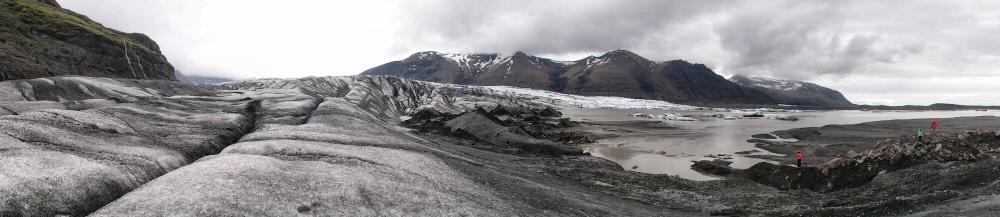
We wandered over to the glacier to have a poke around. It feels a bit tired. A load of dirty ice. Glaciers get more impressive higher up the mountain; down here in the melt zone it’s still impressive, but lacks grandeur. Reminds me of a climbing trip in the Alps with buddies from Sheffield – we tramped across a glacier high in the mountains on our way to climb a route, bivvying out at night on the side of the ice in a small cave.

Glacier panorama

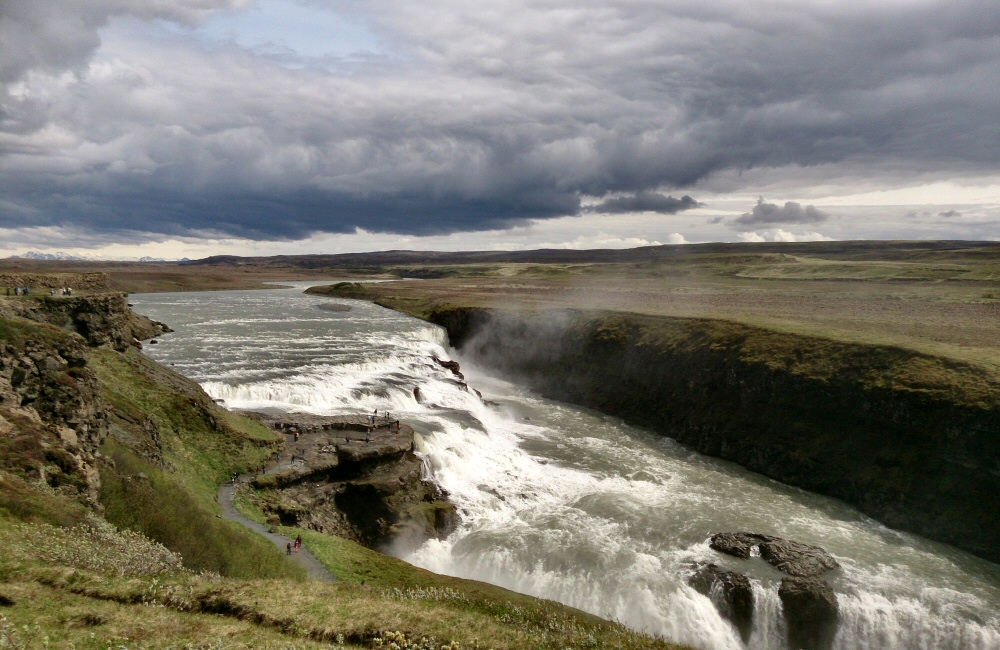
Late afternoon we hopped back in the car for the mission drive back to Reykjavik, stopping off at Gullfoss, a large waterfall, on the way. We also picked up a Canadian hitch hiker who was also heading the same way. There were quite a few hitch hikers – I guess partly because there’s only one road, and partly the laid back casual attitude of the Icelanders. Rose said he was a bit smelly.

Day 2

Most tourists to Iceland spend a day doing the “Golden Circle” which is a bunch of sights in a loop not far from Reykjavik. Since we were there, it made sense to take a look. First we stopped by þingvellir – an impressive fissure in the bottom of a rift valley which sits between the European and American tectonic plates. Further south, this same join between the plates forms the mid Atlantic ridge. The plates are moving apart at about 18mm per year, and while there’s no active volcanic excitement at the surface (like the hot molten lava I came all this way to see…), the valley is full of geothermic centres and hot spots.

Iceland panorama

We also stopped in at Gullfoss (another waterfall) which is an impressive two-level beast.

Gullfoss

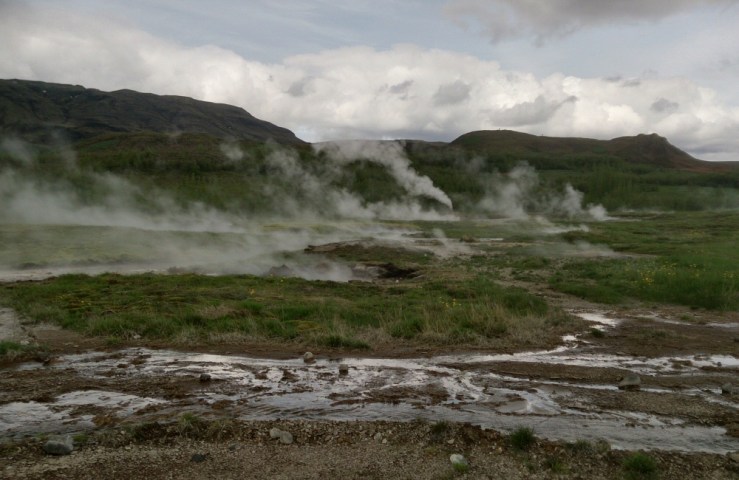
And then Geysir, which itself doesn’t erupt unless there’s just been an earthquake. Just a few yards away is Strokkur, a slightly smaller but much more reliable geyser which pops its top every few minutes. We dropped into see a geyser in California with Ant and Anna – so this is our second set of geysers this year. Hopefully we’ll get to swing by Yellowstone and Old Faithful later in the summer. The Grand Geyser Tour of 2104.

Steaming ground

Heading back towards þingvellir we picked up more hitch hikers – this time a couple from Czech republic and Macedonia. He was in Iceland for a conference and she came out to join him for a few days’ holiday at the end of his work week.

We’d rented a 4×4 because we wanted to get off road and explore deeper into Iceland. We didn’t really know what to expect, and explored up a couple of gravel tracks. On the first we were thwarted by a river that we weren’t confident to cross. It would probably have been fine but we were a little short on time, needing to get the car back by 4pm – and we had no idea whether the rest of the route over the mountains was clear. Making our way back to the main road we were passed by one of the huge Icelandic “super-jeeps” with monster tyres, blasting his way along the small track like it was the main highway. Next time that’s how we’re going to see Iceland!

A bit further down the road we did find a track over the mountains that looked a bit of fun, and just about doable in the time we had left.

DCIM100GOPRO

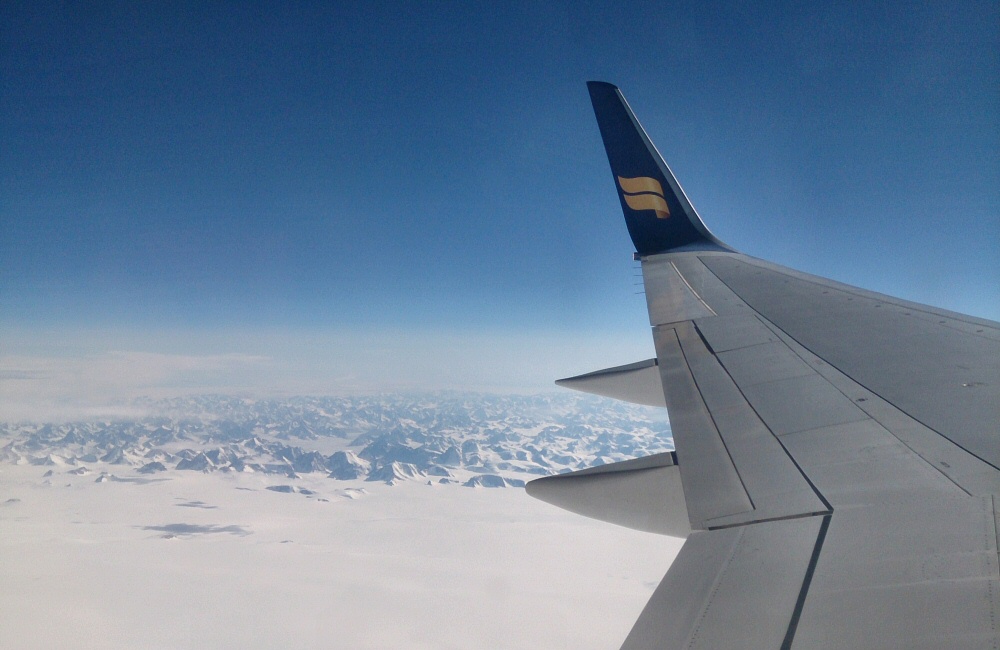
Flying over Greenland on the way back to the USA was pretty cool. Plenty of icebergs, mountains and snow. Definitely need to get there at some point. I spotted an advert in a sailing magazine a couple of days ago; “Crew wanted for expedition to Greenland and Arctic in old wooden Bristol pilot cutter” … now that would be an adventure. One day I want to buy a steel hulled boat and spend some time north of the Arctic circle. Greenland, Canada, Norway …

Greenland

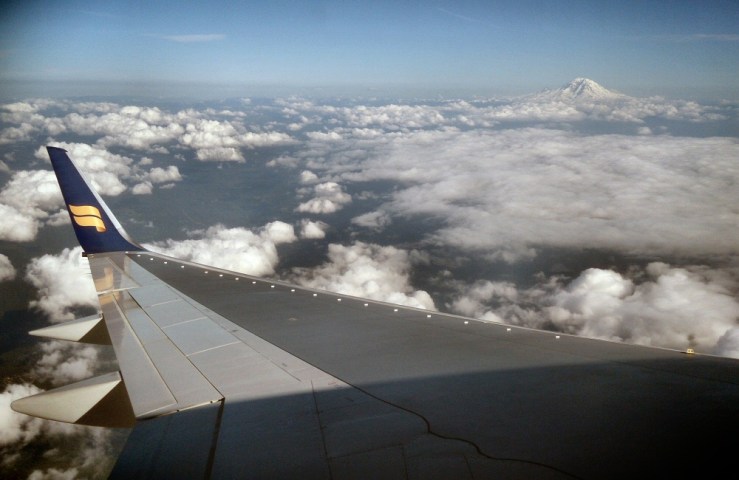
The flight went via Seattle, where we got an awesome view of Mount Rainer as we came into land. I never knew it even existed. We’re going to be coming back up this way in just a couple of weeks, so that’s now on the list of places to see.


Mt Rainer
Mount Rainer

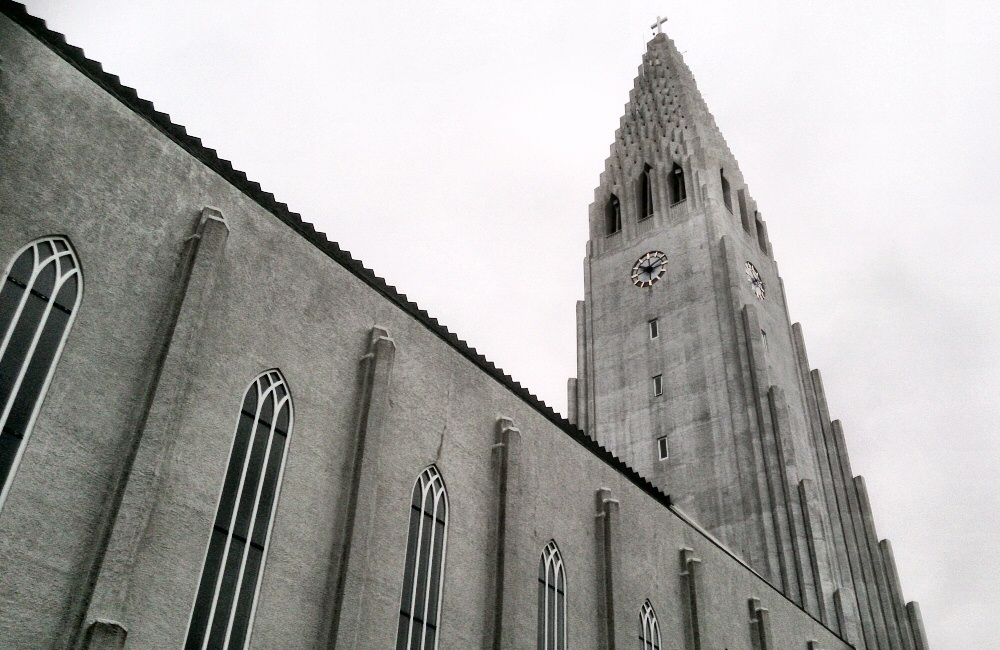
Reykjavik

We landed in Reykjavik yesterday afternoon after a comfortable 3 hour flight from Heathrow. Changed some money and booked a bus for the 45 minute trip into the city – across miles of lava flow, which looked just like old, cracked tarmac road on a huge scale. Checked into our hostel – a private double room in a place not far from the centre of town – and then headed out for a walk to find some supper. We ended up at “the most northerly Pakistani restaurant in the world”, and had a really tasty curry. I figured that we were probably going to struggle to find a decent curry in America over the next few months and we didn’t really get a decent one back in the UK.

I don’t really feel like our travels have started, yet we’ve flown half way around the world and are in a place I’ve never been to before – we’re still due to have a few days at home on the boat in San Francisco before we get going in the van next week at some point.

Plans for the next few days are to hang out around town today then book a 4WD for Monday and Tuesday to explore the island. It feels like the season hasn’t really kicked off here – guidebooks talk about crowds but it feels empty, even last night on a Saturday evening. Maybe we were out too early? Walking back to the hostel at 10pm it was still light as day, and (Rose tells me) it didn’t get dark at all during the night. Her eyelids are really thin (that’s my theory anyway) so she finds it hard to sleep if it’s not fully dark. Here in Iceland we’re just outside the arctic circle and only a few days away from the summer solstice, so we’re going to have to find some eye shades!